
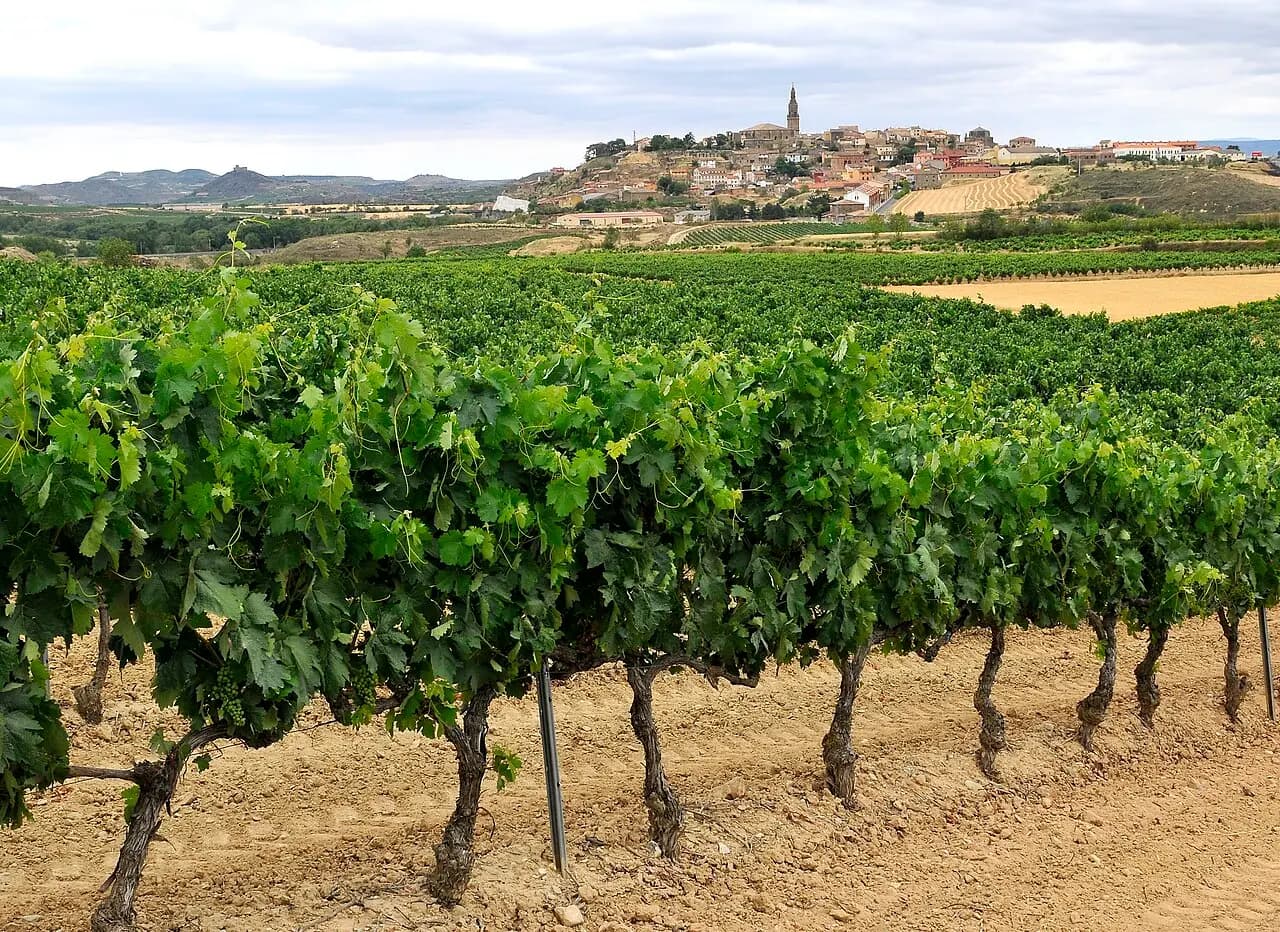
La Rioja by campervan
Wine, vineyards and the van parked right beside them: how to put together a weekend break in La Rioja from Madrid without taking chances at the wheel.
La Rioja is known for its wine, but what you'll actually be travelling through is a valley: the Ebro and the rivers that flow down into it from the Sierra de la Demanda. Villages perched on hilltops, a cathedral with a live cockerel and hen inside, monasteries where the first words in a Romance language were written and a mountain village at the end of the road. All within a handful of kilometres.
The route comes in through Logroño, follows the Ebro to Haro, heads up the Oja river to Ezcaray and comes back via San Millán de la Cogolla and Nájera. Four days with stages of under an hour, because here what counts is the stops, not the driving. Below you have the map with the real route, the kilometres for each day and what you'll see between one stop and the next.
- Days
- 4La Rioja · Rioja Alta
- Route in the area
- 132 km+ 649 km there and back from Plaza de Castilla
- Behind the wheel
- ≈ 2 h 25 minapprox., without stops
- Best time
- May and SeptemberSpring and the grape harvest
Roads: Motorway to Soria and a national road through the mountains to Logroño. Within La Rioja, short, easy roads.
Best Winkle: Adriático · the most nimble, made for couples and for first-timers
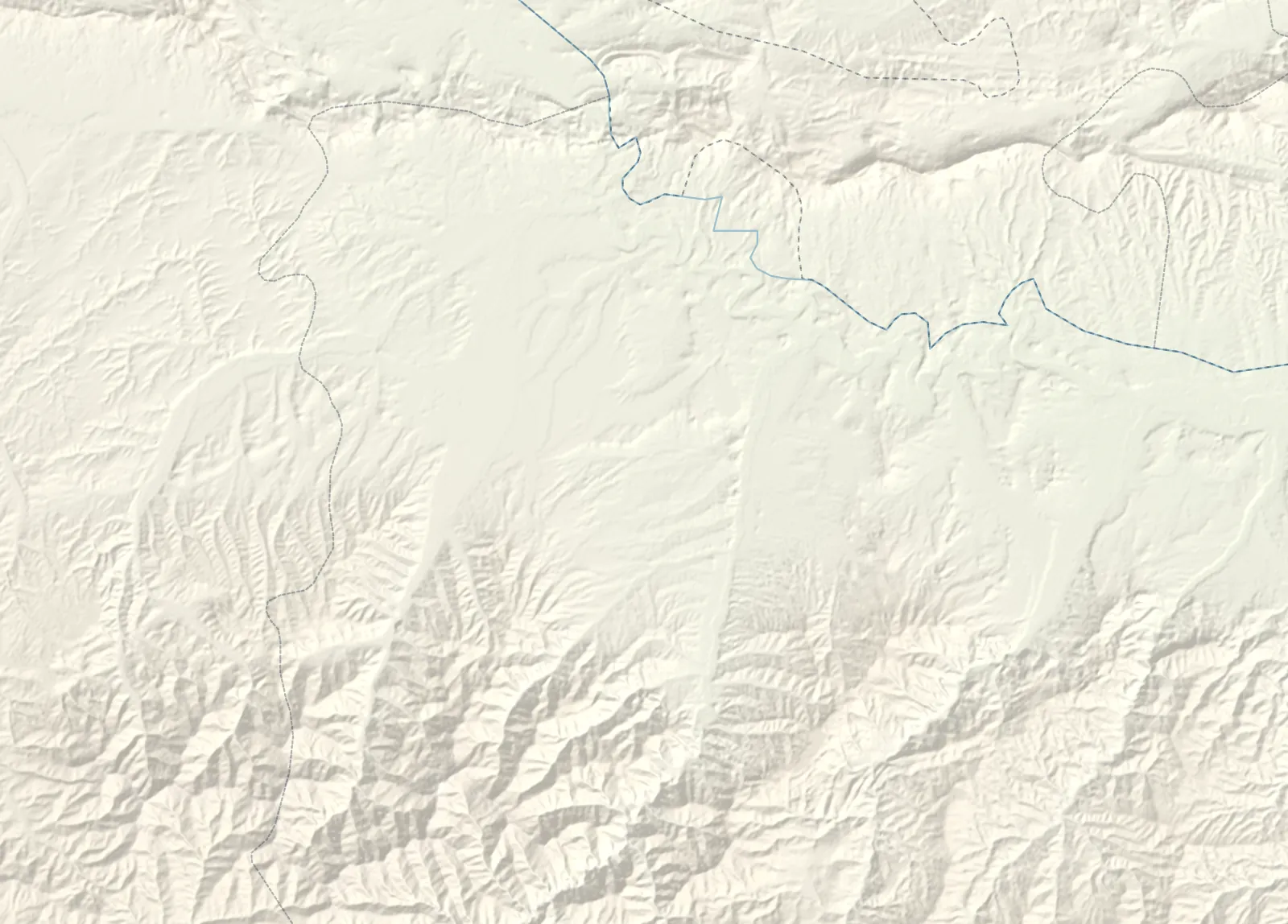 LA RIOJAÁLAVABURGOSSierra de la DemandaEbro River1Logroño2Briones3Haro4Santo Domingo de la Calzada5Ezcaray6San Millán de la Cogolla7Nájera
- 1 Logroño
- 2 Briones
- 3 Haro
- 4 Santo Domingo de la Calzada
- 5 Ezcaray
- 6 San Millán de la Cogolla
- 7 Nájera
From Plaza de Castilla: 326 km · ≈ 4 h Back to Plaza de Castilla: 323 km · ≈ 3 h 50 min
© OpenStreetMap contributors (trazado: OSRM) · Natural Earth · relieve: AWS Terrain TilesDay by day
From Madrid to Logroño, over the Sierra de Cameros
Madrid (Plaza de Castilla)1Logroño 326 km ≈ 4 h
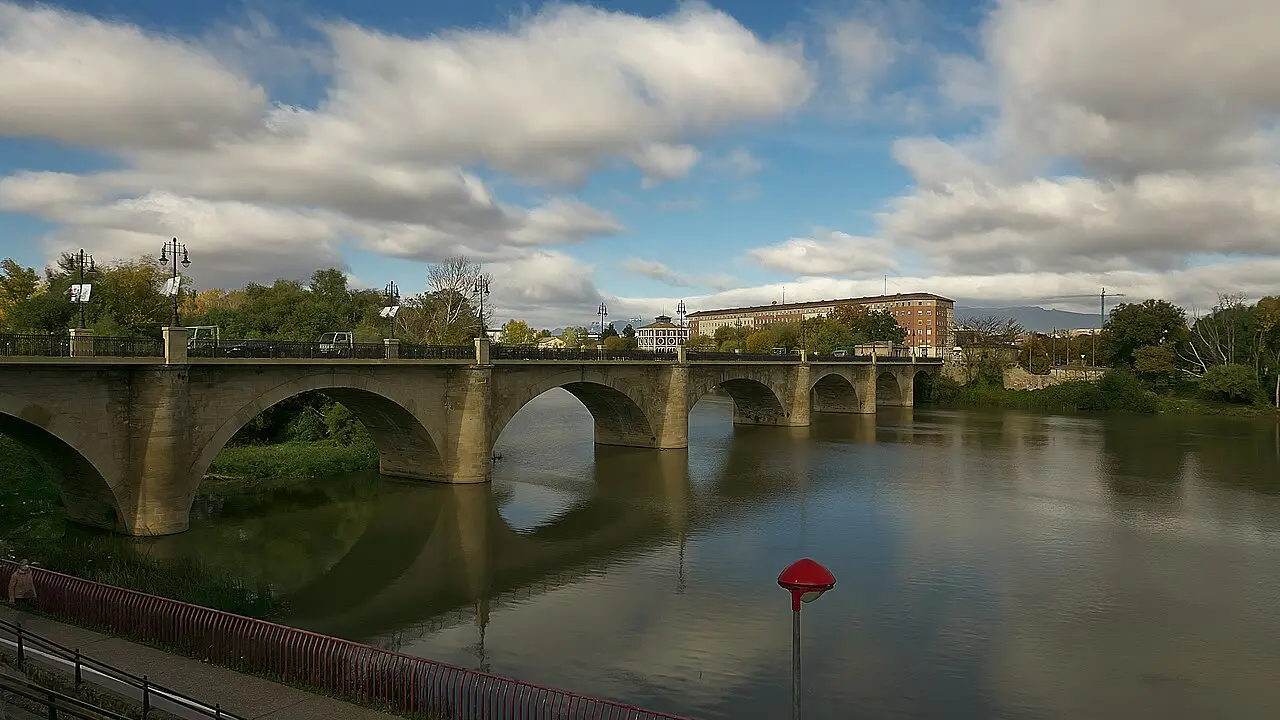
The Puente de Piedra, where the Camino enters Logroño.Photo: Jl FilpoC · CC BY-SA 4.0 A driving day, about four hours. You leave Plaza de Castilla on the A-2, join the A-15 to Soria and from there carry on along the N-111, which is no longer a motorway. This is the scenic stretch: the national road crosses the Sistema Ibérico mountains under the Piqueras pass, at 1,712 metres, through a 2,444-metre tunnel opened in 2008 that saves you twelve kilometres of bends.
When you come out of the tunnel you're already in La Rioja, heading down the Iregua valley, a river that rises in the Sierra Cebollera and ends in the Ebro, in Logroño itself. Along the way you pass Villoslada de Cameros and Torrecilla en Cameros, mountain villages nobody associates with La Rioja and well worth a stop to stretch your legs.
In Logroño, park the van and walk. The Puente de Piedra, the stone bridge over the Ebro, is where the Camino de Santiago enters the city, and the Camino is what made it grow. The co-cathedral of Santa María de la Redonda was built between the 15th and 18th centuries, and the Espolón, with its equestrian statue of Espartero, is the city's living room. At dinner time, head for calle Laurel: more than sixty bars in just over two hundred metres, each with its own pincho. The mushroom one is the classic.
What to see
- The Piqueras tunnel and the drive down the Iregua valley
- Torrecilla en Cameros, on the way
- The Puente de Piedra over the Ebro
- La Redonda, the Espolón and calle Laurel
Where to sleepAt Logroño's motorhome area or a nearby campsite. Check spaces and rules with the town council before you go.
Heads upThe N-111 between Soria and Logroño is a mountain road. Taken calmly it's fine, but it isn't the motorway it looks like on the map.
Along the Ebro: Briones and Haro
1Logroño3Harovia Briones 46 km ≈ 45 min
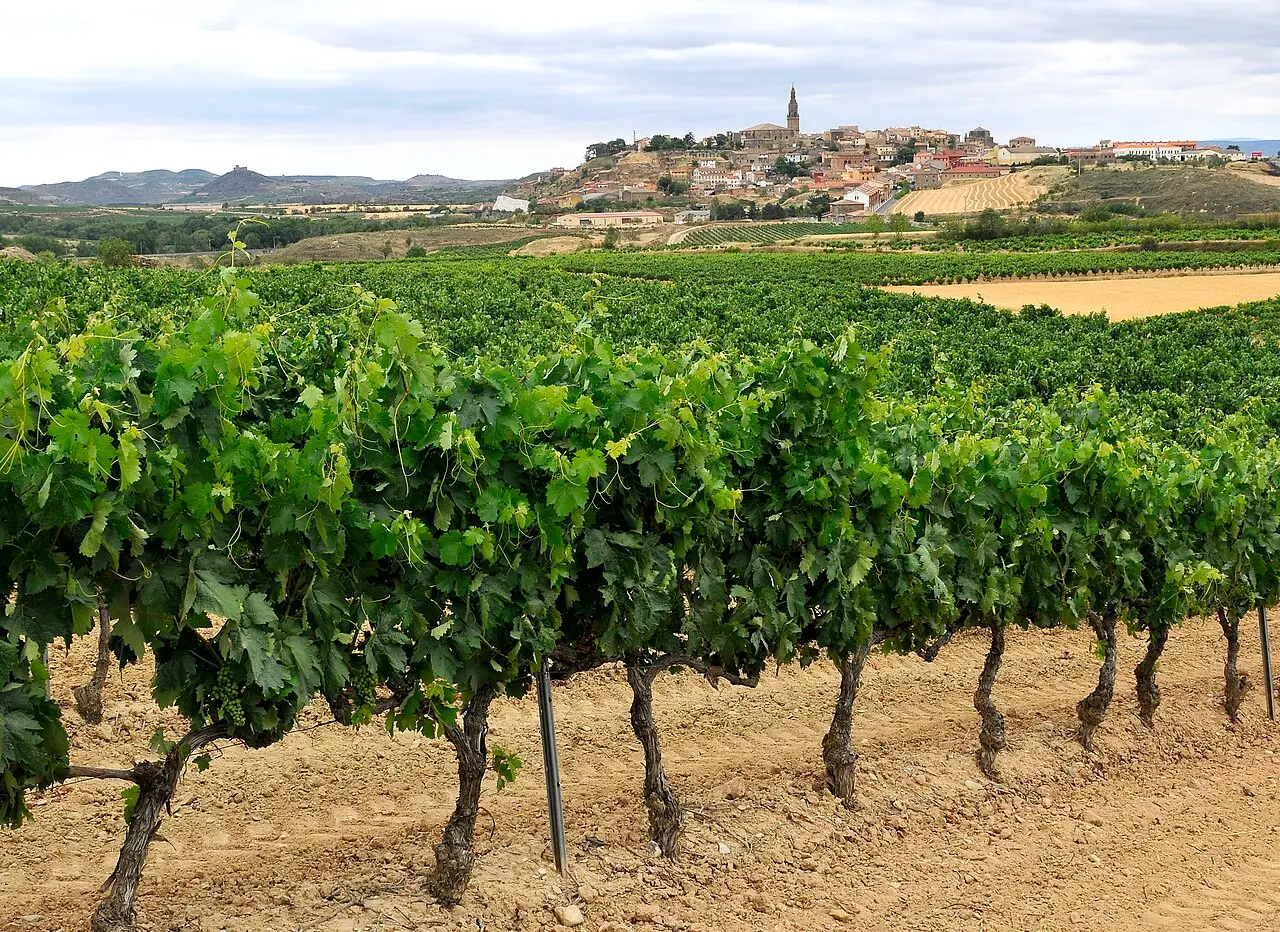
Briones, on its hill above the Ebro.Photo: LBM1948 · CC BY-SA 4.0 A short stage, under an hour, up the Ebro between vineyards. First stop, Briones, which you can see from far off: it sits on an 80-metre hill whose north face drops sheer to the river. It's one of the most beautiful villages in Spain according to the association of the same name, and its church of the Asunción, from the 16th century, has been a listed monument since 1981. If you go on the third weekend of June, you'll catch the Medieval Days, which recreate village life in the 14th century.
On to Haro. Its old town has been a protected historic site since 1975: the plaza de la Paz, the basilica of Nuestra Señora de la Vega and the church of Santo Tomás, with a Plateresque doorway by Felipe Bigarny. Next to the old railway station is the Barrio de la Estación, the Station Quarter, which grew up with the railway and has seven century-old wineries, all within walking distance. If you want to see inside one, book before you leave home and walk there from where you're sleeping.
In the afternoon, head out to the Conchas de Haro, the gorge where the Ebro enters La Rioja, forcing its way between the Obarenes mountains and the Sierra de Cantabria. It's the wildest stretch of the river on the whole route.
What to see
- Briones from below, on its hill above the Ebro
- The plaza de la Paz and Santo Tomás, in Haro
- The Barrio de la Estación, on foot
- The Conchas de Haro
Where to sleepAt Haro's motorhome area or nearby. Get there early during the grape harvest, when it fills up most.
Heads upIf you visit a winery, whoever isn't tasting drives. The van stays parked that night and you carry on in the morning.
Up the Oja river: Santo Domingo de la Calzada and Ezcaray
3Haro5Ezcarayvia Santo Domingo de la Calzada 34 km ≈ 40 min
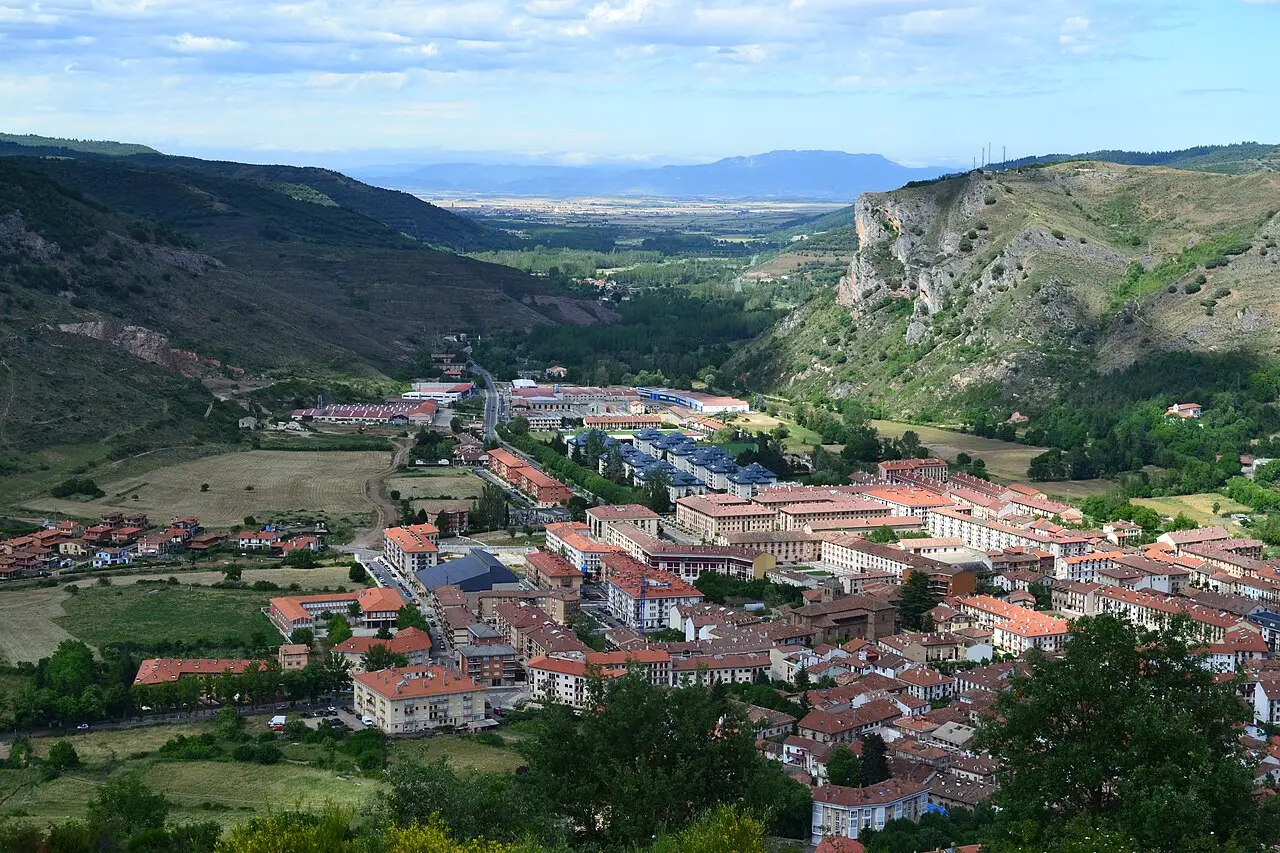
Ezcaray, from the Santa Bárbara hermitage.Photo: edu1975 · CC BY 3.0 Today you follow a river: the Oja, which runs through Santo Domingo and Ezcaray and comes down from the Sierra de la Demanda, where it rises at around 2,000 metres. Popular belief says the name La Rioja comes from it, although the theory is disputed. A short stage, about forty minutes, and the landscape changes from vineyard to mountain.
Santo Domingo de la Calzada is named after a hermit, Domingo García, who built a bridge, a hospital and a hostel here for pilgrims on the Camino. He died in 1109. His cathedral keeps a live cockerel and hen, because of the legend of a wrongly accused pilgrim that gave rise to the saying: "Santo Domingo de la Calzada, where the hen sang after it was roasted". The free-standing tower, about 69 metres high and built between 1767 and 1769, is the tallest in La Rioja. The pilgrims' bridge over the Oja is 148 metres long and has sixteen arches.
You head up the valley to Ezcaray, at 810 metres, right at the foot of the mountains. It was a textile town: the Royal Cloth Factory was founded here in 1752, and Charles III made it a Royal Company in 1773. The church of Santa María la Mayor, from the 16th century, is the only example of Aragonese Gothic in La Rioja.
What to see
- The cockerel and hen in Santo Domingo cathedral
- The free-standing tower and the bridge over the Oja
- The Oja valley, from vineyard to mountain
- Ezcaray and Santa María la Mayor
Where to sleepAround Ezcaray, at a motorhome area or campsite. It's the quietest night of the trip.
Heads upEzcaray is at 810 metres, at the foot of the mountains. Bring something warm for the night.
San Millán de la Cogolla and Nájera
5Ezcaray7Nájeravia San Millán de la Cogolla 52 km ≈ 1 h
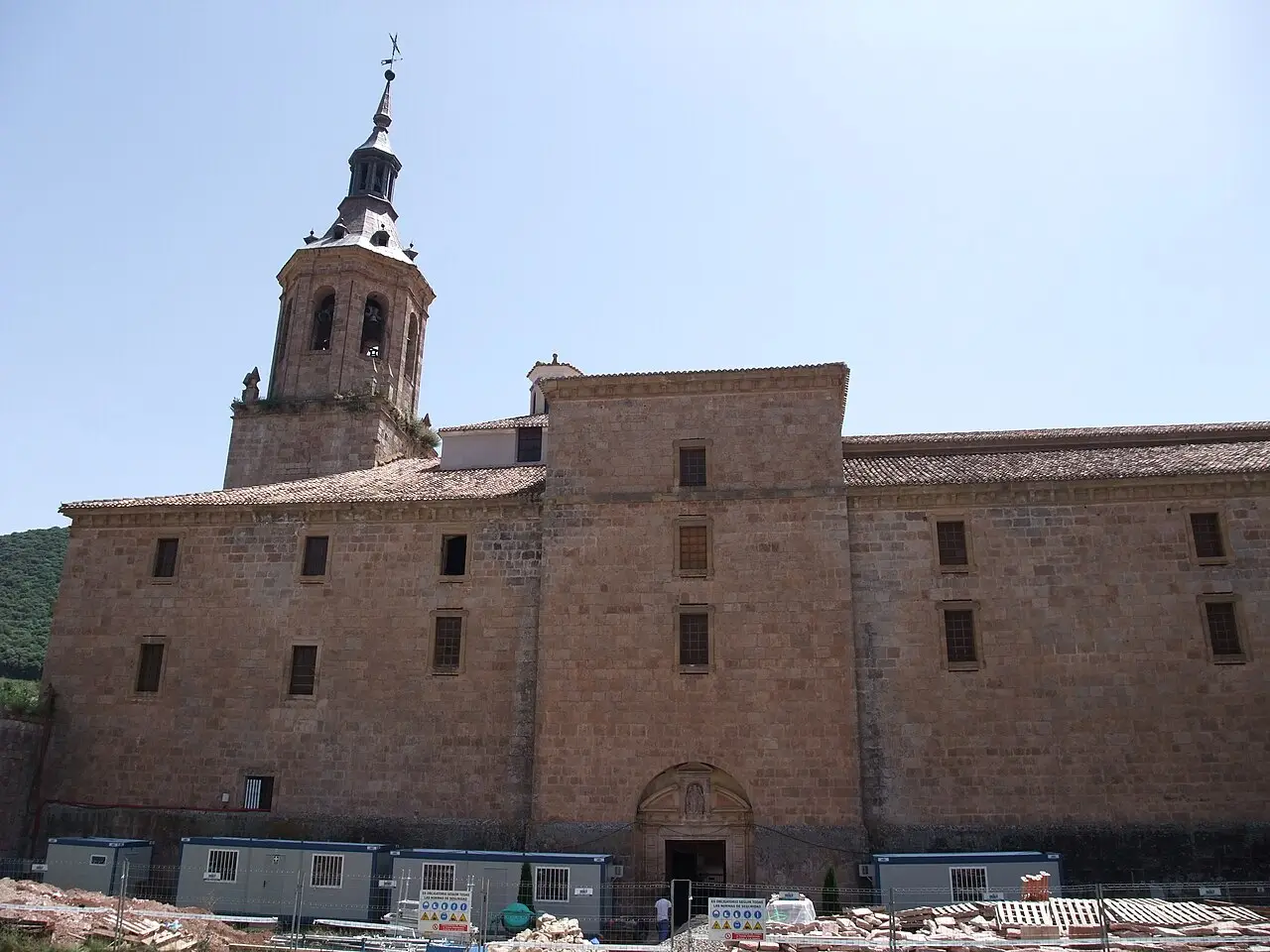
The monastery of Yuso, in San Millán de la Cogolla.Photo: Javi Guerra Hernando · CC BY-SA 4.0 The last day is the history day. San Millán de la Cogolla has two monasteries, Suso up the hill and Yuso below, a World Heritage Site since 1997. At Suso, the original one, caves were dug out for hermits in the 5th and 6th centuries; the building is Visigothic and Mozarabic, with Romanesque additions. This is where the Glosas Emilianenses were written, notes in the margins of a codex that are the earliest texts in a Romance language and in Basque. That's why the village is called the cradle of the Spanish language. Gonzalo de Berceo, the first poet known by name in Castilian, was educated at that monastery.
Yuso, the lower one, was built between the 16th and 17th centuries and since the 1960s has been called the Escorial of La Rioja. Check opening times and how to visit on the monasteries' official website before you go.
Before heading home, stop in Nájera. The monastery of Santa María la Real was consecrated in 1052. Legend has it that King García Sánchez III, out hunting with his falcon, followed it to a cave where he found an image of the Virgin, a bunch of lilies and a bell. Inside are the royal pantheon and the Knights' Cloister, from 1517 to 1528, with Plateresque tracery. From here, back to Madrid via Burgos.
What to see
- The monasteries of Suso and Yuso
- The Cárdenas river valley, in San Millán
- Santa María la Real and its cloister, in Nájera
Where to sleepYou're heading home. If you want to stretch it, Nájera has a motorhome area.
Heads upThe drive back is long, almost four hours. Leave Nájera with a full tank and no rush.
Back to Plaza de Castilla: Nájera → Plaza de Castilla · 323 km · ≈ 3 h 50 min · via Burgos and the A-1
Before you set off
- Book any visits you want to make before you set off, whether wineries or monasteries. In high season they fill up days ahead.
- Decide who drives each day. If there's a tasting, whoever isn't tasting drives, or the van stays parked until the next day.
- Check spaces and rules at the Logroño, Haro and Nájera areas with each town council. Read up on where it is legal to sleep in a campervan.
- Work out the kilometres you have included: between the drive there, the route and the drive back it comes to about 780.
- Download the GPX before you set off, in case you lose signal on the N-111 or in the Demanda.
When to go
May and September are the most comfortable months. In May the vineyards are green and the weather plays along; in September the grape harvest arrives, with the vines laden and the bustle of picking, which runs from mid-month into October. On 21 September Logroño celebrates San Mateo and the Rioja Harvest Festival, with grape treading on El Espolón (council programme). It's lovely, but the city fills up: leave yourself plenty of room to find somewhere to sleep.
August is the month to avoid: heat, fully booked visits and full areas. We see it in our own bookings, where July and August are the peak of the year and May and September are much quieter. There's more on the best times to rent a campervan.
Wine and the wheel
This is a route through wine country and we're not going to pretend otherwise. But the rule is short: whoever drives doesn't taste. Take turns at the wheel, spit at the tasting (that's what the bucket is for) or park the van, sleep nearby and don't move it that night. With a campervan, that last one is the easy option. The drink-driving limits are set by the DGT; the idea is not to get anywhere near them.
And if wine isn't your thing, the route works just as well: Briones, Santo Domingo, Ezcaray, San Millán and Nájera don't need a glass to be worth the trip.
Where to sleep and refuel
The rule is the usual one in Spain. Overnighting, sleeping inside a properly parked van without setting anything up outside, is legal. Camping isn't: as soon as you put out chairs, a table or an awning, it stops being an overnight stop and you can be fined. We explain it all in the guide to sleeping in a campervan without breaking the law.
There are motorhome areas in Logroño, Haro and Nájera, with water and waste disposal. We deliberately don't give you numbers of spaces or addresses: they change, and each town council has its own bylaws. Check the town's website on the day, and if one is full the next one is a short drive away. During the harvest, get there early.
Refuel in Logroño or Haro. The stages are short, but the drive back from Nájera is more than 300 km.
What to eat along the way
In Logroño you eat standing up. On calle Laurel and neighbouring calle San Juan you go from bar to bar: mushrooms, wild mushrooms, pincho moruno, tortilla, pig's ear. Each bar is famous for one or two, and you end up having had dinner without ordering a single dish. For the van, stock up the fridge in Logroño and eat looking out over the Oja valley.
If you have more days
This is our four-day version. With a few more:
- The upper Oja: above Ezcaray the river carries on towards the Sierra de la Demanda, where it rises at around 2,000 metres, and the Valdezcaray ski resort is about 14 km from the village.
- The Iregua valley at a slower pace: on the way there you pass Villoslada and Torrecilla en Cameros; on the way back you can go that way again instead of via Burgos.
- The Bardenas Reales: down the Ebro, in southern Navarre, to swap vineyards for an almost desert landscape. We tell you about it in the Bardenas route.
We set off from Madrid with the van checked over and spotless, and we'll answer your questions about the route on WhatsApp before you leave.
Related routes
- Bardenas Reales and southern Navarre: 3 or 4 days
- Picos de Europa by campervan: 5 days
- 8 campervan routes from Madrid for 3, 5 and 7 days
Before you book
For a couple on a short break, Adriático is the most nimble and the cheapest way to try this. If there are more of you, see the Winkles. Requirements, price and how booking works, in the guide to renting a campervan in Spain.
Ready for this route? Choose your dates and book →
Frequently asked questions
How many days do I need to see La Rioja by campervan from Madrid?
La Rioja is best enjoyed over four days from Madrid. From Plaza de Castilla to Logroño it's about 326 kilometres, close to four hours on the A-2, A-15 and N-111. That gives you time for Logroño, Briones and Haro, the Oja valley up to Ezcaray and San Millán de la Cogolla without rushing. With three days, combine Logroño and Haro into one day.
Can I visit wineries and drive the campervan on the same day?
You can, but sensibly. On a wine route the smart thing is to take turns driving, taste without swallowing or sleep where you did the tasting without moving the van that night. A campervan lets you do exactly that without getting anywhere near the drink-driving limits.
Where can I sleep in a campervan in La Rioja?
Overnighting inside a properly parked campervan is legal in Spain; camping (getting out chairs, an awning or levelling legs) is not. In La Rioja there are motorhome areas in towns such as Logroño, Haro and Nájera, but it's worth checking spaces and rules with each town council before you go, because they change.
When is the best time to visit La Rioja by campervan?
May and September are the most comfortable months: good temperatures, green vineyards or the harvest under way and fewer people than in high summer. The Rioja grape harvest runs from mid-September into October, with Logroño's San Mateo festival on 21 September. In August it's hot and the wineries are packed.
Do I need to book winery visits?
Almost always, yes. Most wineries in La Rioja run guided visits and tastings at fixed times, and in high season they fill up days in advance. Book the ones you want to see before you leave home and plan the rest of the route around those times, not the other way round.