
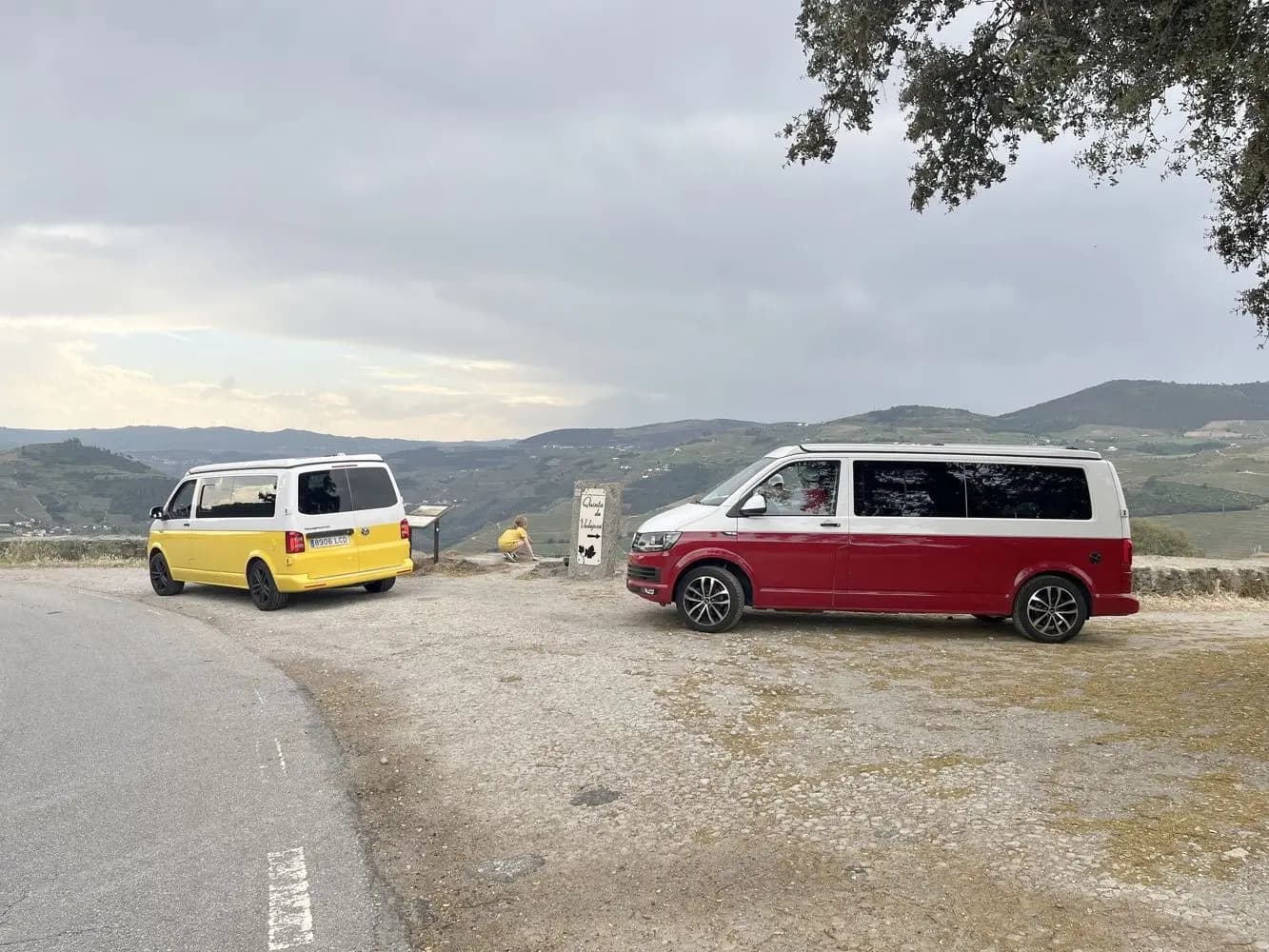
Driving a campervan: tips for the first 100 km
If you can drive a car, you can drive a Winkle. It's taller and a bit longer, that's it. By the first coffee stop of the trip you've already got the hang of it. Here are the tips to make those first kilometres a breeze.
Let me put your mind at ease in one sentence: if you can drive a car, you can drive a Winkle. Full stop. It's taller and a bit longer, and that's it. No strange gearbox, no new pedals, and no special licence required. By the first coffee stop of the trip, you'll already have the feel of it. (If you want to go over the basics of driving in Spain before you set off, the DGT has its own road safety section.)
That said, there are four or five details that make those first 100 kilometres a breeze instead of a white-knuckle ride. Let's go through them.
First thing: it's tall, not wide
The most important mental shift is height. A campervan built on a VW Transporter isn't much wider than a large MPV, but it is taller. What does this mean in practice? Two things. First, watch out for height restrictions: underground car parks, height barriers, low branches on tracks. Always check the sign before you drive in. Second, on bends and in strong crosswinds you'll notice the extra height, so don't take corners as if you were in a small car. Take it easy, no rush.
The width, on the other hand, won't give you any trouble. It fits in a normal lane with room to spare and handles minor roads without any fuss.
Length: the trick is the mirrors
It's somewhat longer than your car, mainly at the back. The key to handling this well is simple: trust your mirrors, which are large for a reason. You don't have rear-window visibility like in a saloon car, so the mirror is your friend. After two or three manoeuvres you'll have a feel for where the van ends, and you'll forget it's longer at all.
Gears and hill starts
Manual gearbox, as always. The diesel engine has plenty of power, so you don't need to rev it: it cruises comfortably at low revs. On hills, drop a gear and let the engine do the pulling, without forcing it. If you're starting on a steep slope, the good old handbrake does the job. Nothing you haven't done before.
Parking without the sweats
This is where 90% of first-day stress comes from, and it's cured with one idea: look for spacious spots. On the road, you'll normally stop at viewpoints, service areas and open spaces with plenty of room. In towns, park on the outskirts or on a wide street and get around on foot — which is also the best way to see the place anyway. Avoid car parks with low height restrictions and impossible gaps in the city centre: it's not worth the stress when there's plenty of space 200 metres away.
To reverse, go slowly and use both mirrors. If there are two of you, have the passenger get out and guide you for the first few days. No shame in that — everyone does it.
Motorway: plenty in reserve, take it easy
On the motorway, the van feels stable and comfortable. It's not a sports car and doesn't try to be: it's best enjoyed cruising between 90 and 110 km/h, music on, no racing. This way you also use less fuel (around 7.5–8.5 litres per 100 km) and with the 80-litre tank you get close to 950 km of range. When overtaking, give yourself margin, as it builds up speed more gently than a small car. Patience and looking well ahead.
The only thing you need to drive it
No small print: a category B licence held for two years, and you need to be 25 or older. The van weighs under 3,500 kg, so your regular licence is all you need. If you want to take turns at the wheel, you can add as many additional drivers as you like; each one is added as an extra when booking. We cover it all in full in the guide to campervan rental requirements.
We won't rush you through the handover
When you come to collect your Winkle, we'll show you round the van calmly: where everything is, how the gearbox works, the dimensions, the mirrors. You'll leave with everything clear. And if any questions come up on the road, you can reach us on WhatsApp.
Check out the available Winkles and pick your dates and book. Thirty minutes behind the wheel and any nerves disappear — that's when the fun starts.
Which campervan to choose
If it's your first time, the Winkle Adriático is the simplest and easiest to handle for getting started without stress.
Related articles
Ready to go? Pick your dates and book →
Frequently asked questions
Is it hard to drive a campervan if I've only driven cars?
No. A Winkle drives like a large car: same driving position, same pedals, normal manual gearbox. The only difference is that it's taller and a bit longer, so you're a touch more alert at the start. Within half an hour you're handling it naturally.
What driving licence do I need to drive a campervan?
A valid category B licence held for at least 2 years, and you need to be 25 or older. The van weighs under 3,500 kg, so you don't need a category C licence or any special permit. You can add as many additional drivers as you like; each one is added as an extra when booking.
Is it easy to park a campervan in the city?
Better than you'd think, though it's worth looking for spacious spots and avoiding car parks with low height restrictions (the van is tall). The easiest option is to park on the outskirts or in wide areas and get around on foot or by public transport. On the road, you'll almost always stop in open spaces where there's plenty of room.
Does it use a lot of fuel and drive well on the motorway?
It's diesel, with average consumption of 7.5 to 8.5 litres per 100 km driving between 90 and 110 km/h, and with an 80-litre tank it gives you a range of close to 950 km. On the motorway it's stable and has plenty in reserve; it's just not a sports car, so it's best enjoyed at a relaxed pace.