
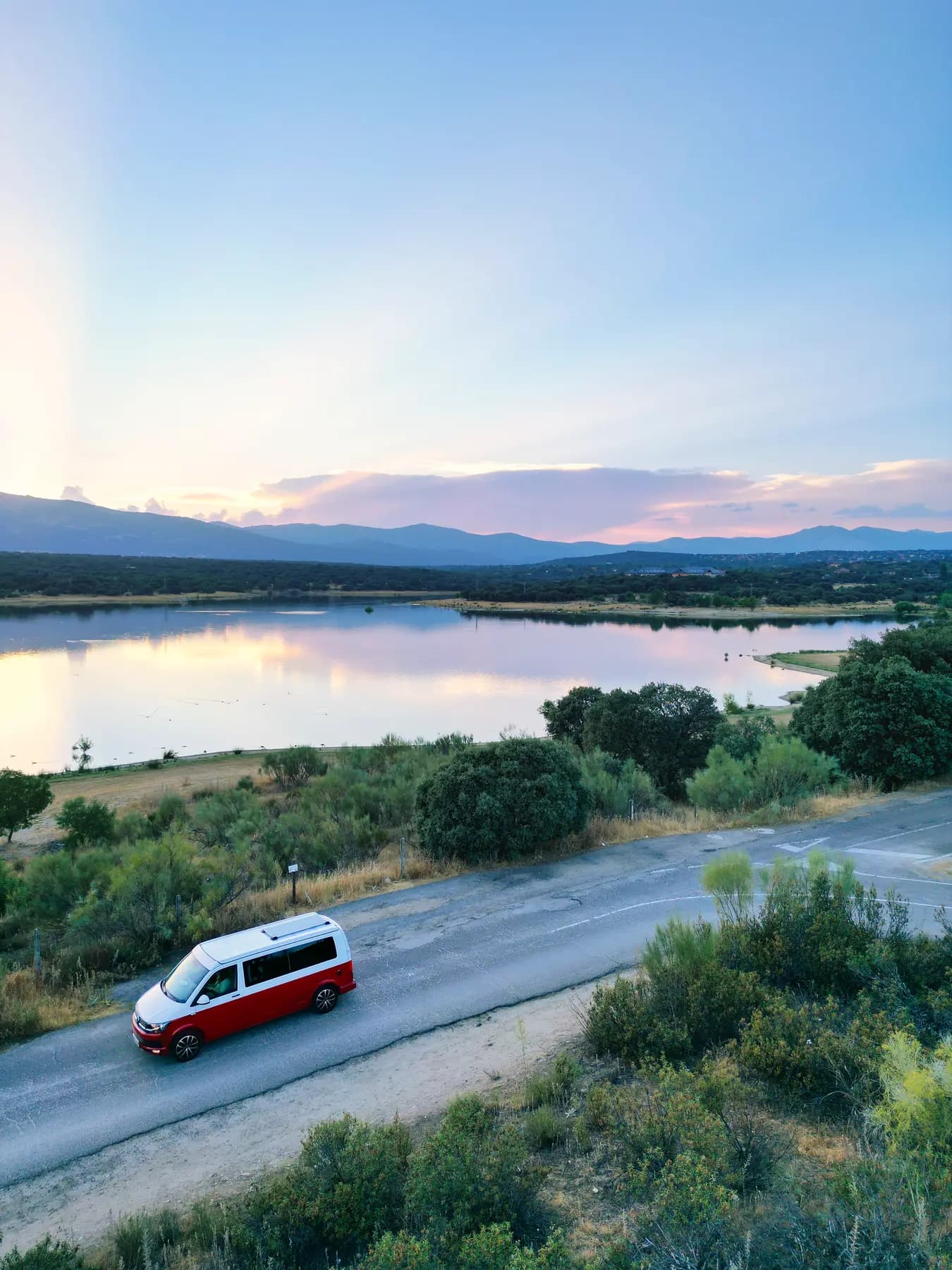
Can you sleep in a van in Spain? Yes, if you don't camp
Spending the night isn't the same as camping. That one distinction is what saves you from the fine. Here's what Spanish law actually says and how to find somewhere to sleep in peace, from the Pyrenees to Tarifa.
Every week we get the same WhatsApp message: "is sleeping in the campervan actually legal, or will someone move me on at seven in the morning?" Yes, it's legal. And no, nobody has to move you on. But between sleeping soundly and picking up a fine there's one detail almost nobody explains properly. Here it is.
The whole confusion comes from mixing up two words the law treats very differently: spending the night and camping. Get them muddled and you pay for it. Understand them and you'll sleep in incredible places without breaking a single rule.
Spending the night isn't camping (and that's the whole difference)
As far as the DGT is concerned, your campervan is a vehicle. As long as it behaves like a parked vehicle, it can spend the night anywhere parking is allowed. That's spending the night. It's legal. Parking is governed by the Spanish Reglamento General de Circulación (the national traffic regulations), which never distinguishes between being inside the vehicle or not: what counts is the state of the vehicle, not whether you are sleeping in it.
The problem starts when the van stops looking like a parked car and starts looking like a campsite. The traffic authority's criterion is easy to remember: you're parked as long as you don't take up more space than the vehicle itself and don't deploy anything outwards. Take any of that out, and you've moved into camping.
You're spending the night (legal wherever parking is allowed) if:
- The van stays within its own footprint, wheels on the ground, no blocks used to level or raise it.
- You haven't put out a table, chairs, an awning or legs.
- You don't have windows or skylights propped open with supports that stick out.
- No liquids or waste have been emptied outside.
You're camping (banned or heavily restricted across almost all of Spain) the moment you:
- Put out an awning, table, chairs or any outdoor furniture.
- Use levelling blocks or extend stabilising legs.
- Empty grey water or the chemical toilet anywhere other than a designated point.
Think of it this way: you can sleep, you just can't set up camp. Dinner with chairs and a tablecloth belongs in service areas and campsites. Inside the van, door closed, you're just another parked car.
What Spanish law actually says
There's no single national law that says "you can sleep here and not there." There's a national layer (traffic and coastal regulations) and then each region and town council tightens the rules its own way. That's why a perfect spot in Asturias might get you a hefty fine in the Balearics.
Three rules hold everywhere:
- Respect the signage. If a sign bans motorhome parking or overnight stops, there's no debate. Plenty of coastal towns put these up in high season.
- Stay out of protected areas. Nature parks, national parks and reserves ban overnight stays except in designated zones. And the fines here are among the steepest.
- Neither the beach nor the seafront. The Coastal Law and local bylaws leave overnight stops on sand and seafront promenades almost entirely off-limits. That photo of waking up with your feet in the water usually ends with a fine.
And how much does the mistake cost? Illegal camping fines run from around €100 to over €1,500, depending on the region. Spending the night properly, with nothing deployed and parked somewhere allowed, isn't sanctioned, no matter how many neighbours call it in. Knowing this gives you the confidence to stay put when you're in the right, and to move on when you're not.
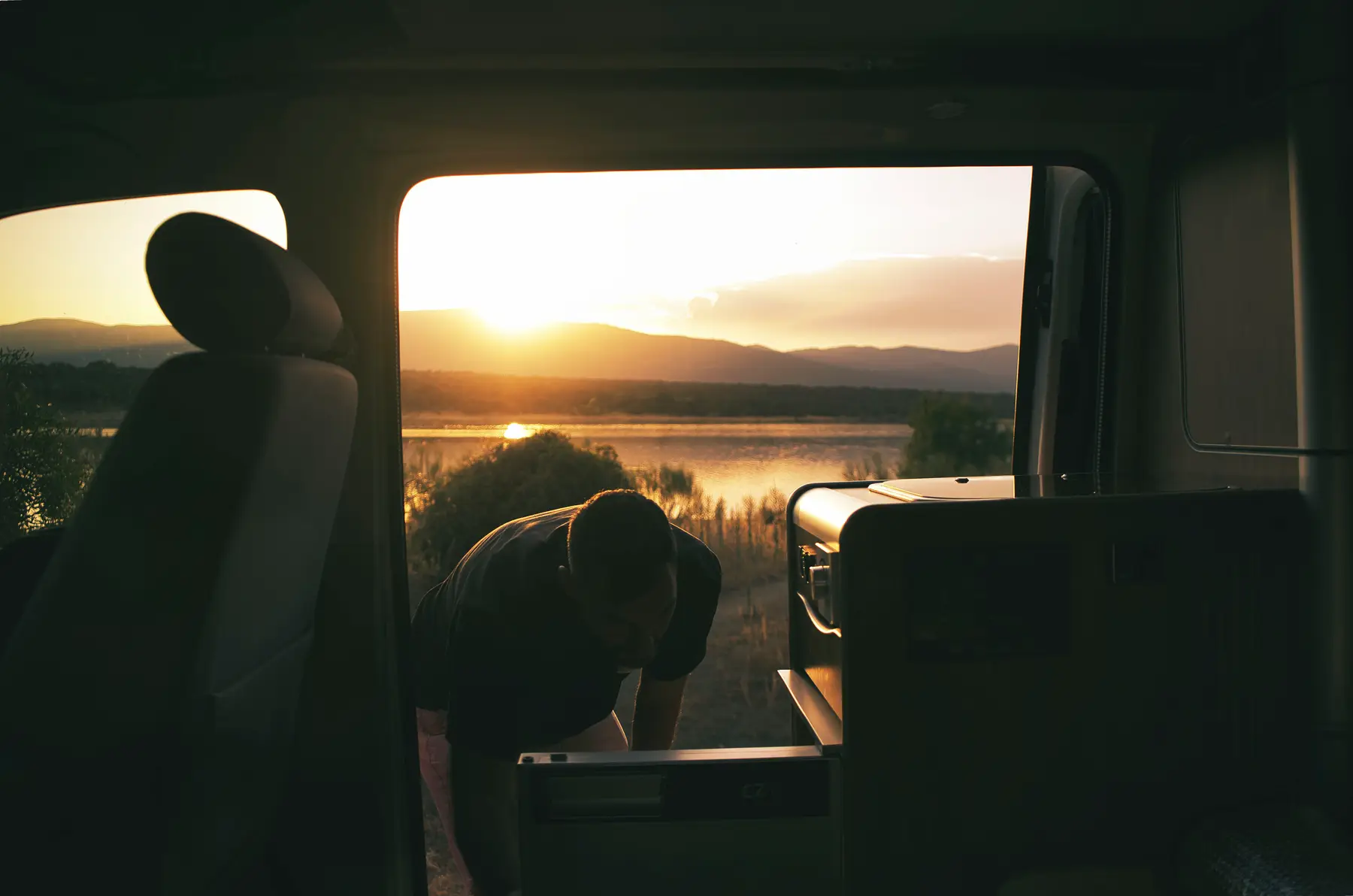
How to find a good spot to sleep (without risking it)
The good news: Spain is full of legal, beautiful places to spend the night. You just need to know how to find them.
Motorhome service areas
The gold standard. Some are public (many free or a few euros), some private, and they're built exactly for this: you park, you sleep, and you'll usually have water, waste disposal and sometimes electricity too. There are more of them every year, and many sit in gorgeous villages that build them specifically to attract travellers.
Campsites
Want a shower, some shade, and to set up a table and chairs without looking over your shoulder? Campsite. Here you really can camp properly. For a stopover halfway through a route, or a couple of days to switch off, they're worth every euro.
Permitted parking spots
A viewpoint car park, a quiet industrial estate, a wide street with no sign banning it. These work for spending the night as long as you behave like a car: arrive while it's still light, have dinner inside, pull down the blinds and go to sleep. Common sense. If a spot gives you a bad feeling, drive ten more minutes.
The apps everyone uses
No need to reinvent the wheel. Park4Night, Campercontact and dedicated motorhome area apps have mapped thousands of spots across Spain with photos, facilities and reviews from people who slept there yesterday. Filter by what you need, read the recent comments (key: they'll tell you if the spot is still permitted), and you can turn up with confidence.
The detail almost nobody mentions: leave no trace
All this freedom rests on one thing: not getting on the wrong side of neighbours and town councils. Every campervan that leaves rubbish behind, empties waste where it shouldn't, or throws a party is a fresh "no parking" sign for whoever comes after.
So the golden rule is boring and sacred: leave no sign you were ever there. Take your rubbish with you. Don't empty anything outside designated points. Keep the noise down. And if someone politely asks you to move, move. That's what keeps Spain open for campervan travel.
With beWinkle, you set off with your homework done
Our Winkles are homologated Volkswagen Transporter campervans, thoroughly checked before every trip, and fitted out to make spending the night legal and comfortable: water tanks, fridges, and, on models that carry it, an outdoor shower so you don't have to rely on local facilities. We set off from Madrid, so you've got mountains, the north coast, the east coast and the border all within a day's drive. No burning your first day on transit kilometres.
And because this is all about travelling with peace of mind, before you set off we'll answer your route questions over WhatsApp: where you'll usually find service areas, what to bring, what to avoid depending on the season. Person to person, because that's what a small team is for.
Take a look at the Winkles available and their kit, check the FAQ, and once you're clear, pick your dates and book. Where you sleep tomorrow is your call. We just provide the van, so it's legal, beautiful, and entirely yours.
This guide is for informational purposes and summarises the general framework in Spain as of 2026. Rules on overnight stops and camping vary between regions and municipalities: always check local signage and bylaws before spending the night.
Which campervan to choose
For a comfortable overnight stop with an outdoor shower and awning, the Winkle Caribe makes a great travel companion.
Related articles
Ready to sleep where the map turns to sea? Pick your dates and book →
Frequently asked questions
Is it legal to sleep inside a campervan in Spain?
Yes. Spending the night (sleeping inside the vehicle without deploying any camping gear) is legal anywhere you're allowed to park, because as far as the DGT is concerned you're still just a parked vehicle. What's restricted is camping: putting out a table, chairs, an awning, levelling blocks under the van, or emptying water anywhere other than a designated point.
What's the difference between spending the night and camping?
You're spending the night if your campervan takes up no more space than its own footprint and nothing sticks out beyond it: no open windows propped up with supports, no legs, awning, table, chairs or rubbish outside. The moment you deploy any of that, you've moved into camping territory, and wild camping is banned or heavily restricted across most of Spain.
Can I be fined for sleeping in my campervan?
Not for spending the night properly (nothing deployed, parked somewhere you're allowed to park). You can be fined for camping where it's banned, for ignoring a sign that prohibits overnight stops or motorhome parking, or for spending the night in a protected natural area or a coastal zone where it isn't allowed. Fines for illegal camping typically run from around €100 to over €1,500, depending on the region.
Where can I sleep in my campervan legally and without worry?
In motorhome service areas (public or private), at campsites, and in permitted parking spots without a sign banning overnight stays. Apps like Park4Night, Campercontact or dedicated motorhome area apps show you the spots with facilities and reviews from other travellers.
Can I spend the night on the beach or in a nature park?
Almost never. Spain's Coastal Law and most protected-area regulations ban overnight stays on beaches, dunes and nature parks, and many coastal towns explicitly prohibit it in high season with signage. Look for a nearby service area or campsite instead: you'll sleep better and avoid any nasty surprises.