
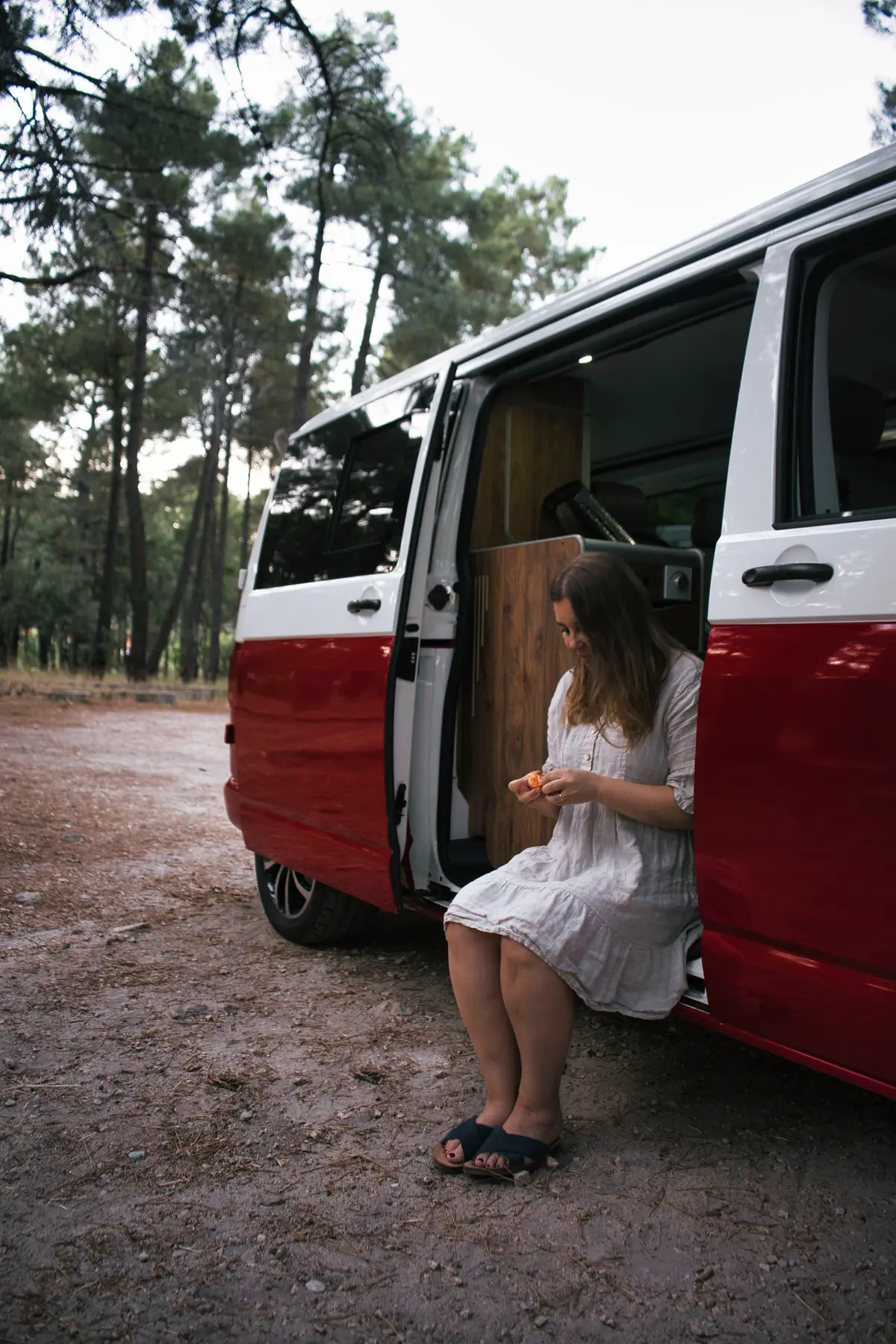
What to pack for your first campervan trip
The temptation is to pack half your house into the van. Big mistake. Space is what it is, and you'll thank yourself for every free inch. Here's what you actually use, and what sits in the cupboard the whole trip.
There's a pattern that repeats itself on nearly every first trip: the van leaves Madrid loaded up like you're moving house, and comes back with half a rucksack never opened. I get it, not knowing what you'll need is unsettling. But in a campervan, space is gold, and everything you pack "just in case" is one less bit of room to actually live comfortably.
So let's separate what you genuinely use from what just gathers dust under the seat.
The rule that changes everything: soft bag, not a suitcase
This guide is about what to pack; if it's also your first trip and you're wondering where you can sleep or how it drives, start with the practical guide to travelling by campervan.
Before the list, here's the tip people thank us for most: forget the rigid suitcase. There's no hotel-style boot in a van, there are gaps. A fabric bag squashes flat, tucks into any corner once you've emptied it, and disappears. A hard suitcase just sits there, taking up room, getting in the way the whole trip. One soft bag per person and you've got plenty of room.
Clothes: less than you think
You'll wear the same T-shirt twice and nothing bad will happen, I promise. For a week, pack clothes for three or four days and hand-wash something along the way.
What you can't skip is layers. Even in the height of summer, nights near a river, a reservoir or up in the mountains get considerably colder than you'd expect. A fleece or a decent jumper will save you on plenty of nights. And a light rain jacket, which takes up no space at all and is a lifesaver the day it rains. Footwear: trainers for walking and flip-flops for the shower and inside the van. Not much else.
Sleeping and cooking: just enough, and good enough
Here's an important point about how we work: at beWinkle, bedding, tableware and the kitchen kit are an extra, not standard. You decide when booking. If you're travelling from far away or want to pack light, it's easiest to add them and find everything ready and set up. If you've got your own sleeping bag and kit you like, bring them and skip the extra. Your call.
As for cooking, the campervan already comes with a fridge (and the taller models a freezer) and a gas hob. You just bring the first day's shopping and top up at supermarkets in the villages along the way. No need to pack a pantry for the whole week or lug around cool boxes: the van already keeps things cold.
Toiletries and the drawer of essentials
Basic toiletries in travel-size format and a couple of quick-dry towels, which weigh and take up half as much. And then there's the drawer of small things that make all the difference:
- A head torch or small torch. You'll use it every night.
- A phone charger with a long cable, because the socket is never where you want it.
- Bin bags. Obvious until you don't have any.
- An eye mask or something to block out the light, if you're the type the sun wakes up at seven.
- An old towel for mud, feet and improvised washes in the river.
What stays at home (and no one misses)
To wrap up, here's what's excess baggage on nearly every trip: the hairdryer (there's no socket for it in the van, and you won't need one), the iron, the "just in case we go somewhere smart" shoes, the tent (you're sleeping in the van, that's what it's for), and half the food you were going to pack. Travel light and you'll enjoy it twice as much.
One last note in case you're wondering: water, gas and electricity are already sorted in the van. If you're curious how it all works, we explain it simply in the campervan manual.
List sorted? Time to pick your dates
Once you've settled on a van, we hand over your Winkle checked over and ready to go, and we're on WhatsApp for any last-minute question about what to pack for your route and the season. Have a look at the Winkles and their extras and pick your dates and book. "I don't know what to pack" gets solved by travelling once.
Which campervan to choose
For a light first trip, the Winkle Adriático brings the essentials without overwhelming you.
Related articles
- Campervan manual: gas, water and electricity without losing your mind
- Winter in a campervan: how to sleep warm with the parking heater
Packing your bag? Pick your dates and book →
Frequently asked questions
Do I need to bring bedding and kitchenware for a rental campervan?
At beWinkle, bedding, tableware and the kitchen kit come as an extra, not as standard, so you decide when booking whether you want them included or you'd rather bring your own. If you're coming from abroad or want to travel light, adding them is the easy option; if you've got a sleeping bag and kit you like, skip it and bring your own.
What kind of bag is best for a campervan?
A soft bag, never a rigid suitcase. In a van, space is used up hole by hole, and a fabric bag squashes flat and tucks into any corner once you've emptied it. A hard suitcase just sits there taking up room for the whole trip with nothing you can do about it.
Do I need to bring a cool box or refrigerated items?
No, the campervan already has a fridge (and the taller models a freezer too). Bring fresh shopping for the first day and top up at supermarkets in the villages along the way. No need to lug cool boxes or stockpile food for the whole week.
What do people usually forget on their first campervan trip?
The classics: a torch or head torch, comfy shoes for inside the van, a long charging cable for your phone, bin bags, and something to block out the light if you're an early riser. And there's almost always a missing extra layer: even in summer, nights in the mountains or near water get colder than you'd expect.