
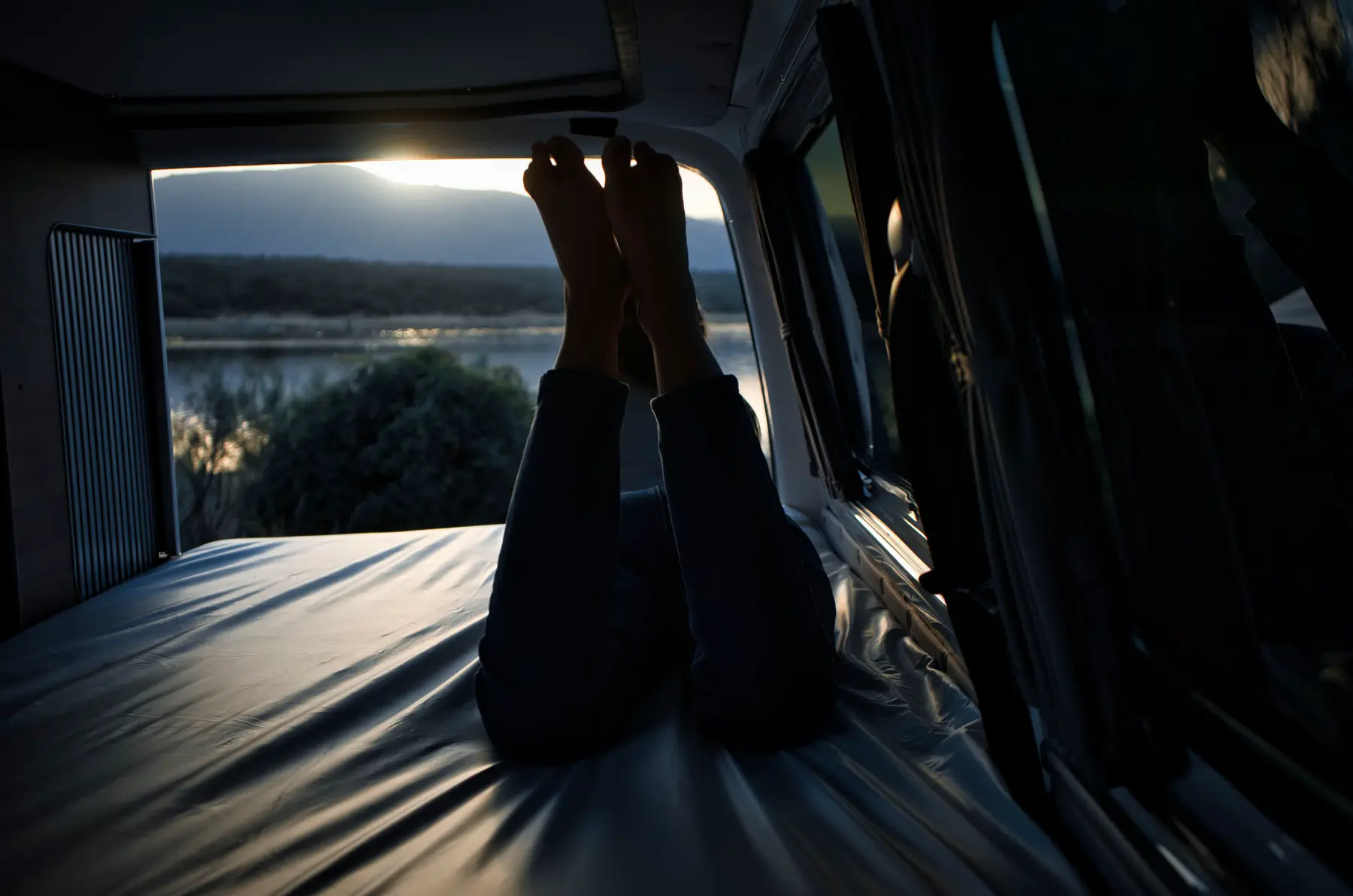
Winter in a campervan: how to sleep cosy
The campervan isn't just for summer. With a parking heater and a good sleeping bag, sleeping with snow outside and a comfortable cabin is one of the best feelings there is. We tell you how to do it properly, without getting cold or any nasty surprises.
There's a widespread and completely wrong idea out there: that campervans are a summer thing. That as soon as it turns cold, you park it up and forget about it. It's exactly the opposite. Sleeping in your campervan with snow falling outside, a comfortable cabin and a hot coffee in the morning is one of the best feelings this lifestyle gives you. The trick isn't putting up with the cold. The trick is not feeling it at all.
Here's how to do it properly.
The key piece: the parking heater
If you take one thing away from this, make it this. The parking heater is what turns winter in a campervan from a heroic plan into a comfortable one. It runs on diesel from the tank itself, genuinely heats the cabin, and uses hardly anything: from the battery, only what the fan needs. What does that mean in practice? That you can leave it on low all night and sleep just like at home, even if it's freezing outside.
In the fleet, it's fitted in the Báltico, the Índico and the Caribe. The Báltico and the Índico also have Kaiflex thermal insulation, which helps stop that heat escaping through the walls. That's why we recommend these Winkles for tackling winter routes with peace of mind.
The other front: condensation
Winter's silent enemy isn't the cold, it's condensation. When it's warm inside and there's humidity around (from breathing, from cooking) and the windows are cold, droplets form. If you don't do anything about it, you wake up to everything damp, which really isn't pleasant.
The solution is simple, if a little counterintuitive: ventilate a little even when it's cold. Cracking open a window or the skylight for a while, especially after cooking and when you wake up, refreshes the air and carries the moisture away. Don't fully cover the vents. It feels like you'll get cold by opening up, but with the heater on low you won't even notice, and the van wakes up dry.
Sleeping warm: layers, in bed too
The heater does the heavy lifting, but help it along. A decent sleeping bag or proper duvet makes all the difference, and sleeping with a thin thermal layer on is the trick seasoned winter travellers swear by. A thin beanie if you feel the cold badly, and thick socks. Same logic as your clothing: layers, in bed too.
And a detail that's much appreciated: the taller models have hot water. A warm shower after a day out in the winter mountains, with the cold still in your bones, is one of those small things that makes the trip.
Living inside when the days get shorter
In winter it gets dark early, so you spend more time inside. This is where a well-thought-out campervan really shows its worth. The swivel cab seats and the interior table turn the cabin into a little lounge for a relaxed dinner, a game of cards or something to watch. With warm LED lighting and the heater humming away, those long evening hours stop being a problem and become one of the best parts of the day.
If you've got the bug for the technical details of the heater and the other systems, we break it all down simply in the campervan manual.
The reward: Spain in winter, almost all to yourself
The best part of all this is what's on the other side of the window. Snow-capped mountains with no queues, villages without tourists, reservoirs steaming at dawn, low-season prices. Spain in winter is a different country, quieter and more yours, and the campervan is the best way to explore it without giving up sleeping warm.
Check which Winkles work best for the cold in their specs and kit, ask us on WhatsApp anything you need for your winter route, and pick your dates and book. The cold outside, with a well-equipped campervan, is just part of the scenery.
Which campervan to choose
For the cold, the Winkle Báltico is the only one with a parking heater: it keeps the interior warm without the engine running.
Related articles
- What to pack (and what not to) for your first campervan trip
- Campervan manual: gas, water and electricity without losing your mind
Planning a winter route? Pick your dates and book →
Frequently asked questions
Is it cold sleeping in a campervan in winter?
Not with a parking heater. It's a heater that runs on diesel from the tank and warms the cabin while using very little battery, so you can leave it on low all night and sleep comfortably even if it's freezing outside. The Báltico, the Índico and the Caribe all have one fitted.
Does the parking heater use a lot of battery or diesel?
Very little. It draws diesel from the vehicle's tank and uses a minimal amount, and from the battery it only uses what the fan needs. A whole night with the heater on low barely makes a dent in the tank, and it keeps you sleeping warm.
How do I avoid condensation inside the campervan in winter?
Ventilate a little even when it's cold: open a window slightly or crack open the skylight for a while, especially after cooking or when you wake up. Condensation forms when warm, humid air inside meets cold glass, so refreshing the air and not fully covering the vents keeps it under control.
Which beWinkle models are best for winter?
The Báltico and the Índico, thanks to their Kaiflex thermal insulation, parking heater, hot water and swivel seats for living inside. The Caribe also has a heater. These are the Winkles designed to be enjoyed all year round, not just in summer.