
The Ribeira Sacra by campervan
Four days from Madrid down to the Sil canyon: Monforte de Lemos, the catamaran, the terraced vineyards and the monastery of Santo Estevo.
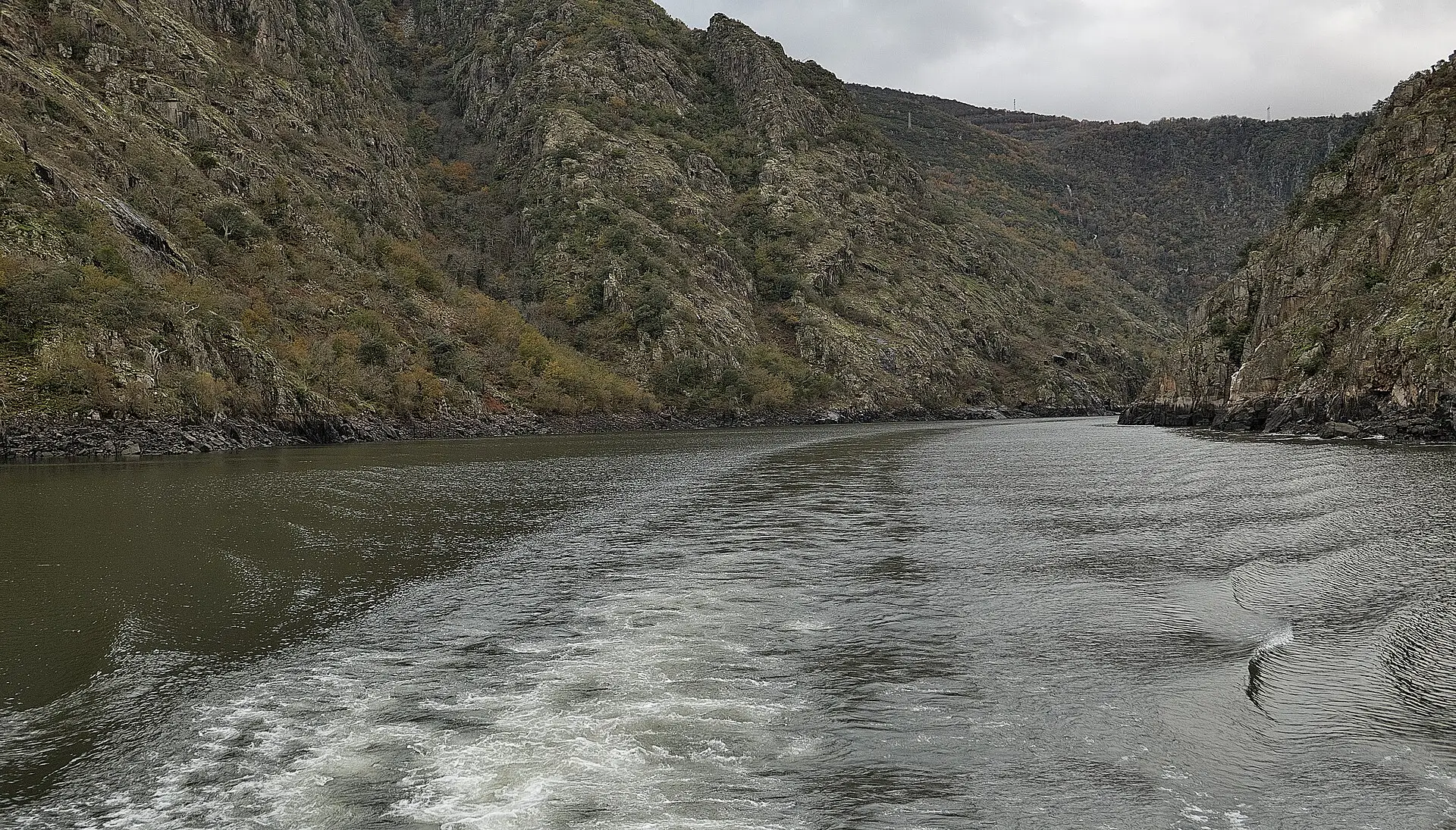
The Ribeira Sacra is inland Galicia: the Galicia with no sea, just a river that has carved itself a canyon more than 500 metres deep, with slopes planted with terraced vines that drop right down to the water. The river is the Sil, and the gash it has opened near its meeting with the Miño is the heart of a region that UNESCO named a World Heritage Site in 2026. It sounds far away, and it is a little: around six hours from Madrid. That is why it is one for a campervan, with nights in between, not a there-and-back dash. This route is four days. One to drive up to Monforte de Lemos, the main town; two to drop into the canyon along its two banks, the catamaran and the vineyards on the Lugo side and the viewpoints and the monastery of Santo Estevo on the Ourense side; and the fourth to head home. Mountain roads, small villages and wine everywhere, which here you taste at the stop and never at the wheel.
- Days
- 3Lugo · Ourense
- Route in the area
- 46 km+ 1,042 km there and back from Plaza de Castilla
- Behind the wheel
- ≈ 1 h 15 minapprox., without stops
- Best time
- Mayo y septiembreFrom spring to early autumn; September and October are the grape harvest
Roads: De montaña, con curvas cerradas y tramos estrechos al bajar al cañón. Con calma, se hacen bien en furgo.
Best Winkle: Índico · well balanced, with a shower and heater for the cool valley nights
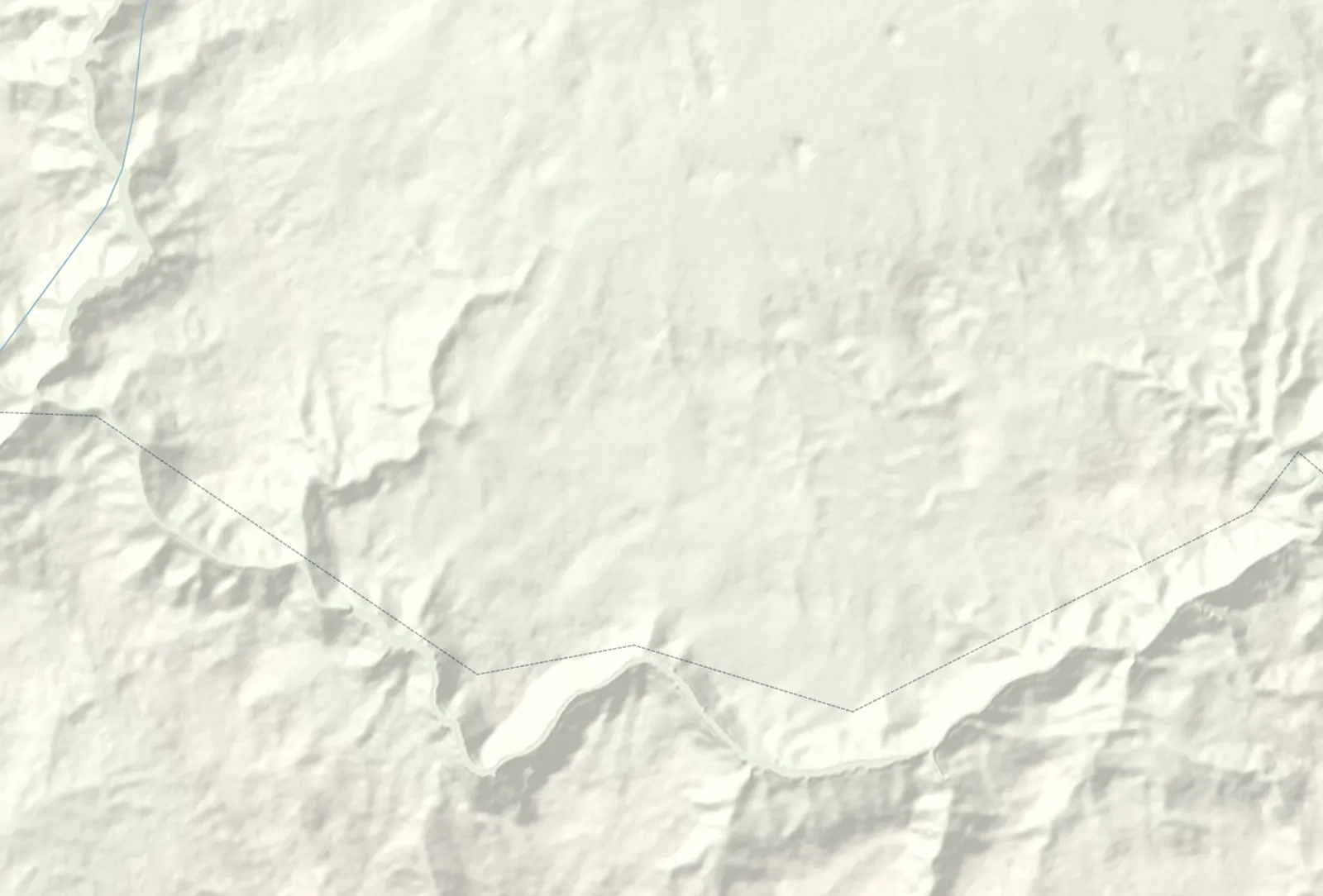 RIBEIRA SACRASIL CANYONLUGOOURENSEDoade pier (Sil catamaran)Os Balcóns de Madrid viewpoint1Monforte de Lemos2Doade (Sober)3Parada de Sil
- 1 Monforte de Lemos
- 2 Doade (Sober)
- 3 Parada de Sil
- Doade pier (Sil catamaran)
- Os Balcóns de Madrid viewpoint
From Plaza de Castilla: 521 km · ≈ 6 h 10 min Back to Plaza de Castilla: 521 km · ≈ 6 h 15 min
© OpenStreetMap contributors (trazado: OSRM) · Natural Earth · relieve: AWS Terrain TilesDay by day
From Madrid to Monforte de Lemos
Madrid (Plaza de Castilla)1Monforte de Lemos 521 km ≈ 6 h 10 min
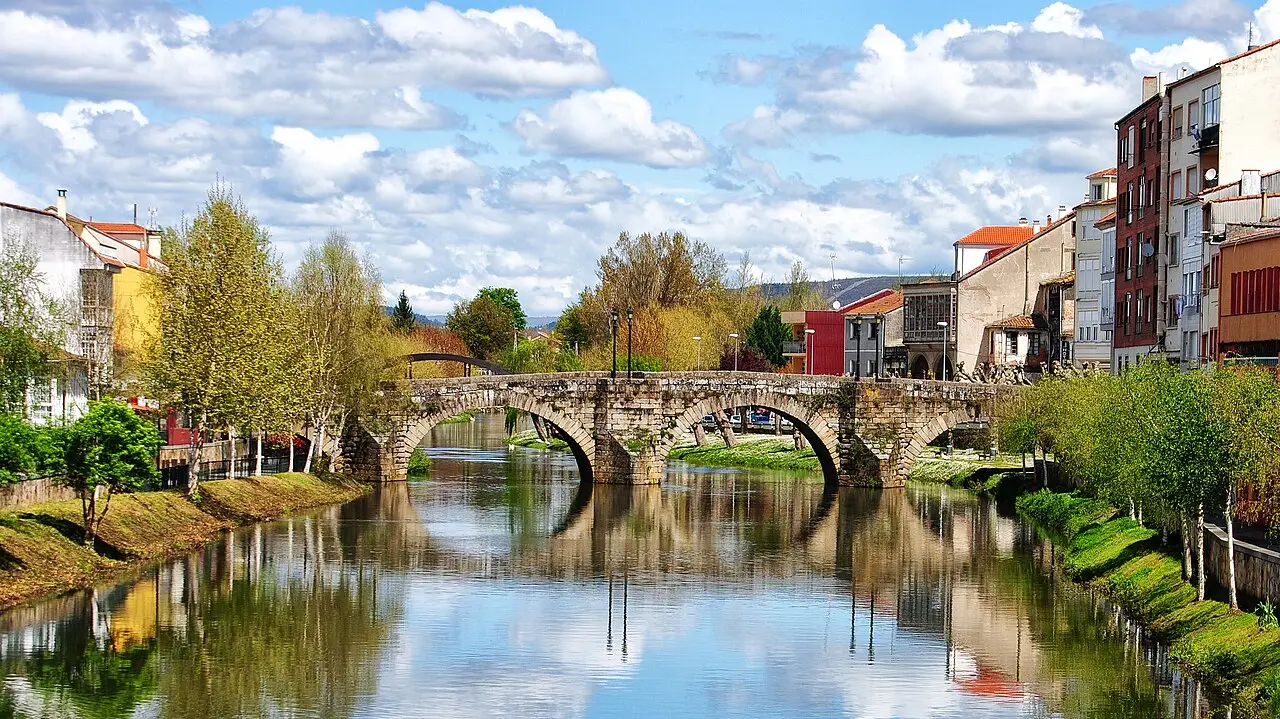
The old bridge over the river Cabe, in Monforte de Lemos.Photo: Cándido Correa · CC BY-SA 4.0 The first day is the driving one. You head up the A-6 into Galicia and drop down to Monforte de Lemos, the gateway to the Ribeira Sacra and the natural place for your first night. It is no mere stopover: Monforte was the seat of the County of Lemos, one of the most powerful in Spain in the 16th and 17th centuries, and it shows in what they left built. If you arrive with daylight, climb San Vicente hill. At the top stand the Torre da Homenaxe and the monastery, and from the wall you look down on the old town and the valley of the river Cabe at your feet. Below sits the College of Nuestra Señora de la Antigua, so large for the size of the town that it is nicknamed the Galician Escorial. It is the opening act: it tells you this is no forgotten corner, but a region that once had plenty of money and plenty of stone.
What to see
- The Torre da Homenaxe above the old town
- The Jesuit college at sunset
- The old bridge over the river Cabe
Where to sleepIn Monforte or nearby.
Heads upThis is the long driving day. If you leave Madrid late, split the climb in two and come into the region in the morning.
The Sil canyon from Doade, catamaran and vineyards
1Monforte de Lemos2Doade (Sober) 15 km ≈ 25 min
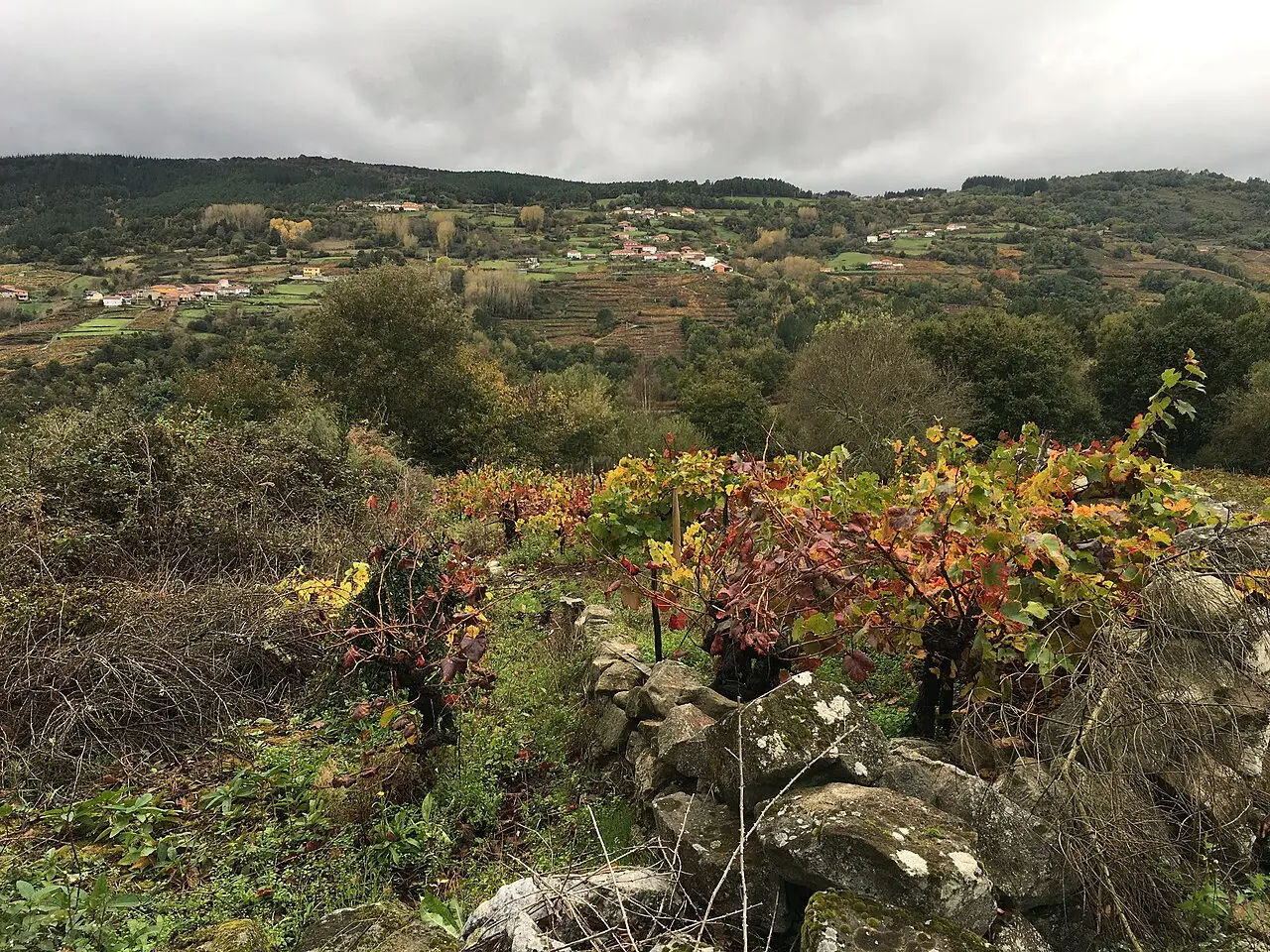
The terraced vineyards of the Sil canyon, in the Ribeira Sacra.Photo: Tanja Freibott · CC BY-SA 4.0 From Monforte you drop into the canyon on the Lugo side, the one around Sober and Doade. This is the picture-postcard face of the Ribeira Sacra: slopes so steep that the vines are planted on stone terraces, the socalcos, narrow steps climbing up from the river that have to be harvested by hand and almost in mid-air. This is the Amandi sub-zone, one of the cradles of the region's wine, and the landscape in front of you is the one that earned the World Heritage listing. The best way to grasp the size of the gorge is to get inside it. From the Doade pier a tourist catamaran runs along the canyon hard against the walls, with drops of more than 500 metres and gradients that in places are almost vertical. You see the river still and dammed, and the vines hanging above. Up on the rim there are viewpoints you reach on a short walk. Between one and the next, a stop to try a local Mencía: just not for whoever is driving afterwards, who leaves it for dinner.
What to see
- The terraced vineyards tumbling to the river
- The canyon from the catamaran
- A viewpoint over the bend in the Sil
Where to sleepAround Doade or Sober.
Heads upThe catamaran runs with a booking and in blocks through the day. Check times on the tourism website before you go down, as signal in the canyon comes and goes.
Os Balcóns de Madrid and the monastery of Santo Estevo
2Doade (Sober)3Parada de Sil 31 km ≈ 50 min
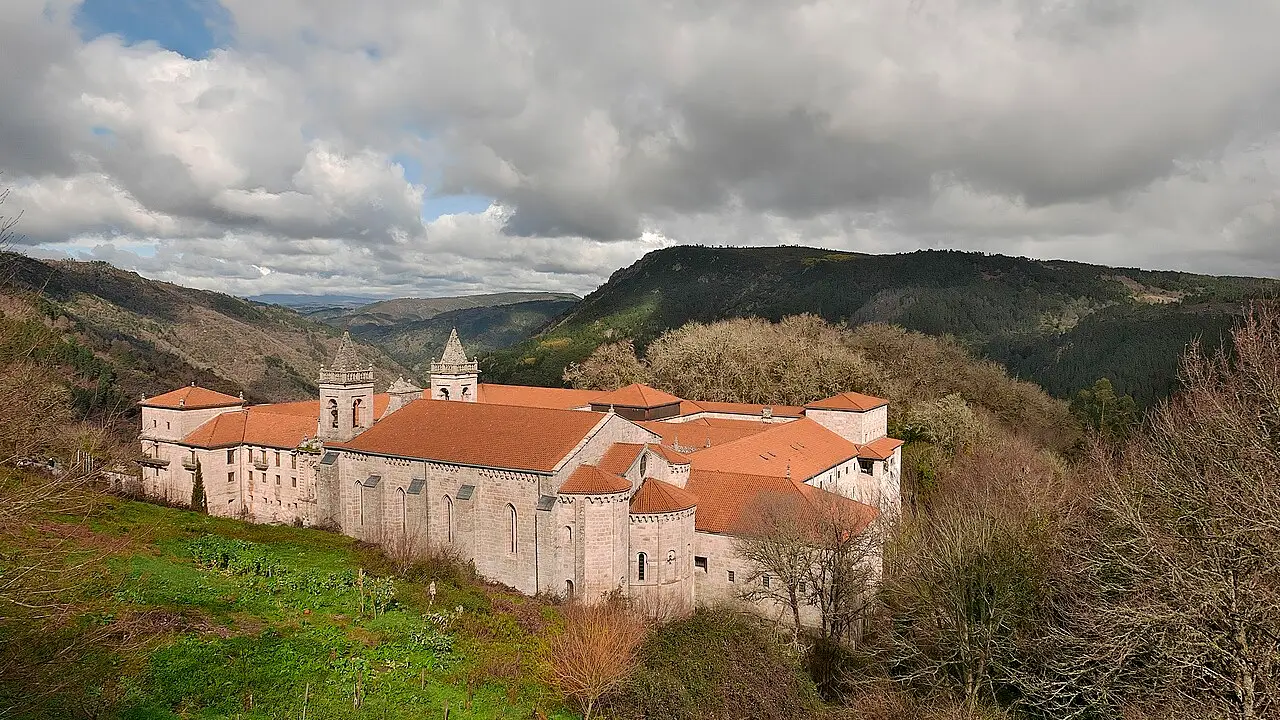
The monastery of Santo Estevo de Ribas de Sil, now a Parador.Photo: Jl FilpoC · CC BY-SA 4.0 On the third day you cross to the other bank, the Ourense one, through Parada de Sil and Nogueira de Ramuín. The morning stop is the Os Balcóns de Madrid viewpoint, a tongue of rock leaning out over the canyon from which you watch the Sil make a tight bend far below. There is nothing to do but arrive and look: it is one of those places where people fall quiet for a while. Then the monastery of Santo Estevo de Ribas de Sil, tucked into the woods above the river. It is Benedictine, with origins earlier than the 10th century, was one of the most important in Galicia and today works as a Parador, so you can walk its three cloisters even if you are not staying. Between one place and the next, slow road through chestnuts and oaks. Do not rush: here the journey is the road, not arriving.
What to see
- The canyon from Os Balcóns de Madrid
- The three cloisters of Santo Estevo
- The riverside woods on the way to the monastery
Where to sleepNear Parada de Sil or Luíntra.
Heads upThe roads dropping into the canyon are narrow with little room to pass. Better in daylight and without rushing.
Back to Plaza de Castilla: Parada de Sil → Plaza de Castilla · 521 km · ≈ 6 h 15 min · the next day, back to Madrid; or stretch it along Monforte and the Miño if you stay longer
Before you set off
- Fill up with water and diesel in Monforte: inside the canyon there are few places to refuel.
- Book the Sil catamaran ahead in spring and summer.
- Comfortable shoes: nearly every viewpoint means a short walk.
- Whoever drives does not taste. The local wine goes at the stop, never at the wheel.
- Pack a jacket even in summer: the valley gets cool at night.
You do not see the Sil until it is almost on top of you. You are driving a road through oaks, with no hint that anything lies alongside, and then the woods open and a gash half a kilometre deep appears, with the river still at the bottom and the vines hanging off the walls. That is the Ribeira Sacra, and it is why the trip is worth it even with Madrid around six hours away.
The region sits along the banks of the Sil and the Miño, in southern Lugo and northern Ourense, and its main town is Monforte de Lemos. In 2026 UNESCO named it a World Heritage Site for that landscape of water and vineyard, and before that it was already a Biosphere Reserve. It is a place to take slowly: this guide plans four days, with Monforte as a base on the first and the Sil canyon split in two, one bank per day.
When to go
Spring and early autumn are best. In May and June the valley is green and the temperatures behave; in September and October the harvest comes in, and watching the grapes picked off those impossible terraces is part of the trip. Summer works, but the heat builds and the canyon holds the temperature like a pot, so set off early for the viewpoints.
There is another reason to come outside July and August, and it is ours. At beWinkle summer takes most of the bookings, and the months around it stay much quieter: in the shoulder season you will find a van free on almost any weekend, and the Ribeira Sacra wants exactly that, the viewpoints to yourself and no queue for the catamaran. The typical beWinkle trip runs around four days, which is exactly how long this route lasts. Once you know your dates, check availability and book early.
Where to sleep and refuel
Monforte de Lemos is the best base for the first night: it has aires and campsites nearby, supermarkets and petrol stations, which are scarce inside the canyon. Fill the tank and the fridge there before you drop down. On the Lugo side, Sober and Doade have places to stay and quiet spots for the night; on the Ourense side, Parada de Sil and Luíntra do the same job.
Two campervan notes. One: parking and overnighting are regulated village by village and change, so use signposted aires and campsites and ask locally before you stay, because the last thing you want is a fine halfway through the trip. And two: the roads to the bottom of the canyon are narrow and full of bends, the kind you take in second gear. Nothing a campervan cannot handle easily if you take it calmly; if it is your first time behind the wheel of one, our help centre walks you through how it works before you leave.
What to eat along the way
Here you eat Galician and drink local. The wine of the Ribeira Sacra is the thread: light, fresh Mencía reds, Godello whites, from small wineries clinging to the slopes. Many open for visits and tastings by appointment, and it is one of the best plans in the area, always with the rule that whoever drives afterwards does not taste. To go with it, empanada, pulpo á feira, meat and cheeses from the valleys. Buy in Monforte or at the village markets and have dinner in the van with the canyon beside you: hard to beat.
If you have more days
This route stays in the Sil canyon, which is the part you cannot miss, but the Ribeira Sacra carries on along the Miño. With one extra day you can head over to Chantada and Belesar, where the vine terraces fall over the other river, and round it off with the inland monasteries, like Santo Estevo de Ribas de Sil itself if you ran out of time. And if you fancy a complete change of scene, from here it is an easy drop down to the coast: the jump to the Galicia of lighthouses and rías is a natural one.
Related routes
- Galicia by campervan: a 9-day route from Madrid
- Western Asturias and the Lugo coast by campervan: 5 days
- Campervan routes: eleven complete itineraries from Madrid
Before you book
The Ribeira Sacra is pure campervan country: you sleep next to the river, switch banks whenever you feel like it and depend on no hotel timetable. For these valley nights, with a heater and shower to hand, the Índico has you covered, though any of the four Winkles will take you. When you have your dates, book online and we will see you at Plaza de Castilla to set off.
Frequently asked questions
How long does it take from Madrid to the Ribeira Sacra by campervan?
The Ribeira Sacra is around 520 km from Madrid. By campervan that is close to six hours up to Monforte de Lemos, its main town and the gateway to the region. That is why the Ribeira Sacra is best done with nights in between rather than as a there-and-back trip: three or four days is the right length.
How many days do you need to see the Ribeira Sacra?
Four days works well: one to drive up from Madrid to Monforte de Lemos, two to drop into the Sil canyon along its two banks (catamaran and vineyards on one side, viewpoints and the monastery of Santo Estevo on the other) and the fourth to head back. With one extra day you can carry on along the Miño.
Can you go along the Sil canyon by boat?
Yes. A tourist catamaran runs along the Sil canyon close to its walls, and one of the departures is from the Doade pier, in Sober. It is worth booking ahead in spring and summer and checking times on the official tourism website, because they run in blocks through the day and change with the season.
When is the best time to go to the Ribeira Sacra by campervan?
Spring and early autumn are best in the Ribeira Sacra: a green valley, mild temperatures and, in September and October, the grape harvest under way. Summer gets hot at the bottom of the canyon, so set off early for the viewpoints if you go in July or August.
Is it hard to drive through the Sil canyon in a campervan?
The roads dropping into the Sil canyon are narrow, with tight bends and little room to pass, but there is nothing technically difficult about them. Taken calmly and in daylight they are fine in a campervan. If it is your first time with one, the trick is to stay in a low gear and take your time.