
The Maestrazgo by campervan: stone villages between Teruel and Castellón
Cantavieja on its crag, Mirambel walled all the way round and Morella crowned by its castle. A 4-day campervan route from Madrid through the Maestrazgo of Teruel and Castellón: what to see, when to go and where to park and sleep.
The Maestrazgo is one of those regions almost nobody puts on a campervan shortlist. People think of the Picos, Galicia, the Basque coast, and leave out a slice of mountain straddling Teruel and Castellón where the villages cling to the rock and there is barely half an hour of bends between one and the next. Cantavieja hanging off a crag, Mirambel walled all the way round, Morella with its castle right at the top. For a campervan it makes complete sense: short hops, quiet roads and plenty of room to pull over and eat in the open.
The route fits into four days, which is roughly how long a typical beWinkle trip lasts. One to get there and settle into Cantavieja, another for the villages of the Teruel Maestrazgo, a third to cross into Castellón and climb up to Morella, and the last to take in Ares del Maestre before heading back. Below you have the map with the real track, the kilometres for each day and what you see between one point and the next.
- Days
- 4Maestrazgo · Teruel · Castellón
- Route in the area
- 148 km+ 880 km there and back from Plaza de Castilla
- Behind the wheel
- ≈ 2 h 45 minapprox., without stops
- Best time
- May, June and SeptemberSpring and early autumn. In summer, a sleeping bag for the night.
Roads: Motorway as far as Teruel and then winding mountain roads, narrow in places. Taken calmly they are fine in a campervan. You do not drive into the old centres of Cantavieja and Morella: park outside and walk up.
Best Winkle: Índico · it has a parking heater, and in the Maestrazgo the nights bite even in summer
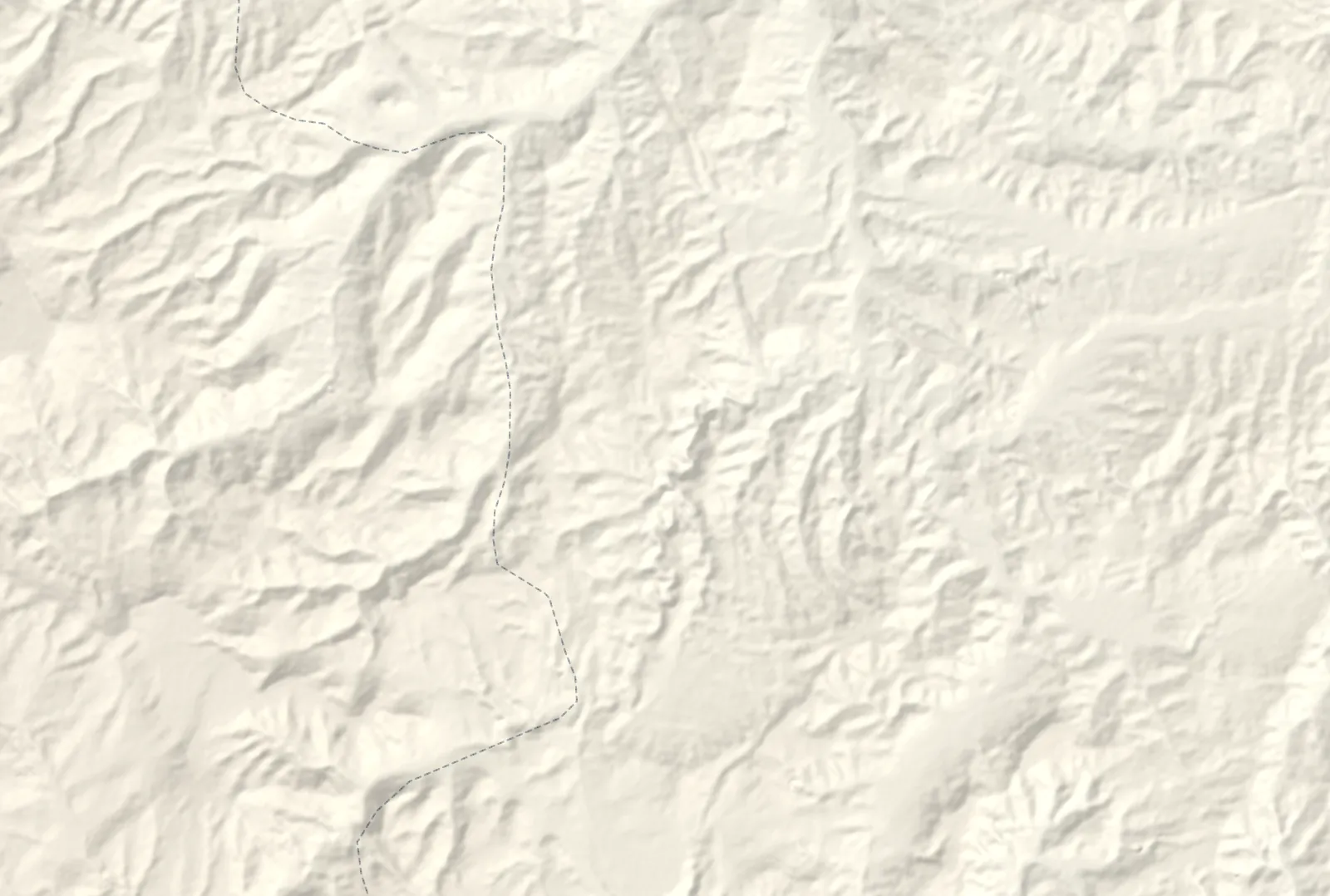 MAESTRAZGOTERUELCASTELLÓN1Cantavieja2Mirambel3La Iglesuela del Cid4Morella5Ares del Maestre
- 1 Cantavieja
- 2 Mirambel
- 3 La Iglesuela del Cid
- 4 Morella
- 5 Ares del Maestre
From Plaza de Castilla: 385 km · ≈ 5 h 10 min Back to Plaza de Castilla: 495 km · ≈ 5 h 40 min
© OpenStreetMap contributors (trazado: OSRM) · Natural Earth · relieve: AWS Terrain TilesDay by day
From Madrid to Cantavieja
Madrid (Plaza de Castilla)1Cantavieja 385 km ≈ 5 h 10 min
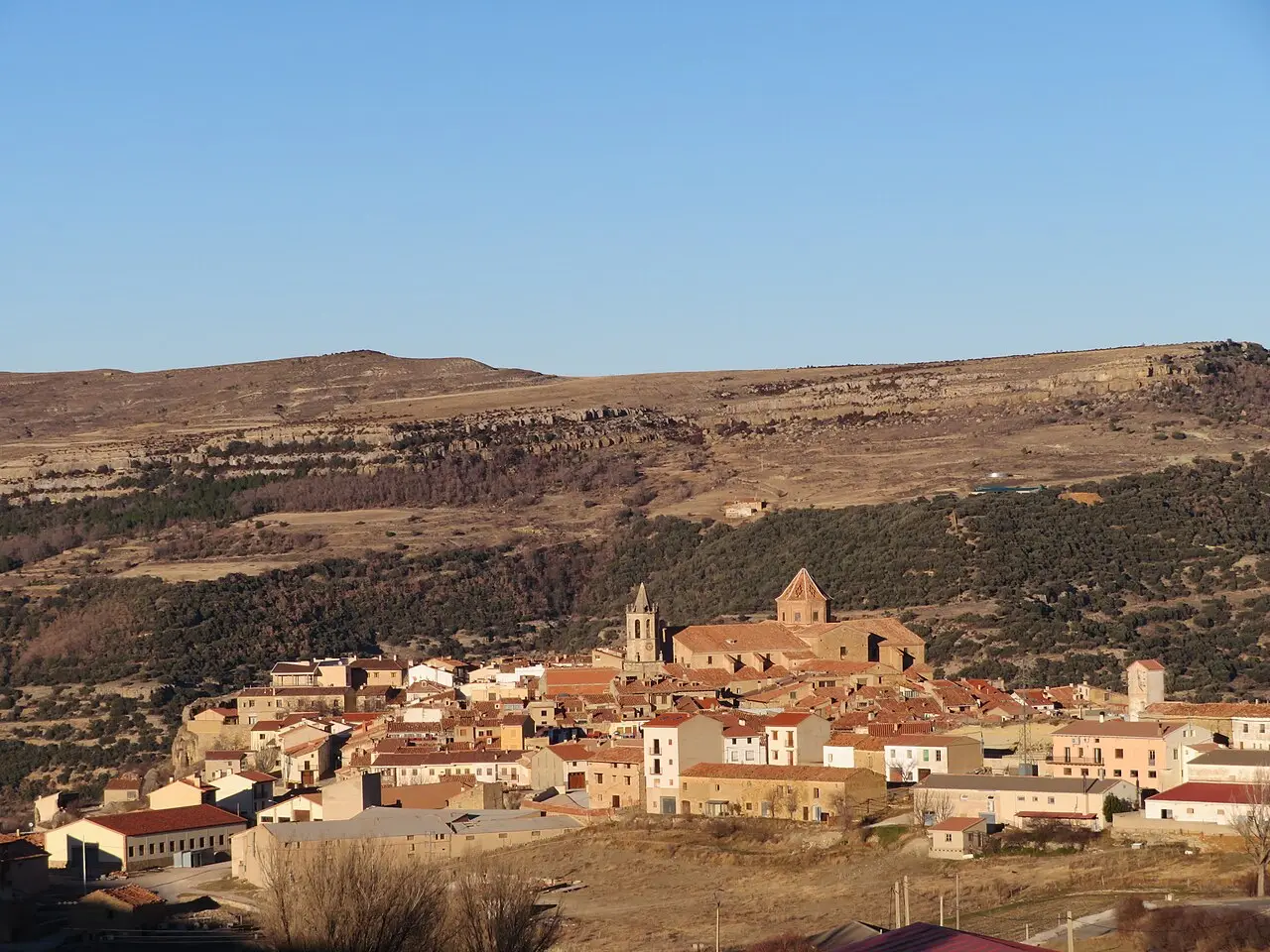
Cantavieja, perched high over the Maestrazgo.Photo: Juan Emilio Prades Bel · CC BY 4.0 You leave Plaza de Castilla and head towards Teruel; from there, mountain road up into the Maestrazgo sierra. This is the day for clocking up the kilometres, so the comfortable thing is to set off after lunch and reach Cantavieja with the last of the light. You see the village coming from a long way off, perched up high.
Cantavieja sits at more than 1,200 metres and is the traditional capital of the Alto Maestrazgo. The old town, medieval in layout, has been a listed historic site since 1981, and since 2014 it has been one of the most beautiful villages in Spain. It stands on a crag that forms almost a triangle, with the houses packed tight and the arcaded square in the middle. It is home to fewer than a thousand people.
Tonight you do not need to see anything else. Leave the van in the car park at the entrance, take a short stroll round the square at dusk and save the village for tomorrow, with daylight and fresh legs.
What to see
- The arrival at Cantavieja on its crag
- The arcaded town-hall square
- A first stroll at dusk
Where to sleepAround Cantavieja, in the area or car park set aside at the entrance. You sleep here two nights.
Heads upIf you leave Madrid late, it is a lot of driving and the last stretch is mountain road: better to split the journey or set off early than arrive in the dark.
Mirambel and La Iglesuela del Cid
1CantaviejaLa Iglesuela del Cid and back 77 km ≈ 1 h 25 min
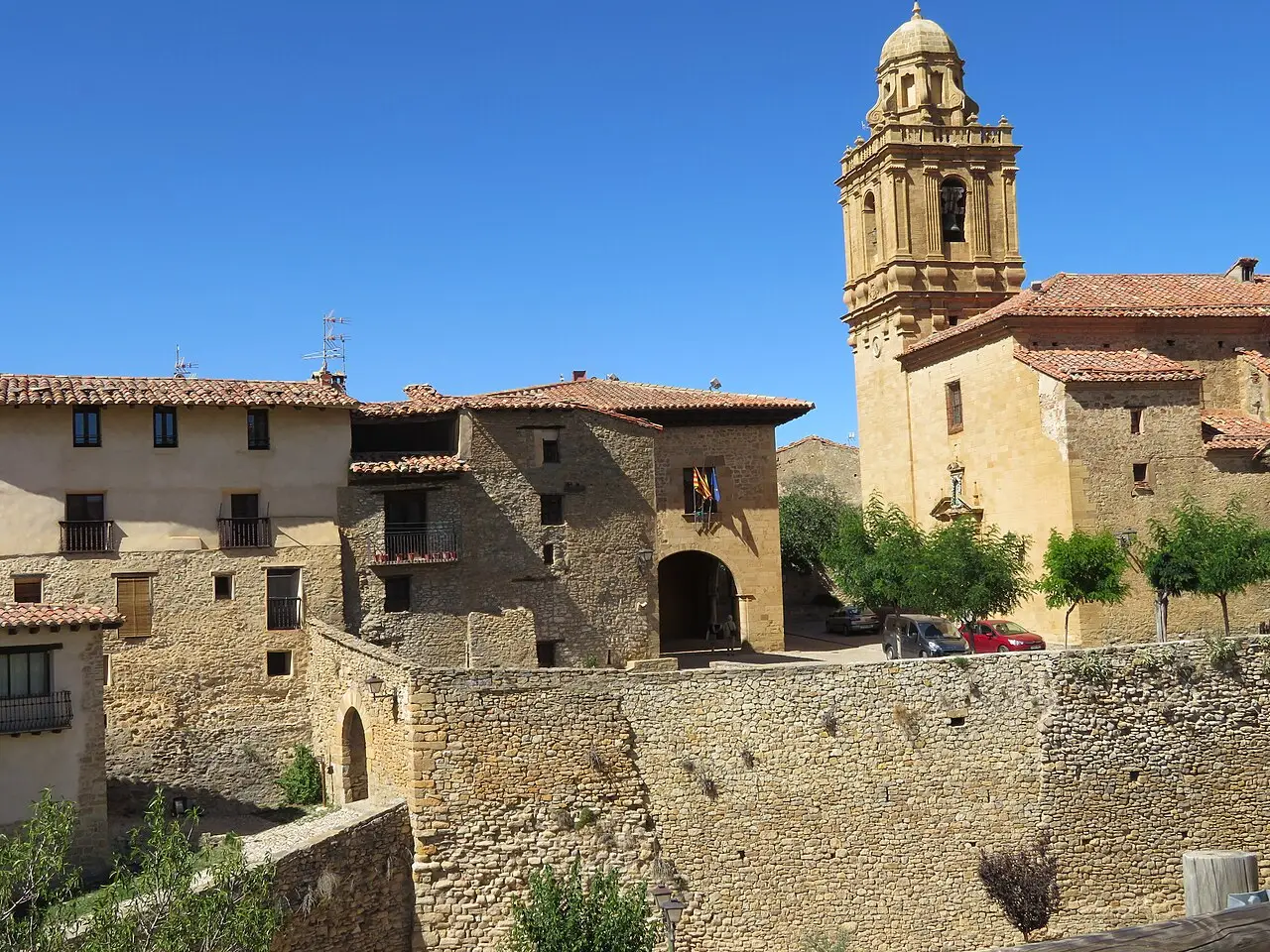
Mirambel, with the rampart closing off the village.Photo: Juan Emilio Prades Bel · CC BY 4.0 The morning is for Cantavieja on foot, and it is worth taking slowly. It has one of those pasts you would not expect: during the Carlist Wars, General Ramón Cabrera, the so-called Tiger of the Maestrazgo, made it in 1836 the capital of the General Command of the Maestrazgo, with an officers' academy and even a cannon foundry. That whole story is told in the Carlist Wars Museum, in a 17th-century house on Calle Mayor.
In the afternoon, van and a short hop to Mirambel. It is a village of just over a hundred people, walled all the way round by its medieval rampart, with two surviving towers from the ones the Templars built. Its old town was listed as a cultural monument in 1980 and the following year won the Europa Nostra Gold Medal for its restoration; it is also one of the most beautiful villages in Spain. Look out for the Portal de las Monjas, with its plaster lattices.
On the way back, if you still have the appetite and the light, stop at La Iglesuela del Cid, a stone's throw away. It is another stone village with grand manor houses that was, like Cantavieja and Mirambel, a commandery of the Knights of St John. The three together are the heart of the Teruel Maestrazgo.
What to see
- The medieval centre of Cantavieja and its square
- The Carlist Wars Museum
- Walled Mirambel and the Portal de las Monjas
- The manor houses of La Iglesuela del Cid
Where to sleepBack in Cantavieja again.
Heads upThese are villages of narrow, steep streets: comfy shoes, and the van always in the car parks at the entrance, never inside the old centre.
Cantavieja to Morella
1Cantavieja4Morella 41 km ≈ 45 min
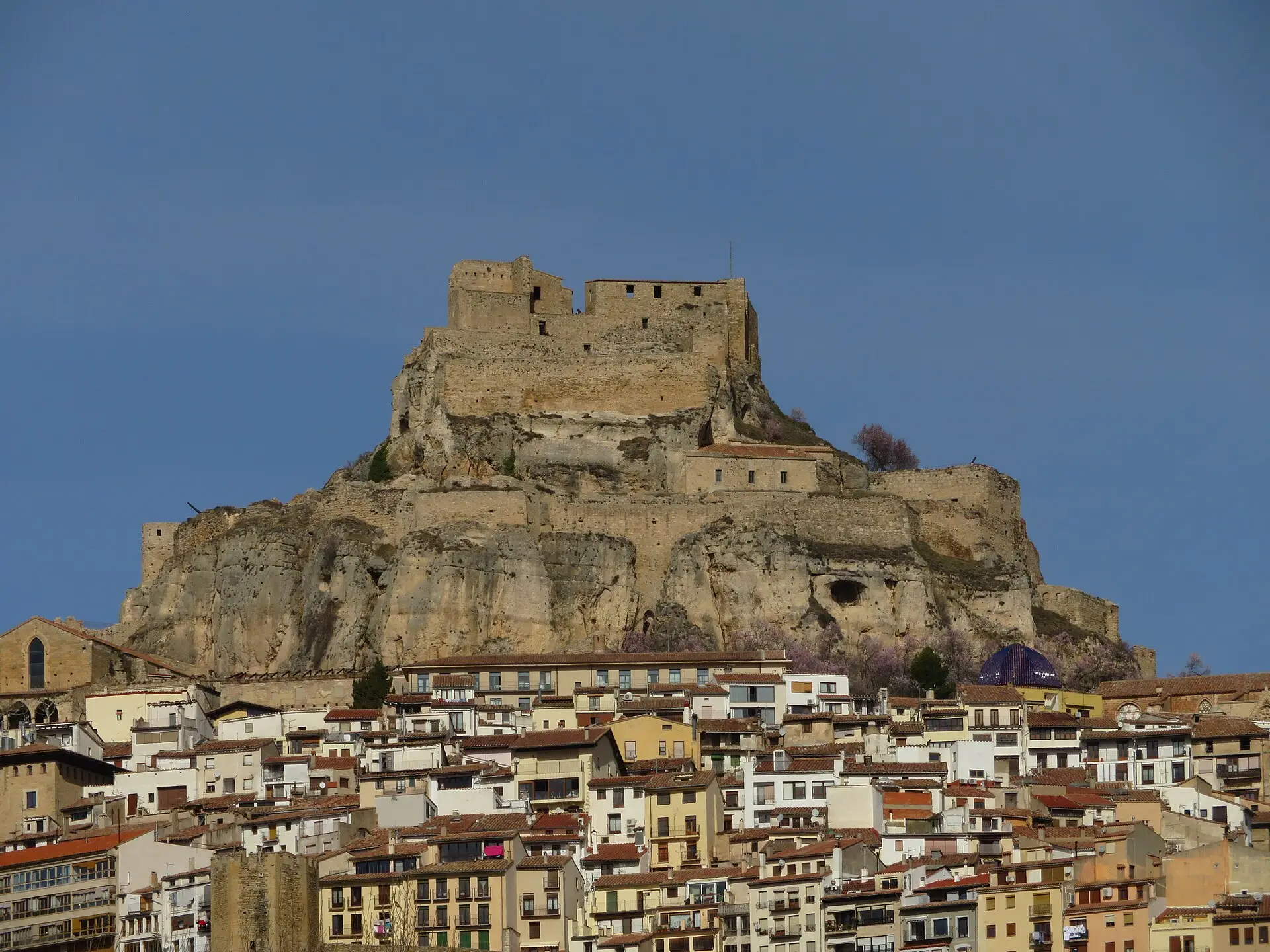
Morella castle, on the rock.Photo: Rodelar · CC BY-SA 4.0 Today you cross from Aragón into the Valencian Community almost without noticing: the Maestrazgo is one and the same on both sides of the line. It is around 40 kilometres of quiet pass road to Morella, which appears all at once with the castle crowning the rock and the walls running down the slope. It is the image you take home from the trip.
Morella sits at 985 metres and is the capital of the Ports of Morella. Come in through one of its gates and climb towards the castle: the wall wraps the old town over a perimeter of about 2,500 metres, built mostly in the 14th and 15th centuries on top of the earlier Muslim base. Up high, hanging over the town, is the archpriest basilica of Santa María, Valencian Gothic from the 13th to the 16th century, with its two carved stone doorways. Morella has been among the most beautiful villages in Spain since 2013, and you feel it the moment you set foot on Calle Blasco de Alagón.
Leave the afternoon free to wander without a map. The old town is one long arcaded climb of blanket shops and pastry shops, and right at the top the views over half the region.
What to see
- The arrival at Morella with the castle up top
- The walls and the ramparts walk
- The basilica of Santa María
- The castle and the views from the top
Where to sleepAround Morella, in its motorhome area or car park.
Heads upYou do not drive into the walled centre. There are car parks outside the gates; leave the van below and walk up.
Ares del Maestre and the drive back
4Morella5Ares del Maestre 30 km ≈ 35 min
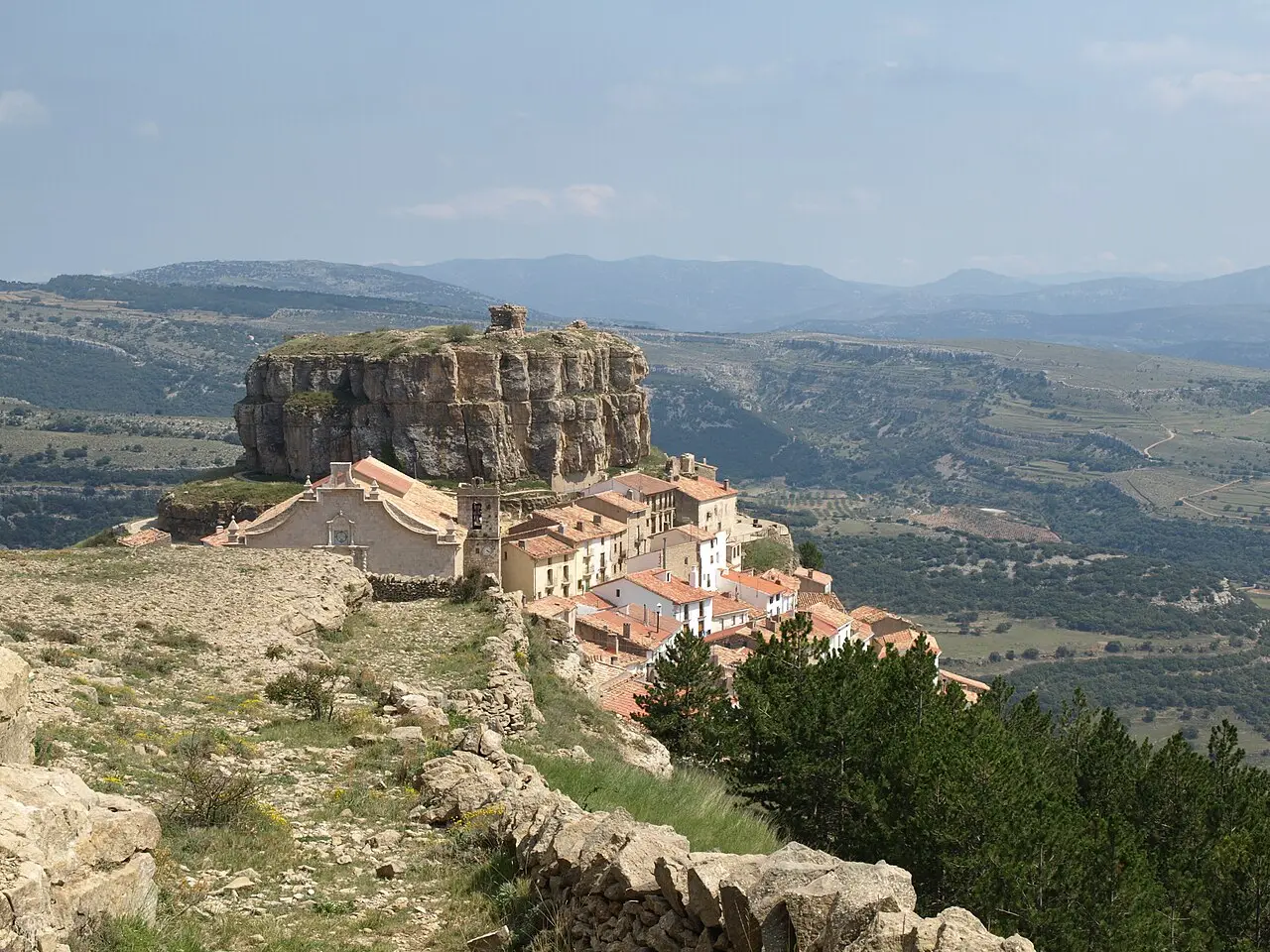
Ares del Maestre, tucked under its mesa.Photo: Julio armelles · CC BY-SA 3.0 es Before heading back, half an hour south drops you at Ares del Maestre (Ares del Maestrat in Valencian), one of those places you have to see with your own eyes. The village tucks in under an enormous rock mesa, with the castle at the very top and the houses spilling down the slope. The municipality rises from 700 to 1,300 metres, so the views from the top take in half the Maestrazgo.
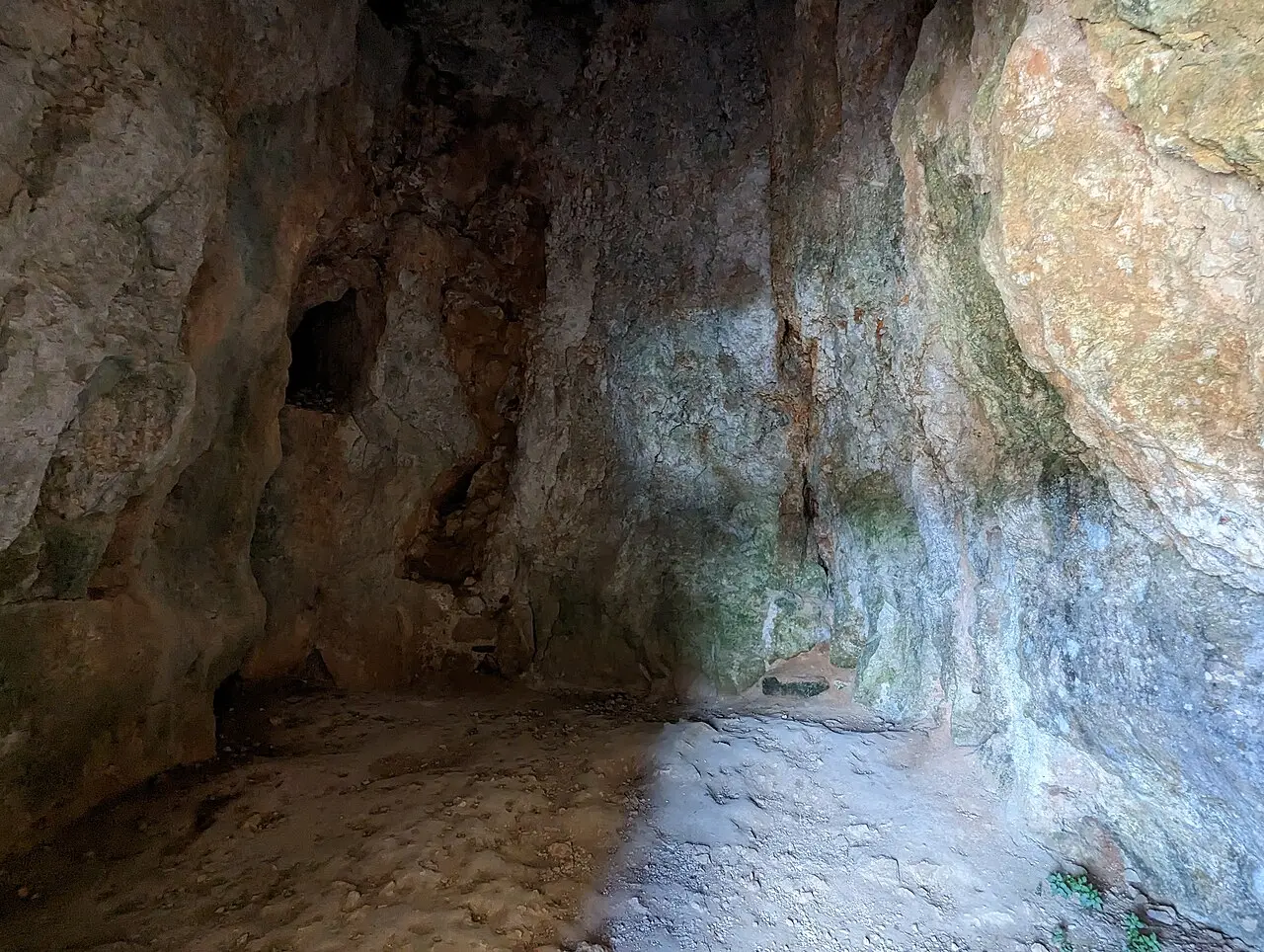
Nearby there is something far older than the castle: the rock paintings of the Gasulla ravine and Cueva Remigia, Levantine art thousands of years old that is part of the Mediterranean Basin rock art protected by Unesco. If it interests you, check ahead about visits, because access to the shelters is usually regulated.
From Ares the drive back to Madrid begins. It is a lot of hours, so set off in good time, with a full tank and one last photo of the village under its mesa.
What to see
- Ares del Maestre under its rock mesa
- The castle and the views from the top
- The surroundings of the Gasulla rock art
Where to sleepHome. The drive back leaves the same day.
Heads upIt is the longest driving day: plan stops to rest and do not do the return in one go.
Back to Plaza de Castilla: Ares del Maestre → Plaza de Castilla · 495 km · ≈ 5 h 40 min · the same day 4, from Ares del Maestre
Before you set off
- A warm sleeping bag even in summer: you sleep above 1,200 metres and the nights cool right down.
- Comfy shoes. Cantavieja, Mirambel and Morella are all slope and stone, and you see them on foot.
- Always leave the van in the car parks at the entrance of each village; you do not drive into the walled centres.
- Sleeping over yes, camping no. We explain it in where it is legal to sleep in a van.
- Download the GPX: up in the sierra you can lose signal.
- If you want to see the Ares rock art, check beforehand how access and guided visits stand.
When to go
You are in high sierra: Cantavieja is above 1,200 metres and Ares climbs to 1,300. In a campervan that is almost an advantage, because you sleep cool. But it pays to know it and pack a good sleeping bag even in August, when the small hours bite.
May, June and September are the sweet spot: mild days for walking, a green sierra and fewer people in the streets. We see it in our bookings too, where most departures bunch up in summer, with July and August at the front, while spring and early autumn run a good deal quieter. In summer that means less room to pick your van and dates, so if you go in high season, check availability early. We break it down by season in when it is best to book.
And if winter tempts you, the Maestrazgo with cold and the odd snowfall is another thing altogether, but then read how to sleep warm in a van first and reckon with the chance of a tricky pass.
Where to park and sleep
This is the question that really holds people back, and it is better answered before you set off than at nine at night driving in circles. You do not take the van into the old centres of Cantavieja and Morella: they are narrow, cobbled, steep streets made for walking. You leave the campervan in the car parks at the entrance and walk up.
For sleeping, several villages in the region have areas or spaces set aside for motorhomes and campervans. Using Cantavieja as a base for the first two nights saves you moving the van, because Mirambel and La Iglesuela are done as a round trip. The practical information for the area is on the Maestrazgo tourism website.
The rule that holds for all of Spain: sleeping over (sleeping inside the van, parked in a legal space, without taking anything out) is allowed; camping (chairs, awning, levelling legs, anything that takes up ground) is not. The whole difference is in sleeping in a van without a fine. In a small village, check the car park sign when you arrive and, if it bans motorhomes or sets a time limit, go to the area.
What to eat along the way
Up here the mountain rules. Tronchón cheese, from a village a stone's throw from Cantavieja, is so much of the area that it even gets a mention in Don Quixote; buy a wheel for the trip. Across the Teruel Maestrazgo you will see lamb, young lamb and pork cured meats, and in season black truffle, because this is truffle country. In Morella the accent changes but not the standard: try the flaons, a pastry filled with curd cheese, and look out for meat with wild mushrooms. Fill the fridge in the bigger villages, because between one and the next there is little chance to shop.
If you have more days
This is the four-day version, built for a long weekend. With a few more, the area gives you plenty:
- The Grutas de Cristal in Molinos: a cave with aragonite formations, north of Cantavieja. A good plan if it is hot or raining.
- Villarluengo and the Órganos de Montoro: a spectacular rock wall and beautiful roads through the deep Maestrazgo.
- Teruel and Albarracín: they lie to the west and link up well. You have them mapped out in the Teruel and Albarracín route.
And if you only have three days, drop Ares del Maestre and come down to Morella on the third, to drive back from there.
Which Winkle you choose
Here we recommend the Índico or the Báltico, the two with a parking heater. To compare, all four: The Adriático, from €70 a day, is the one for couples, up to 3 people. The Caribe, from €80, has an awning, a fridge and a kitchen unit, no heater. The Índico, from €90, for four. And the Báltico, from €100, the most complete, for five. They are all Volkswagen Transporters, with fully comprehensive insurance and 24/7 assistance across Europe. If you are unsure, see which campervan to choose for how many of you travel. For the sierra, the Índico and the Báltico have a parking heater, which on these nights you notice.
Watch the kilometres. The price includes 100 km per day of hire, so over four days you have 400. This route, there and back from Plaza de Castilla and with the loops around the region, comes to around 1,000 km. You fall well short: add the kilometre pack when you book, and have a look first at how to work out the kilometres.
If you have never driven a van, the first half hour at the wheel goes by fast, we cover it in driving a campervan for the first time. By the time you leave the motorway and the sierra bends begin, you handle it like your own car. Vans serviced and spotless, and we sort out your route questions over WhatsApp before you leave.
Related routes
- Teruel and Albarracín by campervan: 3 or 4 days
- Cuenca and the Serranía by campervan: a weekend
- 8 campervan routes from Madrid for 3, 5 and 7 days
Before you book
Go over the requirements, price and how booking works in the guide to renting a campervan in Spain, or look at the Winkles one by one.
Fancy this route? Pick your dates and book →
Frequently asked questions
How many days do I need for the Maestrazgo by campervan?
Four days let you see Cantavieja, Mirambel, Morella and Ares del Maestre without rushing, which is just about how long an average campervan trip lasts. Three works too, dropping Ares and shortening the drive back. The Maestrazgo is small villages and short hops, so it is best enjoyed slowly: park, get out and walk.
How far is the Maestrazgo from Madrid by campervan?
Cantavieja is about 385 kilometres from Madrid, a little over five hours at the wheel because the last stretches are mountain road. Morella is a similar distance, around 400 kilometres. It is not a quick weekend: the comfortable thing is to give the first day to getting there and the last to driving back, and live the area on the days in between.
Can you drive into Cantavieja or Morella with the campervan?
No. The old centres of Cantavieja and Morella are medieval, all narrow steep streets, and no place for a campervan. You leave the van in the car parks at the entrance of each village and walk up, which is the way to see them anyway. To get around the old centres you do not need the vehicle.
Where can you sleep overnight with the campervan in the Maestrazgo?
Several villages in the Maestrazgo have areas or car parks set aside for motorhomes and campervans to spend the night. The general rule in Spain is that sleeping parked in a legal space is allowed; camping (chairs, awning, levelling legs) is not. Always check the signs at the car park before you settle in.
What is the best time of year for the Maestrazgo by campervan?
You are in high sierra, with villages above 1,000 metres, so the nights cool down even in summer: bring a warm sleeping bag. Spring and early autumn give mild days for walking and a green sierra. Summer is fine, but it is when the vans fill up most, so check dates early. May, June and September are the most comfortable months.
Which Winkle should I choose for this route?
We recommend the Índico (up to four) or the Báltico (five), the two with heating. They are all Volkswagen Transporters with 100 km a day included, fully comprehensive insurance and 24/7 assistance across Europe. Up in the sierra the heater is welcome, which the Índico and the Báltico have. Choose by how many of you travel, not by the name.