
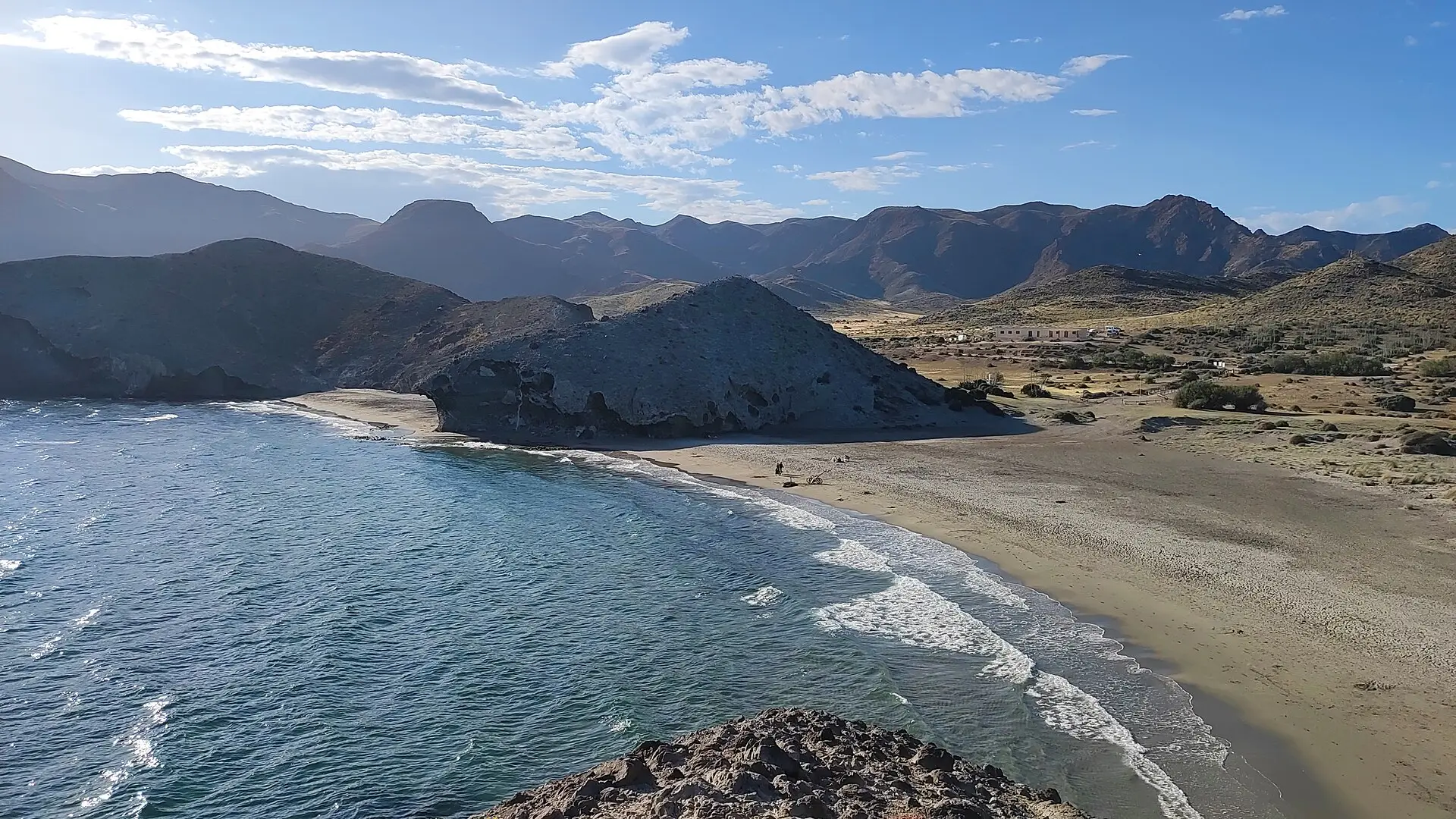
Granada, the Alpujarra and Cabo de Gata by campervan
From the Alhambra to the white villages of Sierra Nevada and the volcanic beaches of Almería, in five days and at your own pace. What to see each day, where to sleep and which van to pick.
Few routes change scenery so much in so little space. You start looking at the Alhambra from the Albaicín, the next night you sleep among white villages clinging to a Sierra Nevada ravine, and you finish having breakfast in front of a volcanic beach in the far south-eastern corner of the peninsula. Granada, the Alpujarra and Cabo de Gata fit into one round trip, and the van is exactly what ties them together: it lets you stop wherever the road gets pretty and change the plan without asking anyone.
This is a five-day route out of Madrid, made for people who are after places, not mileage. Cabo de Gata sits in the bottom corner of the map, about six or seven hours from Madrid, so it is not a weekend getaway: it is a trip that needs its own calm. We tell you what to see each day, where to sleep without surprises and which van works best for going from mountain to beach on a single tank.
- Days
- 5Granada · La Alpujarra · Almería
- Route in the area
- 328 km+ 1,024 km there and back from Plaza de Castilla
- Behind the wheel
- ≈ 6 h 50 minapprox., without stops
- Best time
- May, June, September and OctoberFrom spring to early autumn, dodging the hard heat of July and August
Roads: Motorway for almost the whole drive down; mountain roads with bends in the Alpujarra, where you go slow and enjoy it. In a van it all works fine if you take your time.
Best Winkle: Índico · the all-rounder, with heating for the Alpujarra nights and a shower for coming back from the beach
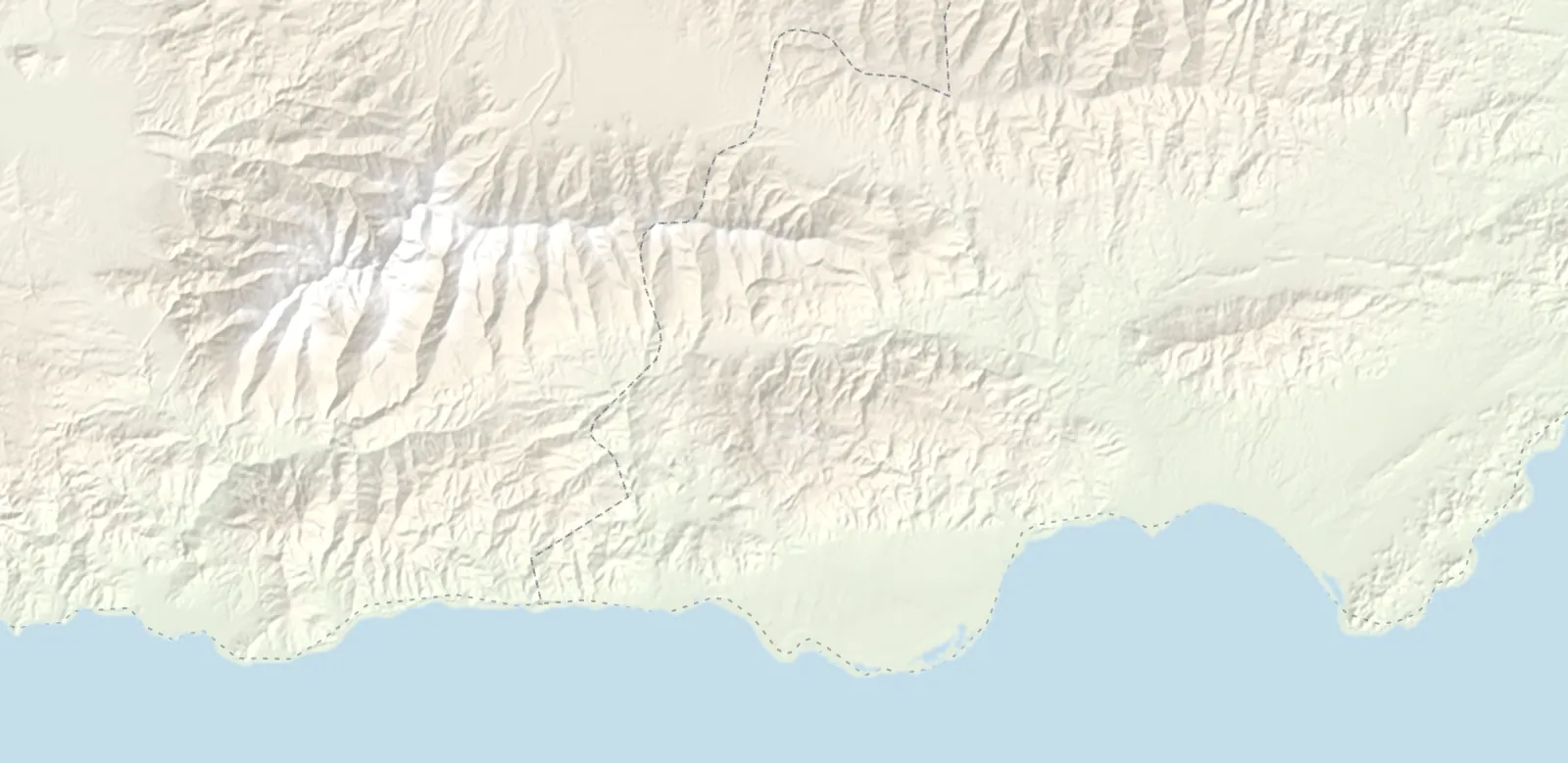 SIERRA NEVADALA ALPUJARRACABO DE GATA NATURAL PARKALBORÁN SEACapileiraTrevélezLos Genoveses beachMónsul beach1Granada2Pampaneira3San José
- 1 Granada
- 2 Pampaneira
- 3 San José
- Capileira
- Trevélez
- Los Genoveses beach
- Mónsul beach
From Plaza de Castilla: 426 km · ≈ 4 h 55 min Back to Plaza de Castilla: 598 km · ≈ 6 h 50 min
© OpenStreetMap contributors (trazado: OSRM) · Natural Earth · relieve: AWS Terrain TilesDay by day
From Madrid to Granada
Madrid (Plaza de Castilla)1Granada 426 km ≈ 4 h 55 min
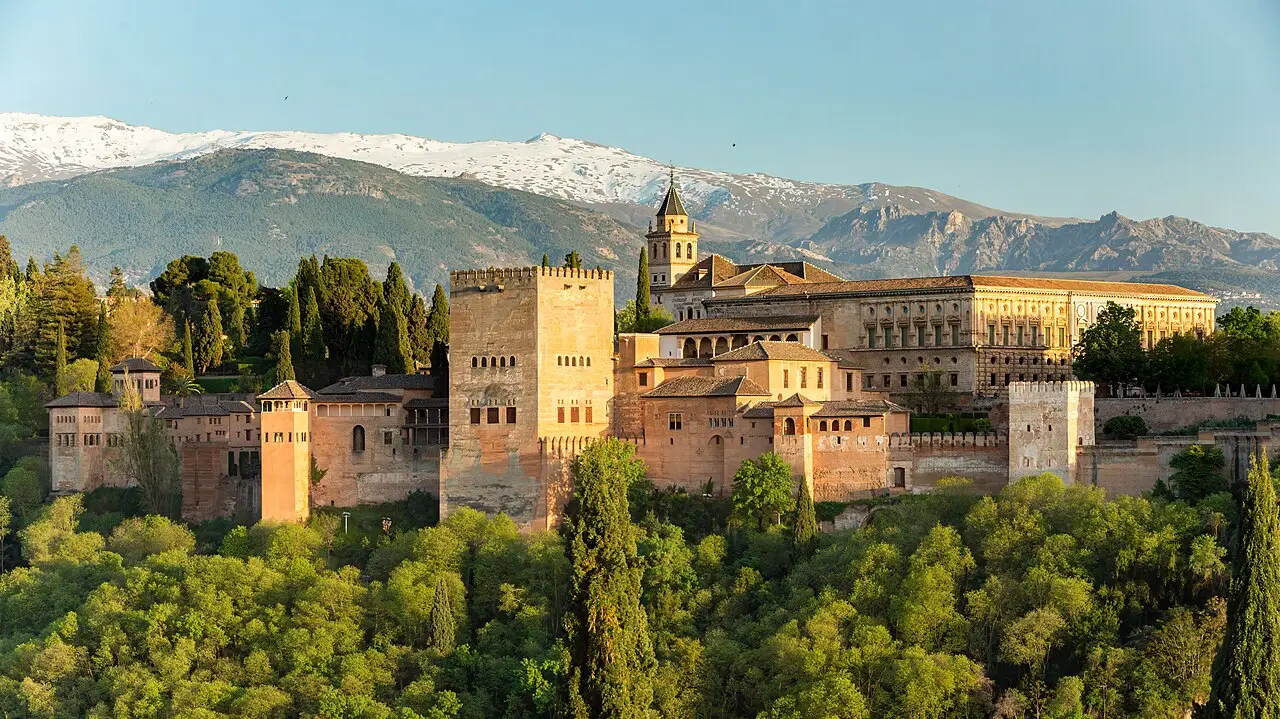
The Alhambra from the Mirador de San Nicolás, with Sierra Nevada behind.Photo: Diego Delso · CC BY-SA 4.0 The drive down to Granada is motorway and you can do it in one go, so save your energy for the afternoon. Leave the van parked and walk up into the Albaicín: the steep streets take you to the Mirador de San Nicolás, the spot where you see the whole Alhambra with a snowy Sierra Nevada behind it. It is the postcard everyone is after, and late in the afternoon, when the stone turns golden, you understand why.
If you want to go into the Alhambra the next day, book your ticket before you leave home: it sells out weeks ahead and you cannot buy it at the gate. The official sale is on the Patronato website, and it is worth checking opening times because they change by season. Head down afterwards for dinner in the Realejo or to go for tapas in the centre, where in Granada the tapa still comes with your beer.
What to see
- The Alhambra from the Mirador de San Nicolás
- The Albaicín and its cármenes
- The Realejo at dusk
Where to sleepAt the campsites around Granada; the centre is no place for the van.
Heads upBook your Alhambra ticket in advance on the official website; it sells out.
From Granada to the Alpujarra
1Granada2Pampaneira 72 km ≈ 1 h 50 min
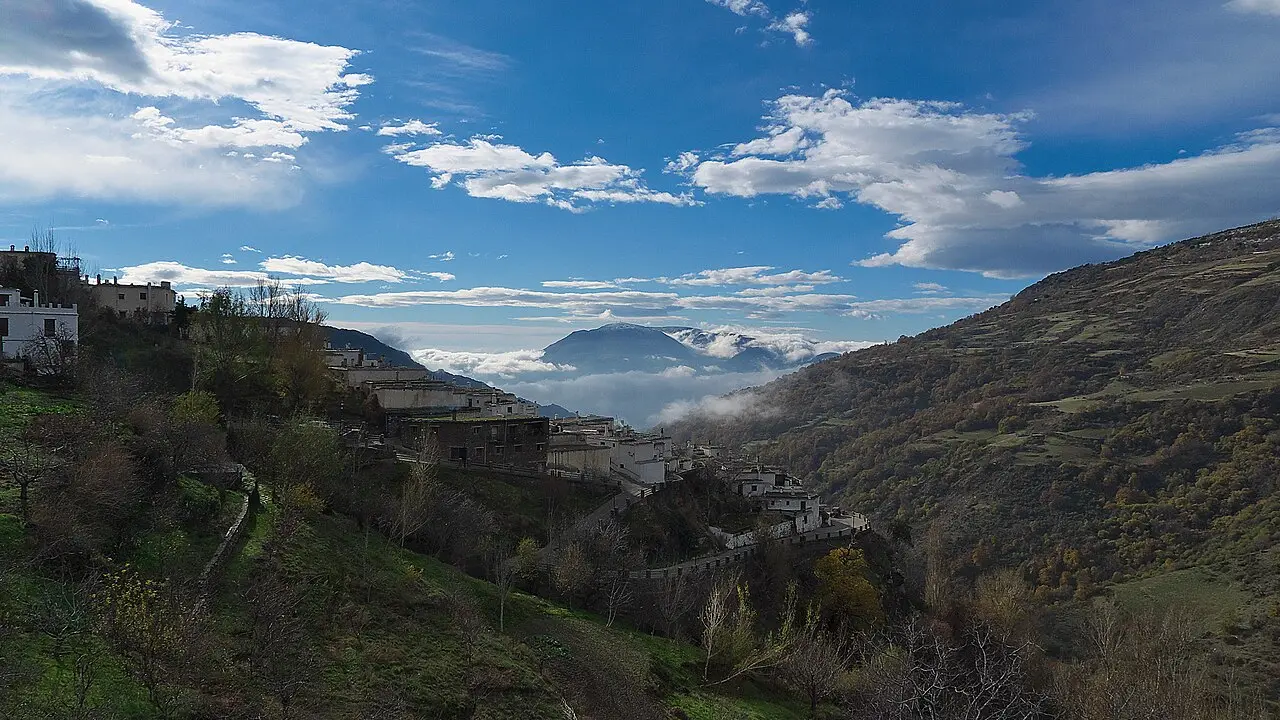
The Poqueira ravine, with the white villages clinging to the slope.Photo: José Luis Filpo Cabana · CC BY 3.0 Today the landscape stands up. You climb the southern face of Sierra Nevada to the Poqueira ravine, a green gash with three white villages stacked one above the other: Pampaneira at the bottom, Bubión in the middle and Capileira at the top. They look like postcards but they are not fake: people live here, weave rugs, bake bread and shell chestnuts. Park at the edge of each village (the streets are for walking, not for the van) and get lost in the alleys with their tinaos and the irrigation channels running past.
Much of this area sits inside the Sierra Nevada National Park, and from Capileira the track climbs towards Mulhacén, the roof of the peninsula at 3,479 m. You do not have to reach the top to enjoy it: a short walk along the channels already clears your head. If you have the afternoon spare, pop over to Trevélez, one of the highest villages in Spain and famous for its cured ham, and buy something for the van fridge.
What to see
- The Poqueira ravine from Capileira
- The streets of Pampaneira
- Trevélez and its ham sheds
Where to sleepAt the campsites in the Alpujarra, around Pampaneira or Órgiva.
Heads upIt gets cold at night up here even in summer; the van heating earns its keep.
From the Alpujarra to Cabo de Gata
2Pampaneira3San José 196 km ≈ 3 h 20 min
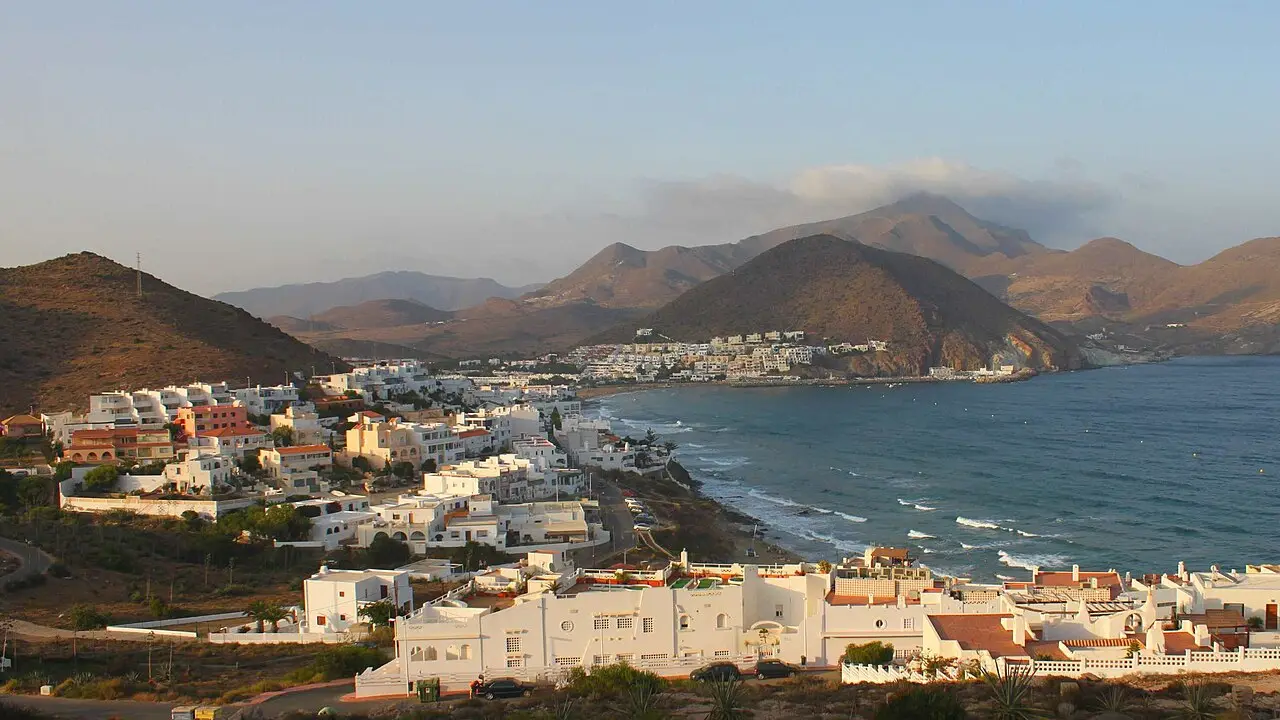
San José, the white seafaring base for exploring Cabo de Gata.Photo: Benreis · CC BY-SA 3.0 Today you swap the mountains for the sea. The road drops off Sierra Nevada and crosses the Tabernas desert before it reaches the Almería coast, and the change of colour is wild: from the green of the channels to the ochre of the south and, at the end, to blue. The destination is San José, the town that works as a base for getting around the Cabo de Gata Natural Park.
San José is small, white and seafaring, with a bay where the van parks near the water. Get there in time for your first swim and to set the chair out: that is basically the whole plan of the trip. If you have the afternoon spare, walk up to the viewpoint at the entrance to the town to get a sense of what is coming tomorrow. This is the moment for the van you chose with exactly this in mind: if you went for Índico, the shower after the beach is just the thing.
What to see
- San José bay
- The Tabernas desert on the way
- Your first swim in the Mediterranean
Where to sleepAt the campsites in San José or Los Escullos, inside the park.
Heads upInside the park there is little shade and fewer petrol stations; fill up and load water before you go in.
Cabo de Gata in depth
3San JoséCabo de Gata lighthouse and back 60 km ≈ 1 h 40 min
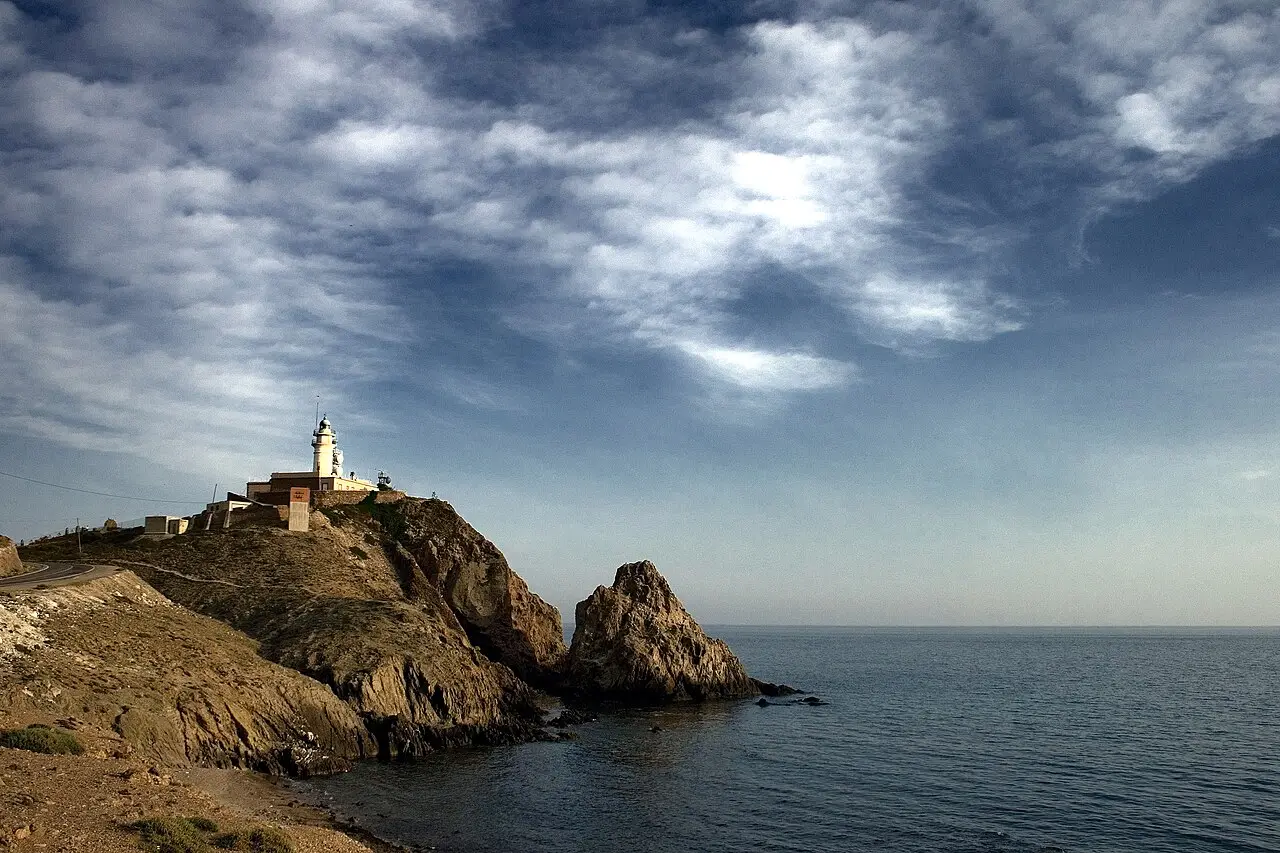
The Cabo de Gata lighthouse, at the far south-eastern corner of the peninsula.Photo: Gabriel Villena · CC BY 2.0 Beach day. The Cabo de Gata-Níjar Natural Park was the first protected marine and land area in Andalusia, declared in 1987, and it shows: the coast is still almost as it was, with volcanic rock cliffs, coves without a single building and water that looks like it belongs somewhere else. From San José you reach the two gems, Los Genoveses and Mónsul, the latter with its famous dune and the Peineta, a black rock crest rising over the sand.
Drive down slowly to the Cabo de Gata lighthouse, the southernmost-eastern point of the peninsula, and look out over the Arrecife de las Sirenas. In between, stop wherever you feel like it: here the plan is to have no plan. In summer car access to some coves is regulated and you go in by bus or on foot, so check the park rules on the day, because they change by season. Head back to San José to sleep with the salt still on your skin.
What to see
- Mónsul beach and its dune
- Los Genoveses beach
- The lighthouse and the Arrecife de las Sirenas
Where to sleepAnother night in San José; tomorrow is an early start.
Heads upIn high season the coves close to cars; you go in by bus or on foot. Check the park that day.
From Cabo de Gata to Madrid
The way back is the long stretch of the trip, so it pays to leave early and break it with a stop. Before you join the motorway you can have one last swim or breakfast looking at the sea, which is the whole point of sleeping where you sleep. If you want to stretch the drive out, Níjar is on the way and a good place to buy a rug or some pottery before heading up.
From there it is motorway almost all the way, crossing the interior again up to Madrid. Share the driving if there is more than one of you, stop properly at a service area when you need to, and arrive without rushing. The van comes back with sand on the floor, and that, in the end, is the sign the trip went well.
Where to sleepHome, at last.
Heads upIt is the longest driving day; start early and break the return with a stop.
Back to Plaza de Castilla: San José → Plaza de Castilla · 598 km · ≈ 6 h 50 min · on the same day, leaving San José early and breaking the return with a stop
Before you set off
- Book your Alhambra ticket on the official website weeks in advance.
- Fill the tank and the water before going into the Cabo de Gata park; there is little inside.
- [object Object]
- In summer, check the cove access rules on the day; they change by season.
- [object Object]
You open the back door of the van and you do not know whether you are going to see snow or sea. On this route, depending on the day, you see both. It starts looking at the Alhambra from the Albaicín, carries on through white villages clinging to a Sierra Nevada ravine, and ends on a volcanic beach in the far south-eastern corner of the peninsula. Five days out of Plaza de Castilla, and what ties them together is the van: it lets you stop wherever the road gets pretty and change your mind without explaining yourself.
This is not a weekend getaway. Cabo de Gata is about 600 km from Madrid, between six and a half and seven hours of driving, so it asks for calm and several days. In return, you get three different Andalusias in a single trip: the monumental, the mountain and the coast. Below you have the map with the route and the trip details; here are the keys to getting it right.
When to go
The short answer: spring and early autumn. May, June, September and October leave the Almería coast mild enough to swim and the Alpujarra at its best, without the heat that really bites in the south in high August. It is a contrast worth keeping in mind, because on the same trip you sleep above 1,000 m one night and right by the beach the next.
Availability counts too. July and August are, by a long way, the busiest months at beWinkle, just as they are the most crowded on the Cabo de Gata coves. Our travellers' typical getaway runs to about four days, so five gives you plenty of margin for this route without watching the clock. If you can pick your dates, the shoulder seasons give you better temperatures and a van that is easier to book. If you can only go in summer, swim early and find shade at midday.
One thing a lot of people leave to the last minute and should not: the Alhambra. Tickets sell out weeks ahead and are only sold on the official Patronato website, never at the gate on the day. Look at the calendar calmly too, because this route racks up distance and it helps to know how many kilometres you will need before you book the van.
Where to sleep and refuel
The golden rule on this trip is simple: you sleep at campsites and designated areas, not in any lay-by with a view. In Spain you can spend the night in the van, meaning sleep inside with everything packed away, but camping outside it (putting out chairs, awning or table for the night) is banned, and inside a protected area like Cabo de Gata it is stricter still. We explain it in detail in the guide to whether it is legal to sleep in a van in Spain, which is worth reading before you set off.
By section: in Granada you have campsites on the outskirts, handy for leaving the van and going into the centre by public transport. In the Alpujarra, the area around Pampaneira and Órgiva has mountain campsites you can base yourself at to move around the Poqueira ravine. And at Cabo de Gata, San José, Los Escullos and Las Negras hold the campsites inside the park: the quiet, legal option for sleeping a step from the water.
Refuelling is not a small detail. The Cabo de Gata Natural Park has little shade, few petrol stations and stretches with nothing, so the rule is to go in with a full tank and loaded water. The same goes for the Alpujarra: petrol stations are scarce up top. Filling up before you climb or before you enter the park saves you the one avoidable scare of the trip.
What to eat along the way
Eating is part of the route. In Granada you go for tapas, and the tapa still comes with the drink: order a beer and see what they bring. In the Alpujarra, the house dish is the plato alpujarreño (egg, pork loin, black pudding, poor man's potatoes), which goes down a treat after walking the villages. And in Trevélez, one of the highest villages in Spain, the cured ham is the star: take a plate's worth for the van fridge.
On the coast, the change is total. Almería is about fried fish, prawns and espetos, and in San José any beach bar on the bay will feed you with your feet almost in the sand. The van works in your favour here: with a fridge and a stove, you have your morning coffee looking at the sea and skip the queue. Buying at the village markets and cooking outside is, for a lot of our travellers, the best part of the trip.
If you have more days
Five days cover the essentials, but the area takes more. An extra day in the Alpujarra lets you go up to one of the higher villages, like Trevélez or the ones in the Poqueira valley, and walk a trail along the channels; this is Sierra Nevada country, and Mulhacén, the roof of the peninsula at 3,479 m, shows itself from up there. If mountains are your thing, you have earned the time.
On the coast, another day lets you drop west to the coves of Los Escullos, La Isleta del Moro and Las Negras, or even pop over to Rodalquilar and its old gold mine. And if you want to thread this route into something bigger, carry on west along the coast or look at our long crossing from the Pyrenees to Cabo de Gata in 12 days, which ends at this very lighthouse.
Related routes
- From the Pyrenees to Cabo de Gata by campervan: 12 days: the great crossing of Spain, end to end, that finishes at this same cape.
- 8 campervan routes from Madrid for 3, 5 and 7 days: to pick your next getaway by how many days you have.
- Campervan routes: eleven complete itineraries from Madrid: the big map with all our routes.
Before you book
This route asks for a van that can go from mountain to beach without breaking a sweat. That is why we usually recommend Índico: it is the all-rounder of the fleet, with heating for the cold Alpujarra nights and a shower for rinsing the salt off when you come back from Mónsul. If there are two of you, Adriático will do; if you are four or five, Báltico gives you more room. Each one has the name of a sea and its own character, and on this route they all deliver.
The rest you already know from us: the price you see in the search is the price you pay, with 100 km a day included (extendable), full insurance and 24/7 assistance across Europe. You get the documents through the app and the keys when you arrive, no queues or paperwork. When you have your dates, check availability and book; if you still have any questions before you set off, they are answered on the help page. See you on the way back, with sand on the van floor.
Frequently asked questions
How many days do you need for the Granada, Alpujarra and Cabo de Gata campervan route?
Five days is the comfortable minimum for this campervan route. They allow an afternoon in Granada, a day among the white villages of the Alpujarra, two days on the beaches of Cabo de Gata and the drive back to Madrid without stress. With less time you would have to drop either the mountains or the coast, and the whole point is going from one to the other.
How far is Cabo de Gata from Madrid by campervan?
Cabo de Gata is about 600 km from Madrid, roughly six and a half to seven hours of driving, motorway almost all the way. It is the far south-eastern corner of the peninsula, so it is better treated as a trip of several days than as a weekend getaway. Granada, on the way, is a little closer.
When is the best time for this campervan route through Andalusia?
Spring and early autumn are the best time for this route. In May, June, September and October the Almería coast is mild and the Alpujarra is at its best. July and August are the busiest months at beWinkle and also the hottest in the south, so if you can choose, the shoulder seasons give you better temperatures and a van that is easier to book.
Can you sleep in the campervan inside the Cabo de Gata Natural Park?
Inside the Cabo de Gata Natural Park wild camping is banned and overnight stays are regulated, so you sleep at the campsites in San José, Los Escullos or Las Negras. In Spain you can sleep inside the van (spend the night in it), but you cannot camp outside it, and the rules change from one town to the next. We cover it in detail in the guide to sleeping in a van in Spain.
Do you need to book the Alhambra in advance?
Yes, the Alhambra ticket has to be booked in advance on the official Patronato website, because it sells out weeks ahead and is not sold at the gate on the day. Opening times change by season, so it is worth checking when you buy. If you cannot get a ticket, the Mirador de San Nicolás gives you the best view of the whole site for free.
Which campervan works best for a route with both mountains and beach?
For a route that mixes the Alpujarra and the Cabo de Gata beaches, an all-rounder with heating and a shower works well, like Índico in the beWinkle fleet. The heating is welcome on cold mountain nights and the shower when you come back from the sand. If there are two of you, Adriático does the job too; for four or five, Báltico gives you more room.