
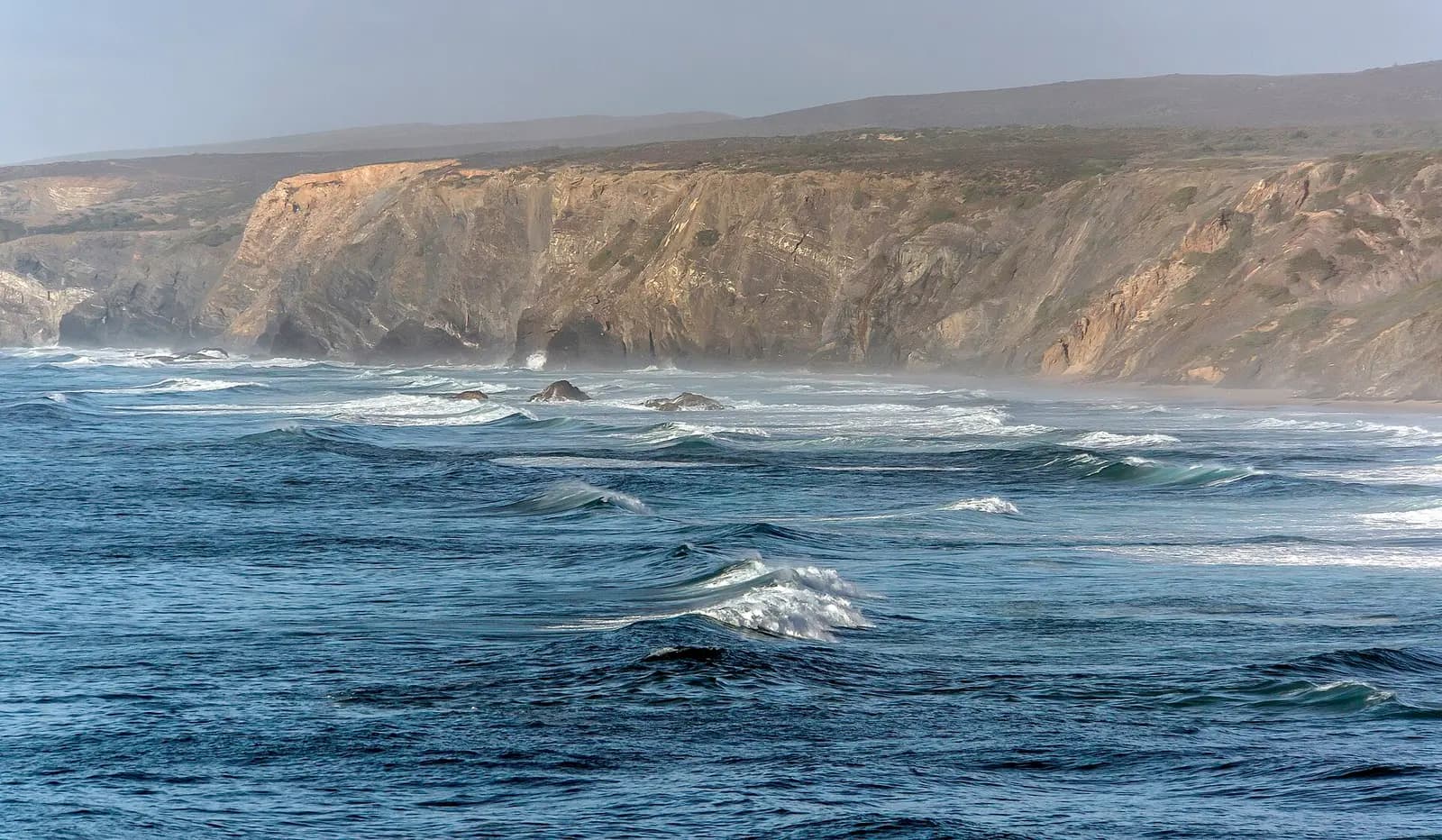
Algarve and Portugal's Atlantic coast by campervan: 9 days from Porto to the south
Porto, Aveiro, the giant waves of Nazaré, Lisbon, the wildest stretch of the Costa Vicentina and, at the end, the golden cliffs of the Algarve. Nine days down the Portuguese Atlantic coast in a campervan, with stops and where to sleep.
You drive Portugal's Atlantic coast from north to south with the sea always on your right. You start in Porto, with the Douro and the port cellars, and finish on the golden cliffs of the Algarve. In between: the most famous wave in the world at Nazaré, an evening in Lisbon and the Costa Vicentina, the wildest stretch and the one that makes the trip.
The plan is simple: on day one you drive up from Madrid to Porto, and from there it's all downhill along the coast. Nine days, stages of forty minutes to two and a half hours, and a long drive home from the Algarve. Below you've got the map with the real route, the kilometres for each day and what's worth stopping for along the way.
- Days
- 9Atlantic Portugal · Porto → Algarve
- Route in the area
- 742 km+ 1,283 km there and back from Plaza de Castilla
- Behind the wheel
- ≈ 10 h 45 minapprox., without stops
- Best time
- June and SeptemberSpring and early autumn
Roads: Electronic-toll motorways and coastal roads. Nothing tricky for a campervan.
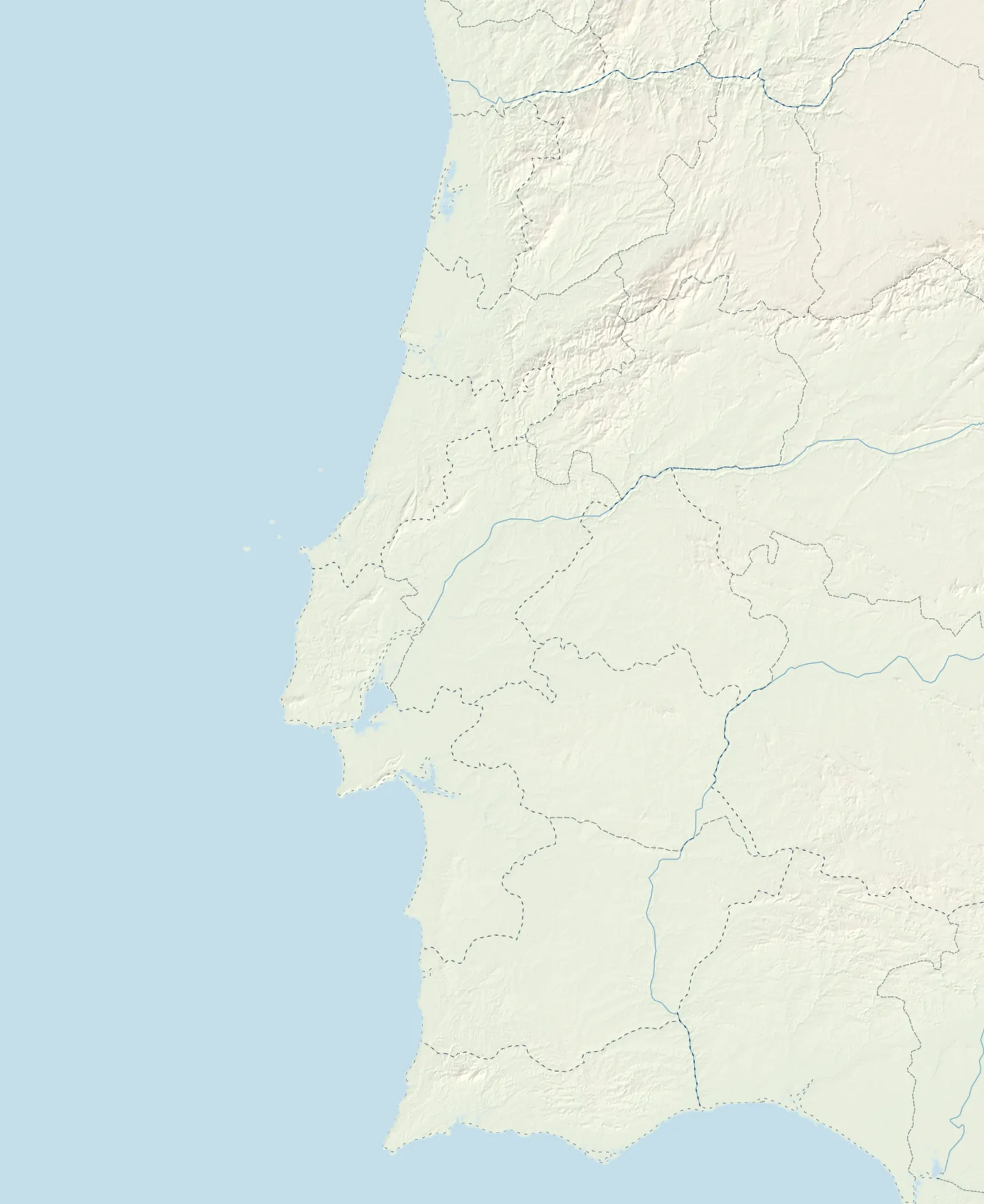 Atlantic OceanNORTECENTROALENTEJOALGARVESPAIN1Porto2Aveiro3Nazaré4Lisbon5Vila Nova de Milfontes6Aljezur7Sagres8Lagos9Benagil
- 1 Porto
- 2 Aveiro
- 3 Nazaré
- 4 Lisbon
- 5 Vila Nova de Milfontes
- 6 Aljezur
- 7 Sagres
- 8 Lagos
- 9 Benagil
From Plaza de Castilla: 555 km · ≈ 6 h 20 min Back to Plaza de Castilla: 728 km · ≈ 8 h 20 min
© OpenStreetMap contributors (trazado: OSRM) · Natural Earth · relieve: AWS Terrain TilesDay by day
Madrid to Porto
Madrid (Plaza de Castilla)1Porto 555 km ≈ 6 h 20 min
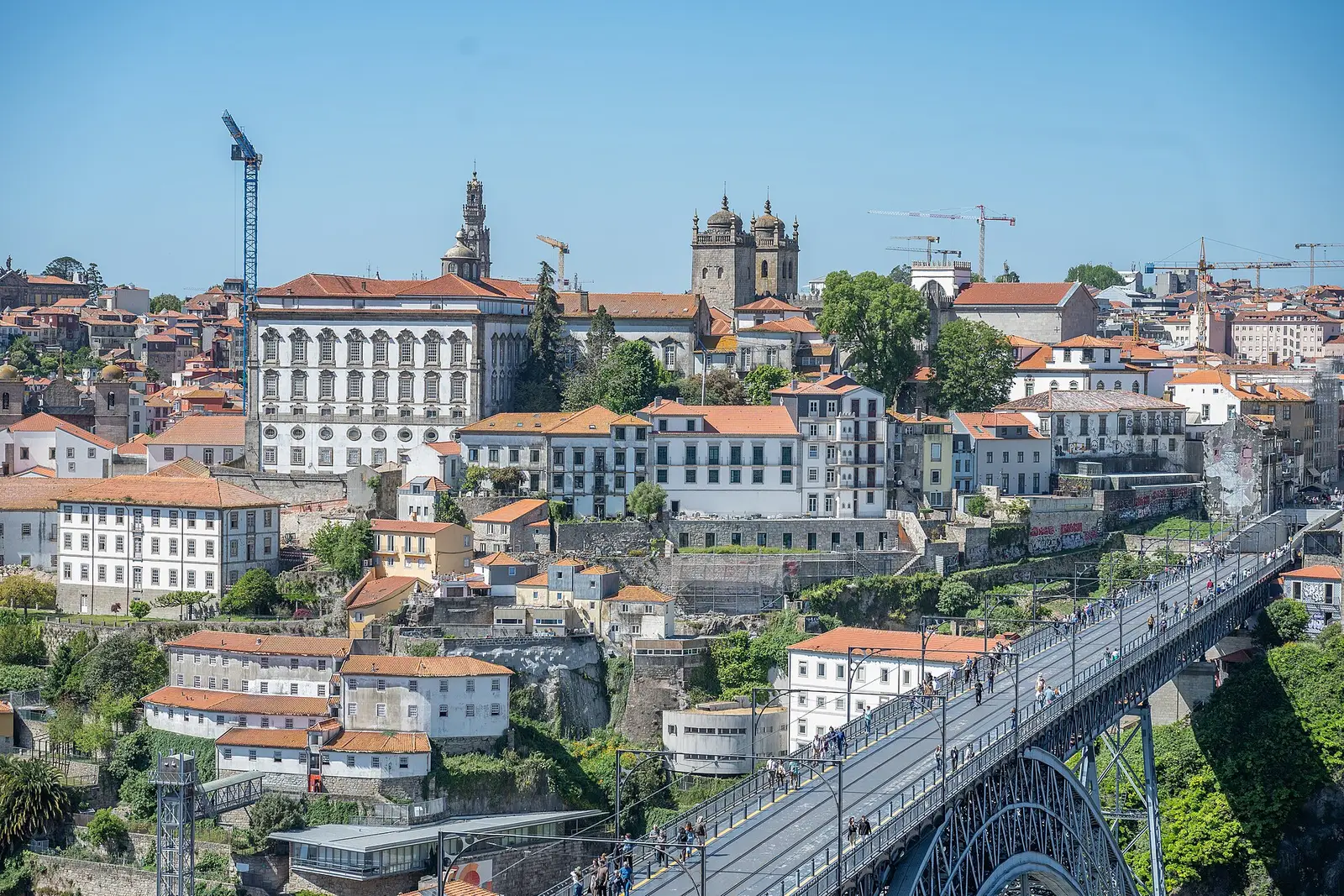
Porto and the Dom Luís I bridge.Photo: Michael Gaylard · CC BY 4.0 A motorway day. Leave Plaza de Castilla early: it's 555 km and a little over six hours at the wheel. There's nothing worth rushing for on the way; the goal is to reach Porto with the evening ahead of you.
Porto makes sense from the river. The Ribeira is the quayside with houses stacked above the Douro, and across the water are the port wine cellars, which aren't actually in Porto but in Vila Nova de Gaia, on the other bank. The Dom Luís I bridge links them: two decks, designed by the engineer Théophile Seyrig. Walk across the top deck at sunset.
The historic centre has been a World Heritage Site since 1996, and you can tell: steep streets, azulejos and Nicolau Nasoni's Clérigos Tower rising above it all. Don't drive the campervan in there. Leave it outside the old town and get around on foot or by metro.
What to see
- The Ribeira and the Dom Luís I bridge, best from the top deck
- The port wine cellars in Vila Nova de Gaia
- The Clérigos Tower
Where to sleepOn the outskirts of Porto, at a campsite or aire. The centre is no place for a campervan.
Heads upMany Portuguese motorways have electronic tolls with no booths. Sort out how to pay before you cross the border.
Aveiro and the striped houses of Costa Nova
1PortoCosta Novavia Aveiro 87 km ≈ 1 h 10 min
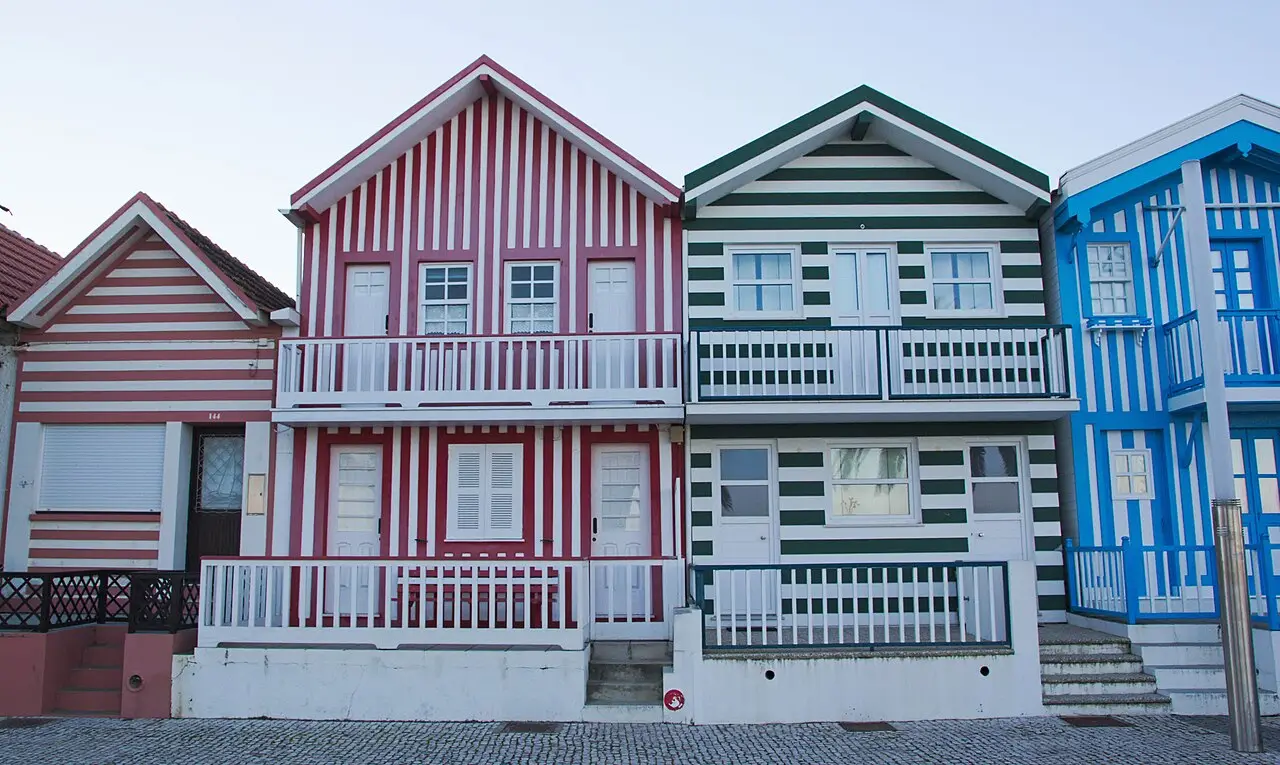
The palheiros of Costa Nova.Photo: Xosema · CC BY-SA 4.0 A slow morning in Porto and, after lunch, just over an hour south. Aveiro is the city of canals, which is why they call it the Venice of Portugal. The moliceiros glide along them: high-prowed boats that carry tourists today but were built to gather moliço, the lagoon weed that fertilised the local fields. Look at the paintings on bow and stern: they usually poke fun at everyday scenes.
The Aveiro lagoon is huge, about 47 km long, with islands and channels that only open to the sea through a gap between Barra and São Jacinto. On the far side, facing the Atlantic, is Costa Nova: a row of houses with colourful vertical or horizontal stripes. They were palheiros, stores for fishing gear and for salting sardines, and today they're holiday homes. The photo is compulsory.
Afternoon on the beach and a walk along the sand. A short day, after yesterday's long one.
What to see
- Aveiro's canals and the moliceiros
- The striped houses of Costa Nova
- Costa Nova beach, facing the Atlantic
Where to sleepAround Costa Nova or Aveiro, at a campsite.
Heads upAveiro is a walking city. Leave the campervan outside the centre and go in on foot.
Nazaré and the giant wave
Costa Nova3Nazaré 147 km ≈ 1 h 50 min
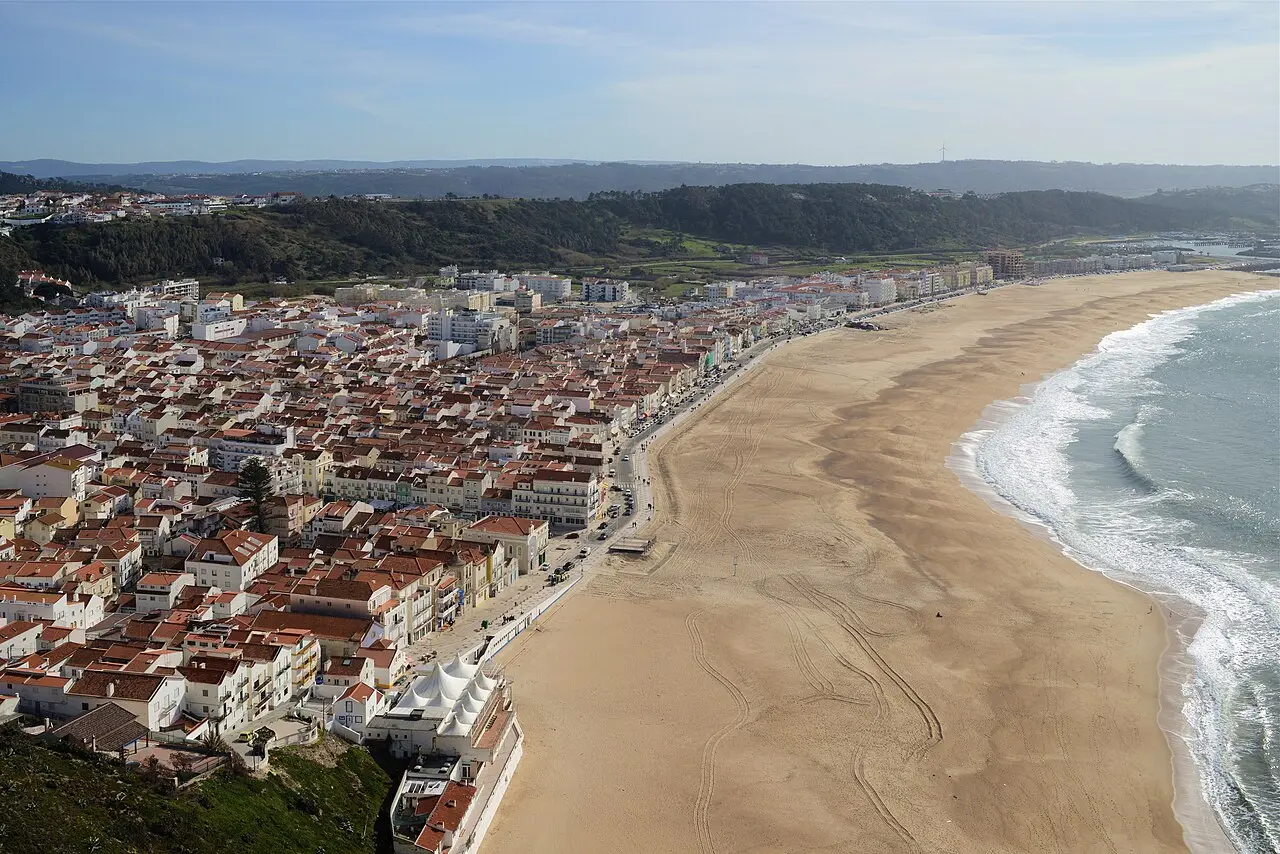
Nazaré and its beach.Photo: Alvesgaspar · CC BY-SA 3.0 Almost two hours along the coast to Nazaré, the fishing town that surfing has put on the world map. Blame the Nazaré canyon, an underwater trench some 211 km long that drops to almost 5,000 metres. Swells travel along it without losing power and reach Praia do Norte far bigger than anywhere else on the Portuguese coast.
That's where the records are. In November 2011 Garrett McNamara rode a wave of about 24 metres that put him in Guinness, and in 2020 the German Sebastian Steudtner raised the mark to 26.21 metres. That happens in a storm swell. Without one, the São Miguel Arcanjo fort above Praia do Norte is still worth the stop.
The town brings together three old settlements, and the best view of the big beach and the rooftops is from the Sítio, the one on top. Nazaré tradition says the women wore seven skirts; nobody agrees on why.
What to see
- Praia do Norte from the São Miguel Arcanjo fort
- The big beach and the town, from the Sítio
- The seafront promenade
Where to sleepIn or around Nazaré, at a campsite or aire.
Heads upIf there's a big swell, watch the waves from above. Don't go down to the water's edge at Praia do Norte.
Lisbon: Alfama, tram 28 and fado
3Nazaré4Lisbon 124 km ≈ 1 h 35 min
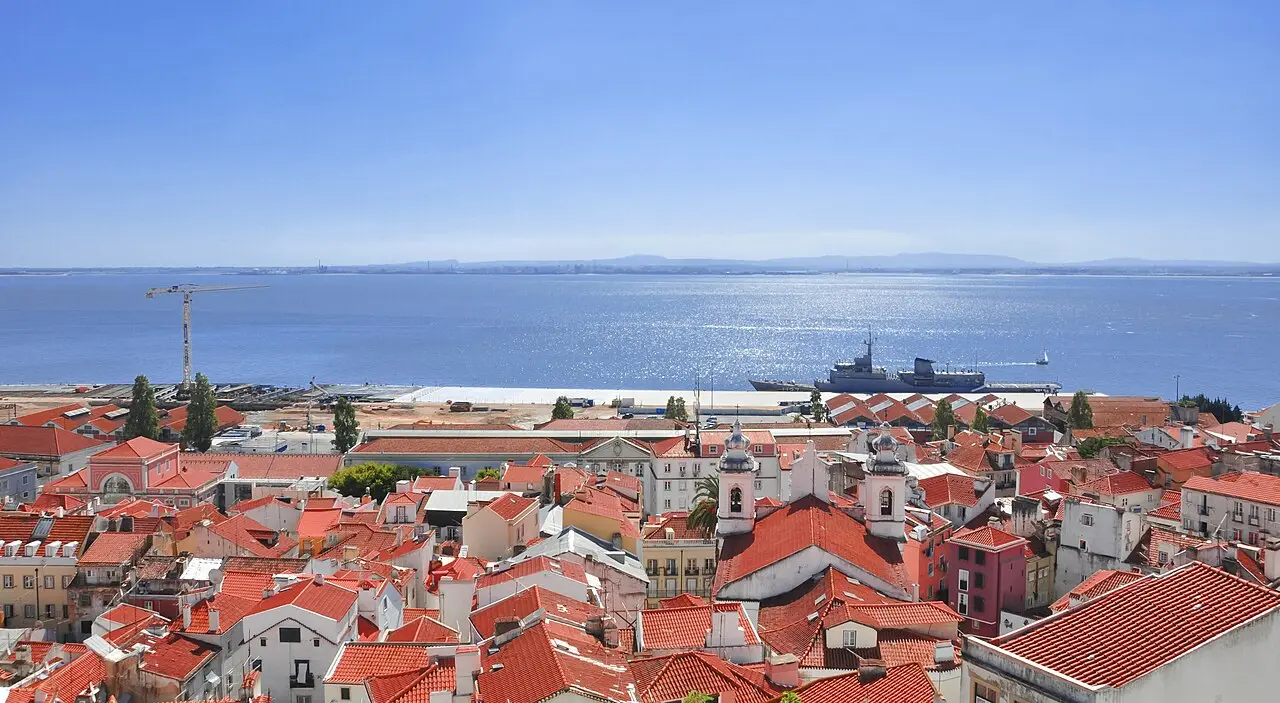
Alfama and the Tagus from Santa Luzia.Photo: Paolo Costa Baldi · CC BY-SA 3.0 An hour and a half to Lisbon. Get there early, leave the campervan at a campsite on the outskirts and go in by public transport. The centre isn't made for campervans: hills, trams and narrow streets.
The evening is for Alfama, the old quarter tumbling down towards the Tagus. Climb to the Santa Luzia and Portas do Sol viewpoints for the rooftops and the river. To get between neighbourhoods there's tram 28, the line tourists use most: it runs from Martim Moniz to Campo de Ourique through Graça, Alfama, Chiado and Estrela, with restored historic trams.
Dinner with fado. UNESCO listed it as Intangible Cultural Heritage in 2011, and Alfama and Mouraria are two of the neighbourhoods with fado houses. Early start tomorrow.
What to see
- Alfama from the Santa Luzia and Portas do Sol viewpoints
- Tram 28
- A fado house in Alfama or Mouraria
Where to sleepAt a campsite on the outskirts of Lisbon, with public transport into the centre.
Heads upLisbon isn't a campervan city. Park outside and forget about the van until tomorrow.
Belém and on to the Costa Vicentina
4Lisbon5Vila Nova de Milfontes 185 km ≈ 2 h 25 min
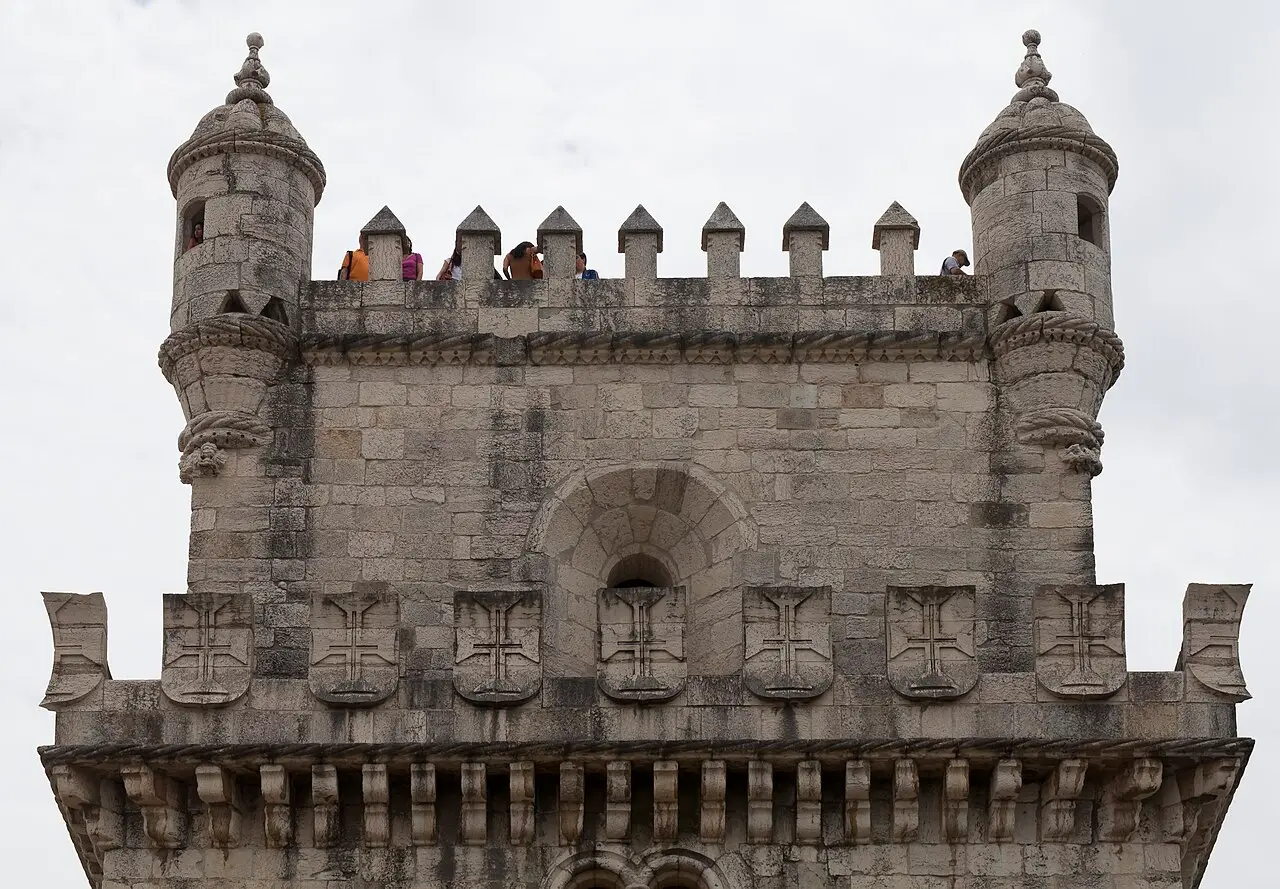
The Belém Tower.Photo: Diego Delso · CC BY-SA 3.0 Before leaving Lisbon, Belém. Work on the Manueline Jerónimos Monastery began in 1501, and it holds Vasco da Gama's tomb. A short walk away, on the river, stands the Belém Tower. Both have been World Heritage Sites since 1983. And next door, the pastéis de Belém: the Jerónimos monks are believed to have invented them, the bakery opened in 1837, and both the recipe and the name are registered.
You head south over the 25 de Abril bridge, more than 2 km across the Tagus estuary. It opened in 1966 as the Salazar bridge and was renamed after the 1974 Revolution.
Today is 185 km, about two and a half hours in all, to Vila Nova de Milfontes, at the mouth of the Mira river, with its São Clemente fort, built between 1599 and 1602. You're now inside the Southwest Alentejo and Vicentine Coast Natural Park, and the trip changes: less city, more cliff.
What to see
- The Jerónimos Monastery and the Belém Tower
- The pastéis de Belém
- The 25 de Abril bridge over the Tagus
- Vila Nova de Milfontes and the São Clemente fort above the Mira
Where to sleepVila Nova de Milfontes, at a campsite. From here on the coast is a natural park: only sleep where it is allowed.
Heads upDo a big shop before leaving Lisbon. The villages on the Costa Vicentina are small.
Costa Vicentina: Milfontes to Aljezur
5Vila Nova de Milfontes6Aljezurvia Zambujeira do Mar, Odeceixe 67 km ≈ 1 h 10 min
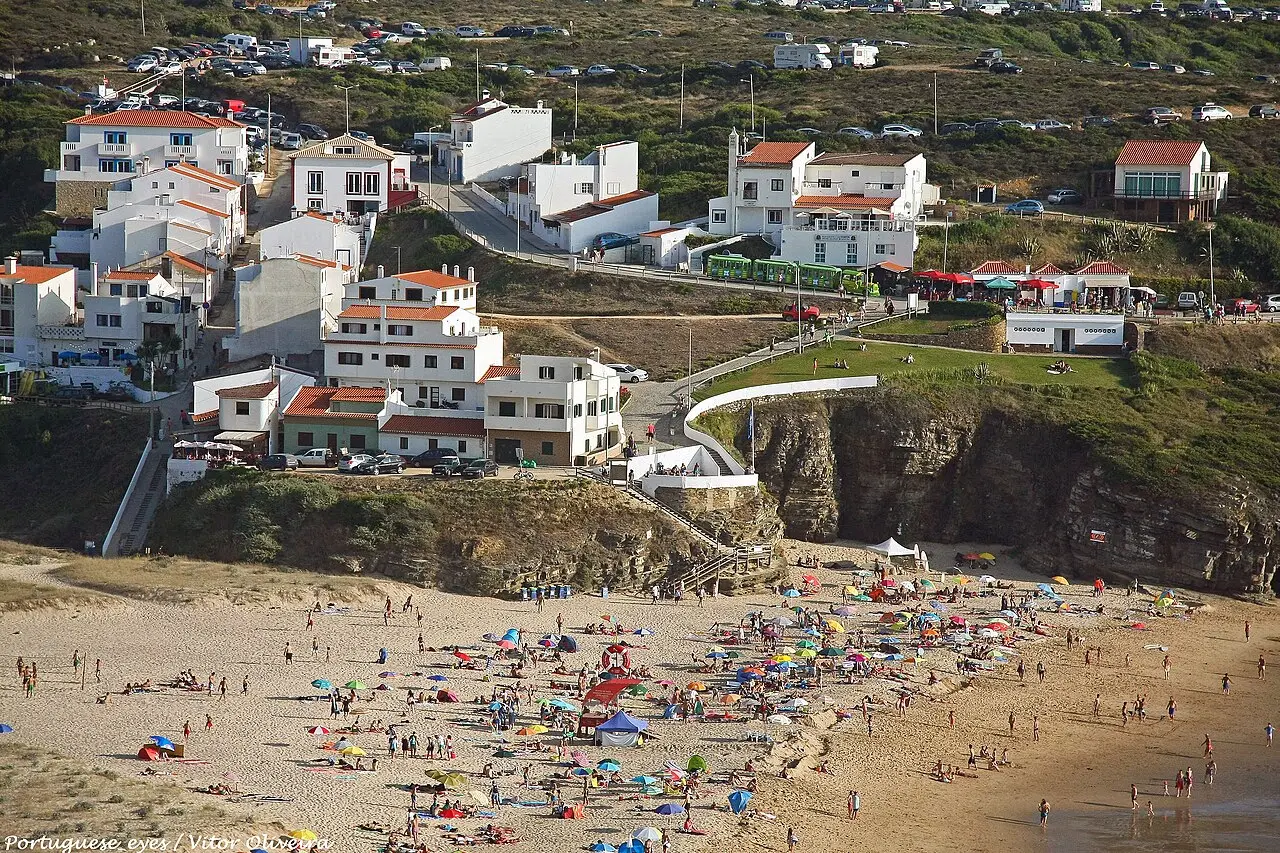
Odeceixe beach.Photo: Vitor Oliveira · CC BY-SA 2.0 The day that makes the trip. The natural park covers 110 km of coastline, from São Torpes to Burgau beach, with cliffs, beaches, dunes, islets and the Mira estuary. It's the only place in the world where storks nest on sea stacks. Look for the nests on the rocky ledges.
You head down the coast, stopping as you go. First Zambujeira do Mar, then Odeceixe, whose beach sits where the Seixe river meets the sea, between high cliffs: river on one side, ocean on the other. It's the northernmost beach in the Algarve, so crossing the Seixe means changing region.
You finish in Aljezur, with its castle on the hill, from the Moorish period. Close by are Arrifana, in a sheltered bay, Monte Clérigo, with a lagoon that forms at low tide, and Amoreira, where you choose between the calm river and the waves.
What to see
- Zambujeira do Mar
- Odeceixe beach, at the mouth of the Seixe
- Aljezur castle
- Arrifana, Monte Clérigo and Amoreira beaches
Where to sleepAround Aljezur, at a campsite or aire. On this protected coast, no overnighting on the clifftops.
Heads upThe Atlantic has a temper here. Swim at lifeguarded beaches and bring a jumper for the evening.
Bordeira, Cape St. Vincent and Sagres
6Aljezur7Sagresvia Carrapateira, Cape St. Vincent 57 km ≈ 1 h 5 min
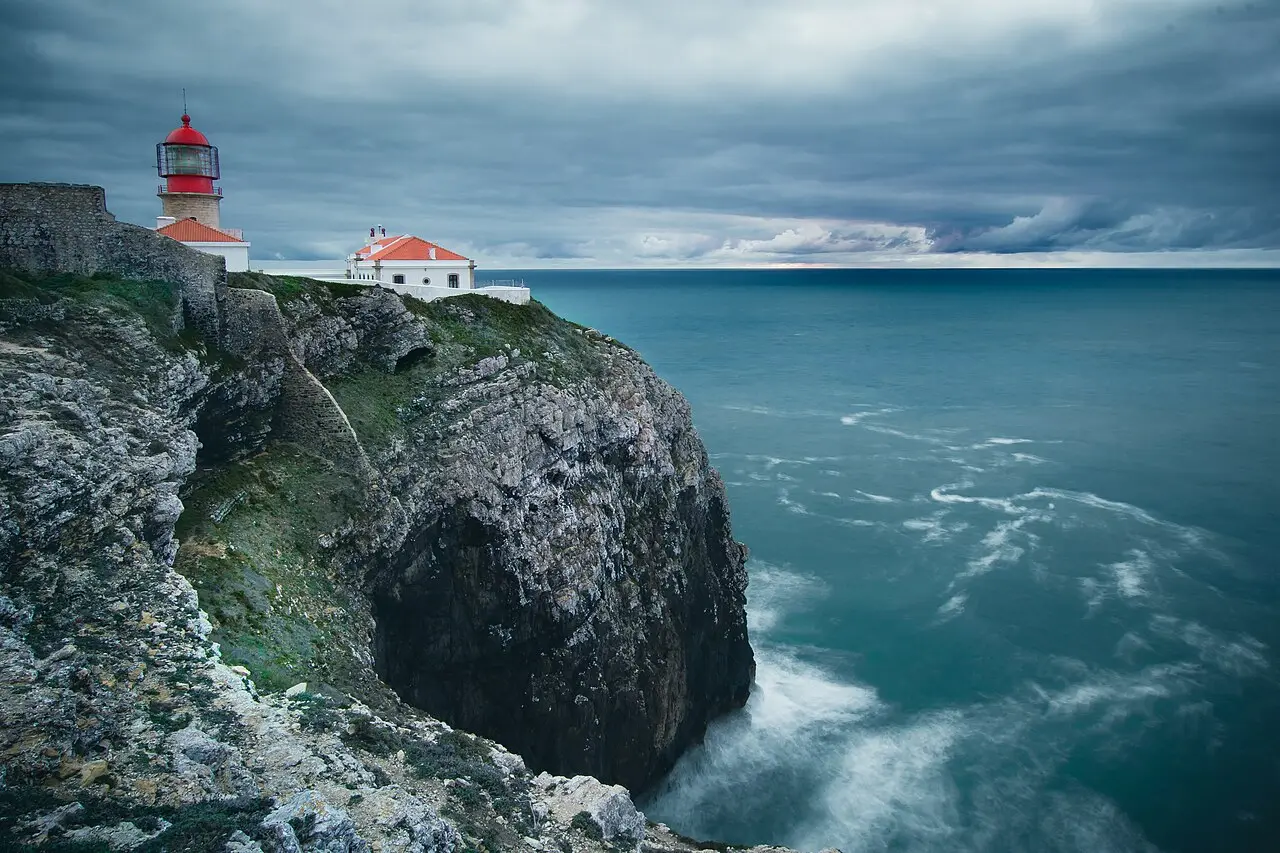
Cape St. Vincent.Photo: Rui Glória · CC BY-SA 4.0 Further south. Near Carrapateira is Praia da Bordeira, a long stretch of sand with dunes and the mouth of the Bordeira stream, popular with surfers. Walk the dunes and swim if the sea lets you.
Then Cape St. Vincent, the south-westernmost point of Portugal and of mainland Europe. The cliffs drop almost sheer 75 metres into the Atlantic, and the lighthouse, completed in 1846 on the remains of a convent, can be seen 60 km away. The Romans called it Promontorium Sacrum, and Strabo thought it the western tip of the known world. At sunset you see why.
You sleep in Sagres, just down the road. Its fortress was built on the orders of Henry the Navigator, known in Portugal as the Infante of Sagres.
What to see
- Praia da Bordeira and its dunes
- Cape St. Vincent and its lighthouse
- The Sagres fortress
Where to sleepAround Sagres, at a campsite or aire. Arrive in daylight.
Heads upIt blows hard at the cape. Hold on to your cap and park sensibly.
Ponta da Piedade and Lagos
7Sagres8Lagosvia Ponta da Piedade 38 km ≈ 50 min
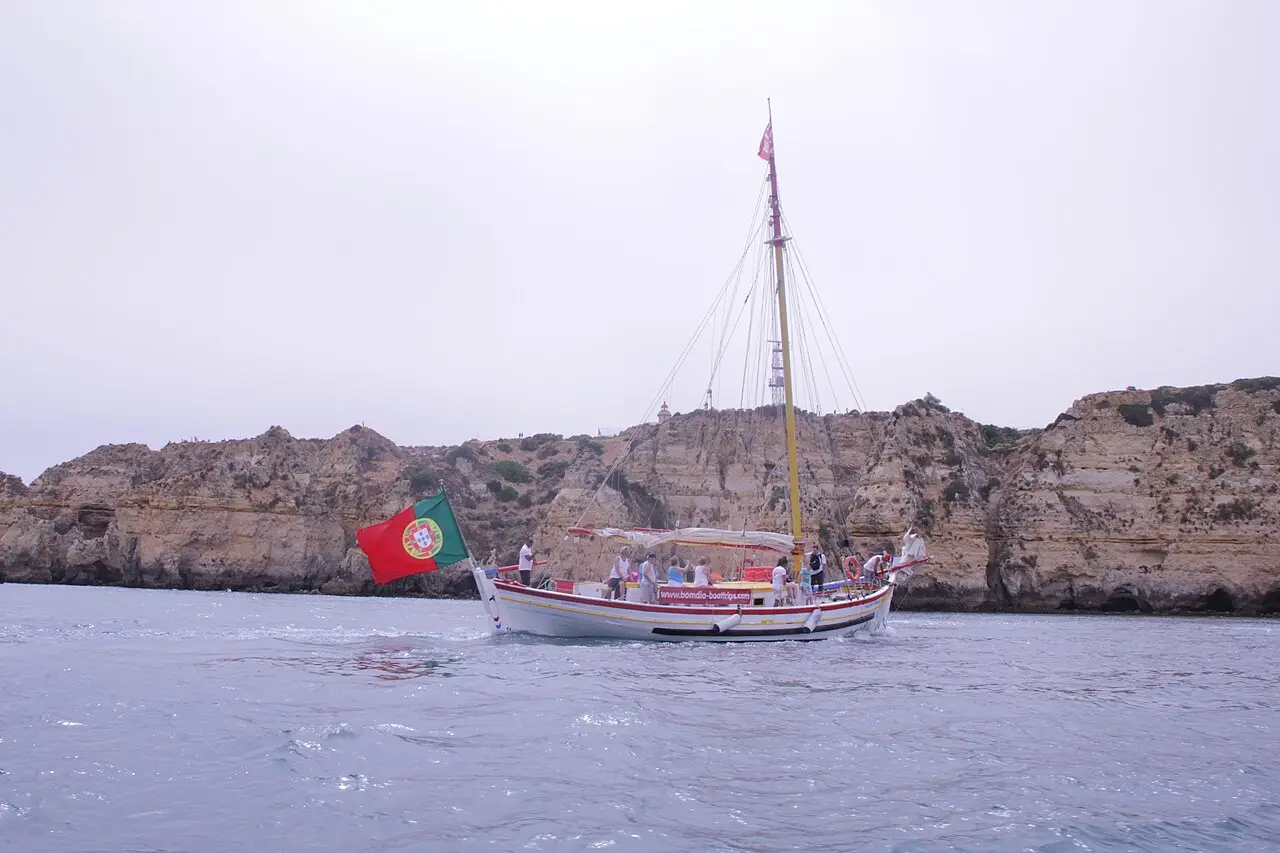
Ponta da Piedade.Photo: Paul Wilkinson · CC BY 2.0 Now you're in the Algarve of the postcards. Ponta da Piedade, just outside Lagos, is a cluster of golden rock formations with cliffs up to 20 metres high and a lighthouse from 1913. You walk along the top, and several of its grottos can be visited by boat.
Lagos mattered in the Portuguese discoveries: it was a major coordination centre and caravels for the explorers were built in its shipyards. Today it's harbour, town walls and plenty of life in summer.
A fifty-minute stage, so you've got the whole day for beach, boat trip and an unhurried dinner in town.
What to see
- Ponta da Piedade and its lighthouse
- The grottos, by boat from Lagos
- The old town of Lagos and its walls
Where to sleepIn or around Lagos, at a campsite or aire.
Heads upLagos fills up in summer. If you want a campsite, book.
Benagil and goodbye to the Algarve
8Lagos9Benagil 37 km ≈ 40 min
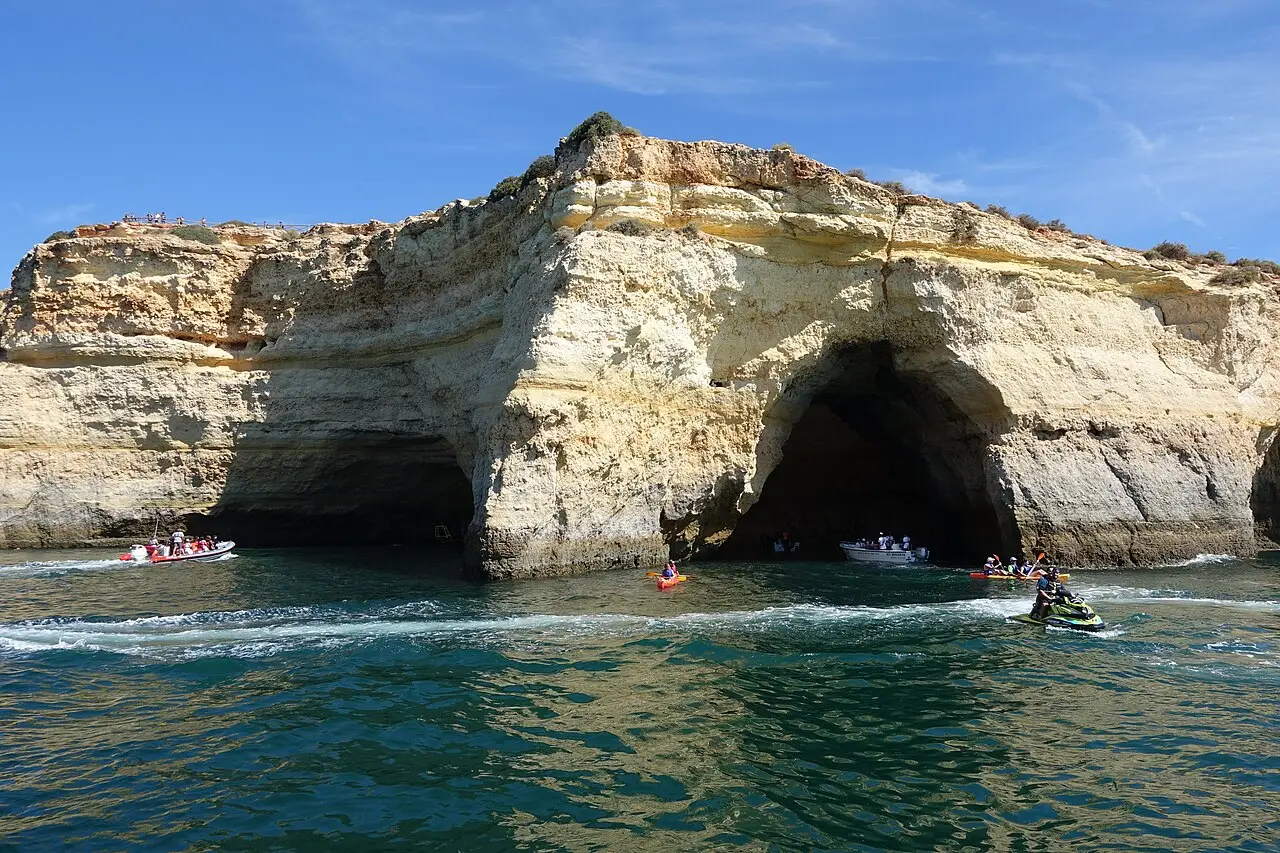
The Algar de Benagil.Photo: Joseolgon · CC BY-SA 4.0 Last day on the coast. Forty minutes away is Benagil and its cave, the Algar de Benagil. Of all the sea caves between Lagos and Albufeira, it's the only one the sea has eroded from both the side and the top, and light pours through the hole in the roof onto the beach inside.
Be careful with what you read online: you can only go in on authorised tours, boats can no longer land on the cave beach, and since August 2024 there's a limit on boats inside, with about two minutes each. Getting there on your own and lying on the sand is no longer an option.
A free afternoon on the nearby coast and an early night: tomorrow is the drive home.
What to see
- The Algar de Benagil, on an authorised tour
- The cliff coast around Benagil
Where to sleepAround Benagil or Lagoa, at a campsite or aire.
Heads upThe cave is tour-only. Book ahead.
Back to Plaza de Castilla: Benagil → Plaza de Castilla · 728 km · ≈ 8 h 20 min · a full day of motorway: best done the next day
Before you set off
- Sort out Portugal's electronic tolls before you cross: many motorways have no booths.
- Tell us your itinerary before you leave. Portugal is in the EU and there's no cross-border surcharge; details in travelling abroad with a rented campervan.
- In Portugal wild camping is banned outside designated sites. Use campsites and aires, and take extra care on the Costa Vicentina.
- Book the Benagil cave trip: entry is by authorised tour only.
- Do a big shop in Lisbon before you head into the Costa Vicentina.
- Download the GPX before you set off, in case you lose signal on the coast.
When to go
Spring and early autumn. June and September strike the best balance: good weather, pleasant water in the south and fewer people than in July and August, when the Algarve gets packed and prices and queues go up.
If what draws you is the Nazaré wave, that's a different trip: the giant waves come with storm swells. Bring waterproofs, take it slowly and leave room to change plans.
Where to sleep and refuel
Portugal tightened its overnight rules a few years ago, and wild camping is banned outside designated sites, with fines. The good news is that it has loads of campsites and aires, especially on the coast. On the Costa Vicentina, which is a natural park, be even more careful: no sleeping on the cliffs or the beach. The general picture is in where it's legal to sleep in a campervan.
Refuel in the big towns (Porto, Lisbon, Lagos) and use every aire for water and emptying. To stretch water and battery between beaches, have a look at the campervan manual. And the usual Portugal warning: many motorways have electronic tolls. Check how to pay before you go in so you don't get fined.
What to eat on the way
In Porto, a glass of port in the Vila Nova de Gaia cellars. In Lisbon, the must is the pastéis de Belém, fresh from the original bakery next to the Jerónimos. On the coast, keep it simple: fish of the day in the fishing towns, from Nazaré to Lagos, and a full campervan fridge for dinner by the sea.
If you have more days
This is our version, but the campervan is yours to stretch:
- Start in Lisbon: short on time? Skip the north. Lisbon to the Algarve via the Costa Vicentina takes 4 or 5 days.
- More Costa Vicentina: around Milfontes you've got Malhão, Furnas and Foz, all surfers' beaches. An extra day here is never wasted.
- More Algarve: with Lagos as a base, the grottos by boat deserve a morning of their own.
- Split the drive home: it's 728 km from Benagil. If you don't fancy a full day of motorway, stop halfway.
We set off from Madrid with the campervan fully checked and spotless, and we answer your questions about tolls, overnight stops and stages on WhatsApp before you leave.
Which campervan to choose
This route works well with any Winkle; choose according to how many of you are travelling in the full fleet comparison.
Related routes
- Galicia by campervan: a 9-day route from Madrid
- Picos de Europa by campervan: a 5-day route
- Basque Country and Landes by campervan: 7 days
- From the Pyrenees to Cabo de Gata (12 days)
Before you book
Check requirements, pricing and how booking works in the guide to renting a campervan in Spain.
Ready for this route? Pick your dates and book →
Frequently asked questions
Do I need anything special to take the campervan to Portugal?
No. Portugal is in the European Union, so you travel without paperwork or extra cost. Bring your ID or passport and the campervan's documents (we give you those). One practical detail: many Portuguese motorways use electronic tolls, so find out how to pay them before you cross the border.
Where can you sleep in a campervan in Portugal?
Portugal tightened its overnight-stay rules a few years back, and wild camping is banned outside designated sites, with real fines. The good news is that it has loads of campsites and motorhome service areas, especially along the coast. Use them and follow the signage; in protected areas like the Costa Vicentina you need to be particularly careful.
How many days do I need to go from Porto down to the Algarve?
With 9 days you can do it at a comfortable pace, enjoying the main stops. If you have less time, you can start in Lisbon and head down to the Algarve in 4-5 days, or focus solely on the Costa Vicentina and the Algarve. The more time you have, the more hidden coves you'll find along the way.
What's the best time of year for this route?
Spring and early autumn are ideal: good weather, pleasant water in the south and fewer people than in summer, when the Algarve gets packed. July and August have the liveliest atmosphere but also the most heat, the highest prices and the longest queues; June and September strike the best balance.