
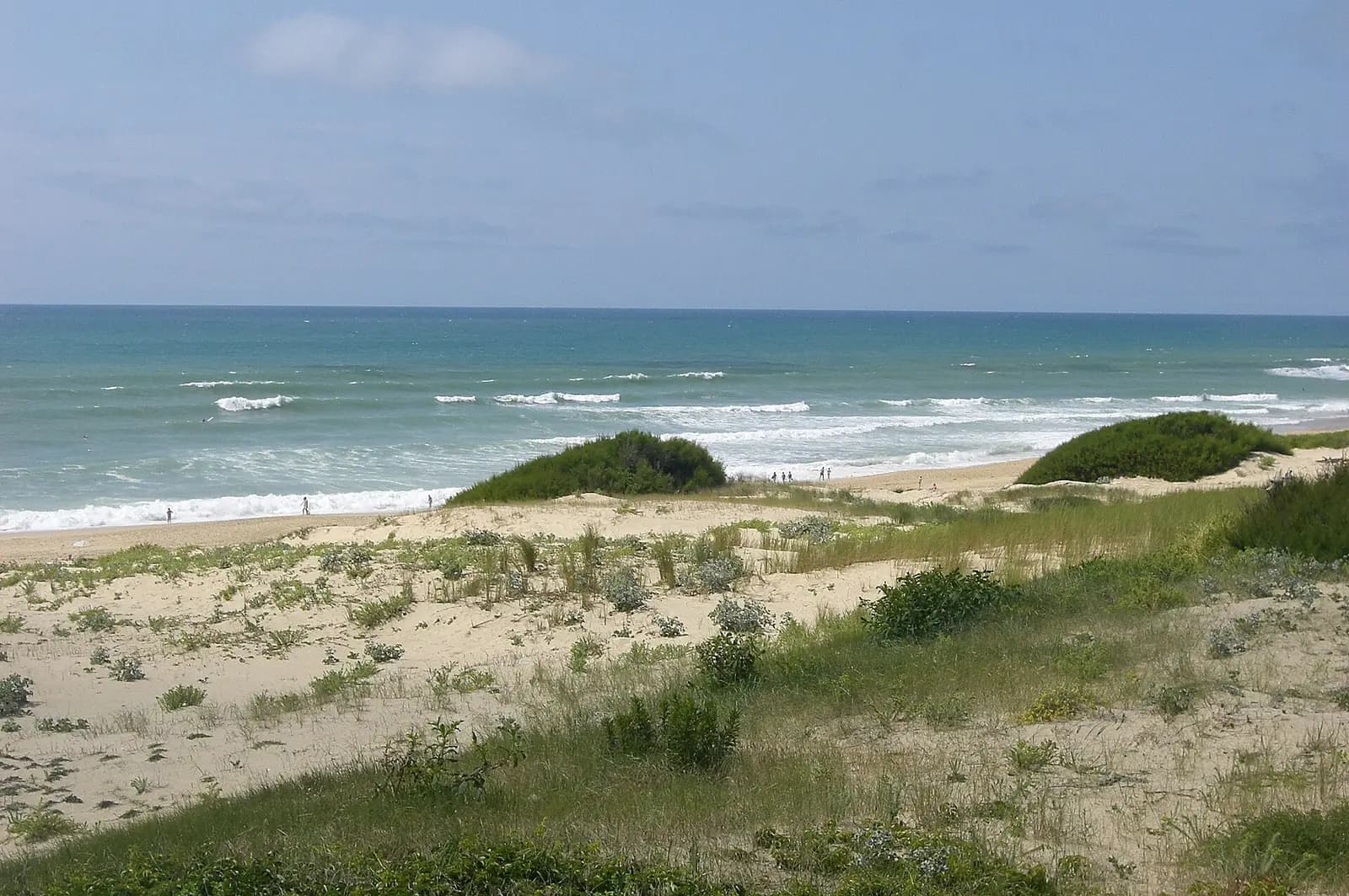
Basque Coast and Landes by campervan: 7 days
From San Sebastián to the endless beaches of the French Landes, taking in Hondarribia and Biarritz along the way. A week of surf, pintxos, pine forests and cliffs, crossing the border without even noticing. Stops and where to spend the night included.
This route starts with pintxos in San Sebastián's old quarter and ends with you sleeping among pine trees beside a Landes beach that never seems to end. In between: Getaria and its mouse, Hondarribia, the Bidasoa border you cross without noticing, Biarritz and the waves of Hossegor. Two countries, one coastline.
The stages are short: no day goes beyond an hour and a quarter at the wheel. The long drives are day one, from Madrid to San Sebastián, and the trip home from Mimizan. Below you've got the map with the real route, the kilometres for each day and what to see along the way.
- Days
- 7Gipuzkoa · Labourd · Landes
- Route in the area
- 233 km+ 1,053 km there and back from Plaza de Castilla
- Behind the wheel
- ≈ 4 h 55 minapprox., without stops
- Best time
- June and SeptemberJune to September for swimming
Roads: Winding coast roads on the Basque side and straight runs through the pines in the Landes. Easy in a campervan.
Best Winkle: Índico · equipment and self-sufficiency, with 57 L of water and an outdoor shower for after the beach
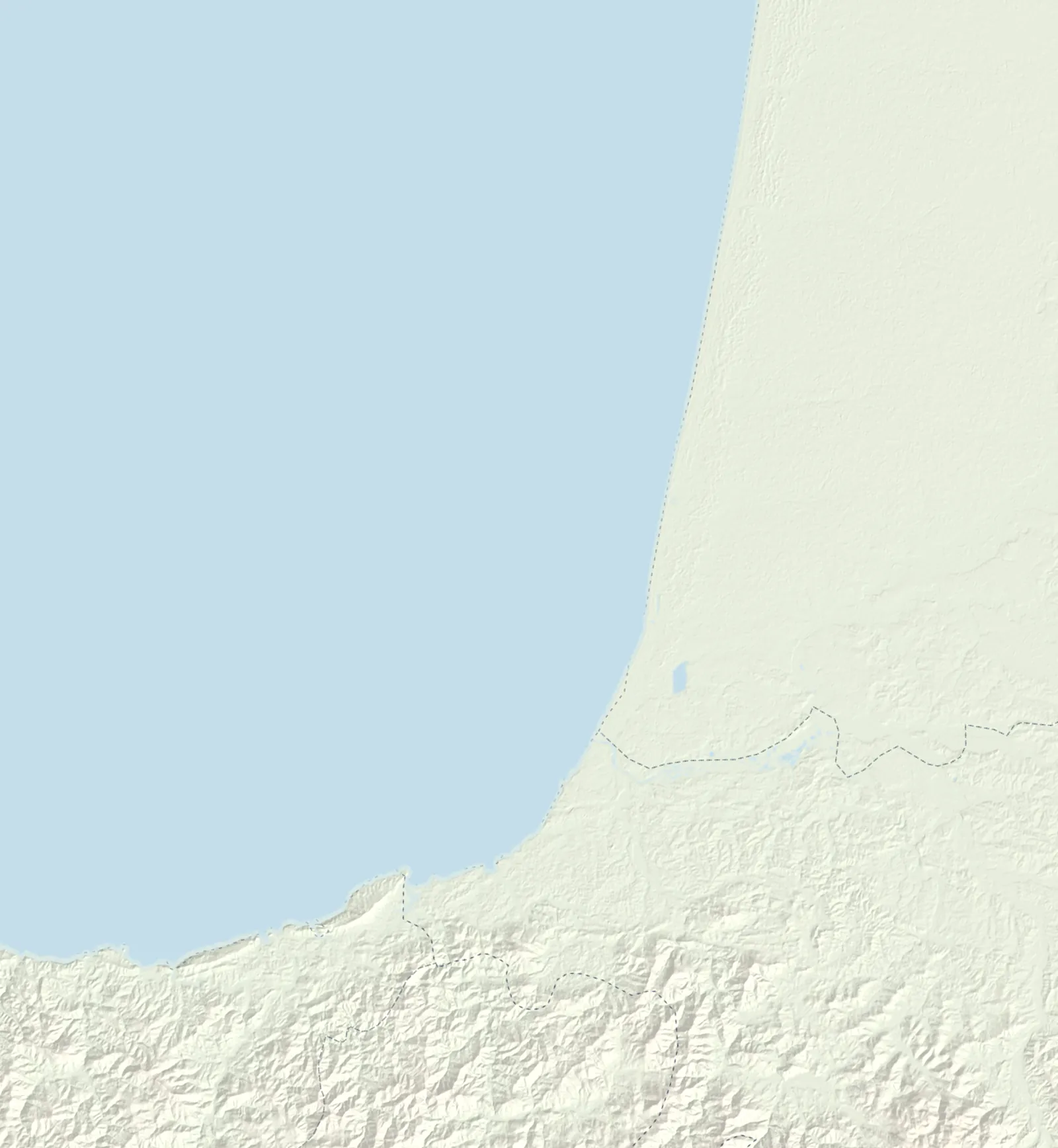 Bay of BiscayGIPUZKOANAVARREPYRÉNÉES-ATLANTIQUESLANDESFRANCESPAIN1San Sebastián2Getaria3Hondarribia4Hendaye5Saint-Jean-de-Luz6Biarritz7Hossegor8Léon9Mimizan
- 1 San Sebastián
- 2 Getaria
- 3 Hondarribia
- 4 Hendaye
- 5 Saint-Jean-de-Luz
- 6 Biarritz
- 7 Hossegor
- 8 Léon
- 9 Mimizan
From Plaza de Castilla: 446 km · ≈ 5 h 5 min Back to Plaza de Castilla: 607 km · ≈ 6 h 50 min
© OpenStreetMap contributors (trazado: OSRM) · Natural Earth · relieve: AWS Terrain TilesDay by day
Madrid to San Sebastián
Madrid (Plaza de Castilla)1San Sebastián 446 km ≈ 5 h 5 min
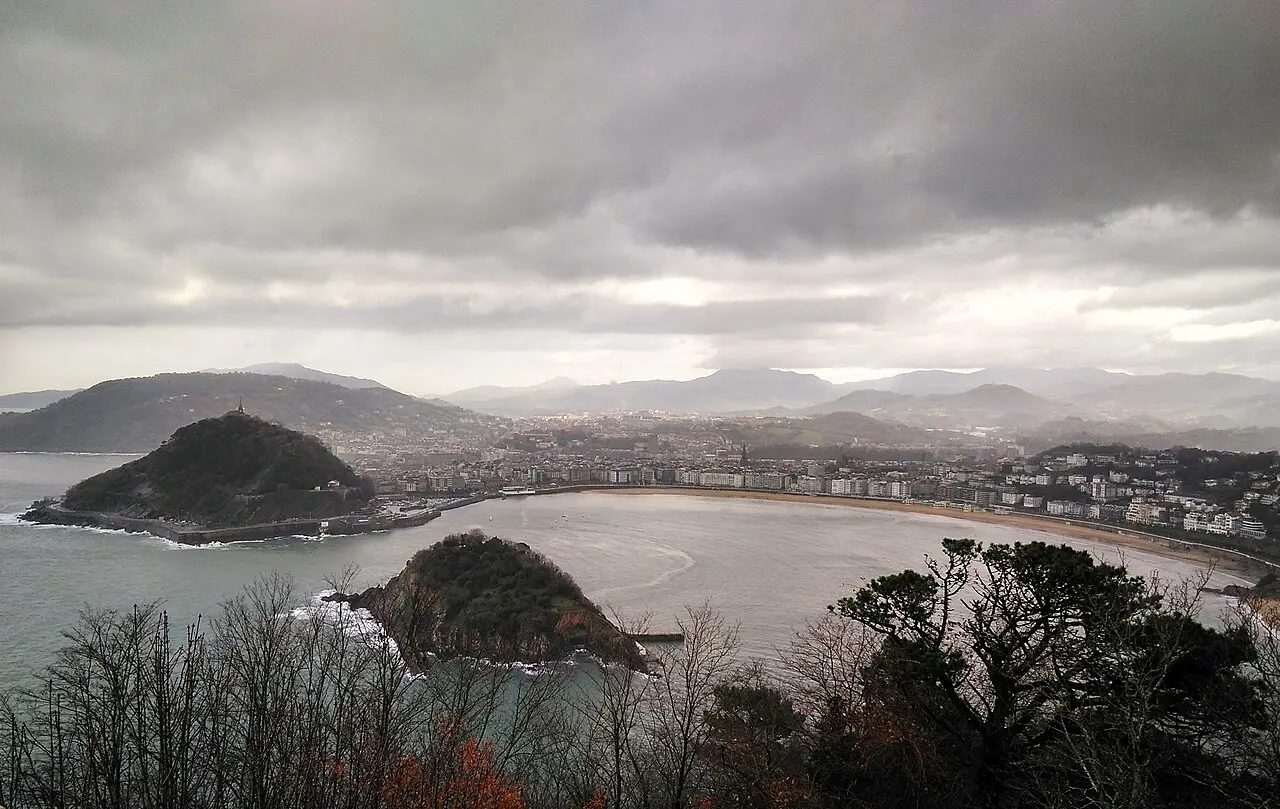
San Sebastián from Igueldo.Photo: Hmvg · CC BY-SA 4.0 A driving day: 446 km and about five hours from Plaza de Castilla. If you can, leave early and arrive mid-afternoon: San Sebastián is at its best with the evening light over La Concha.
First, go up Mount Igueldo, 181 metres above the sea, on the oldest funicular in the Basque Country, opened in 1912. From the top you see the whole bay, with Santa Clara island in the middle and Mount Urgull on the far side. On the way down, at the end of Ondarreta beach, is the Comb of the Wind: Eduardo Chillida's steel sculptures on the square designed by Luis Peña Ganchegui, completed in 1976.
The night belongs to the old quarter: bar, pintxo, txakoli and on to the next bar.
What to see
- La Concha bay from Mount Igueldo
- The Comb of the Wind, at the end of Ondarreta
- Pintxos in the old quarter
Where to sleepIn or around San Sebastián, at an aire or campsite.
Heads upOvernight parking on the Basque coast is tightly regulated. Use aires and campsites and read the signs.
Zarautz and Getaria
1San Sebastián2Getariavia Zarautz 26 km ≈ 30 min
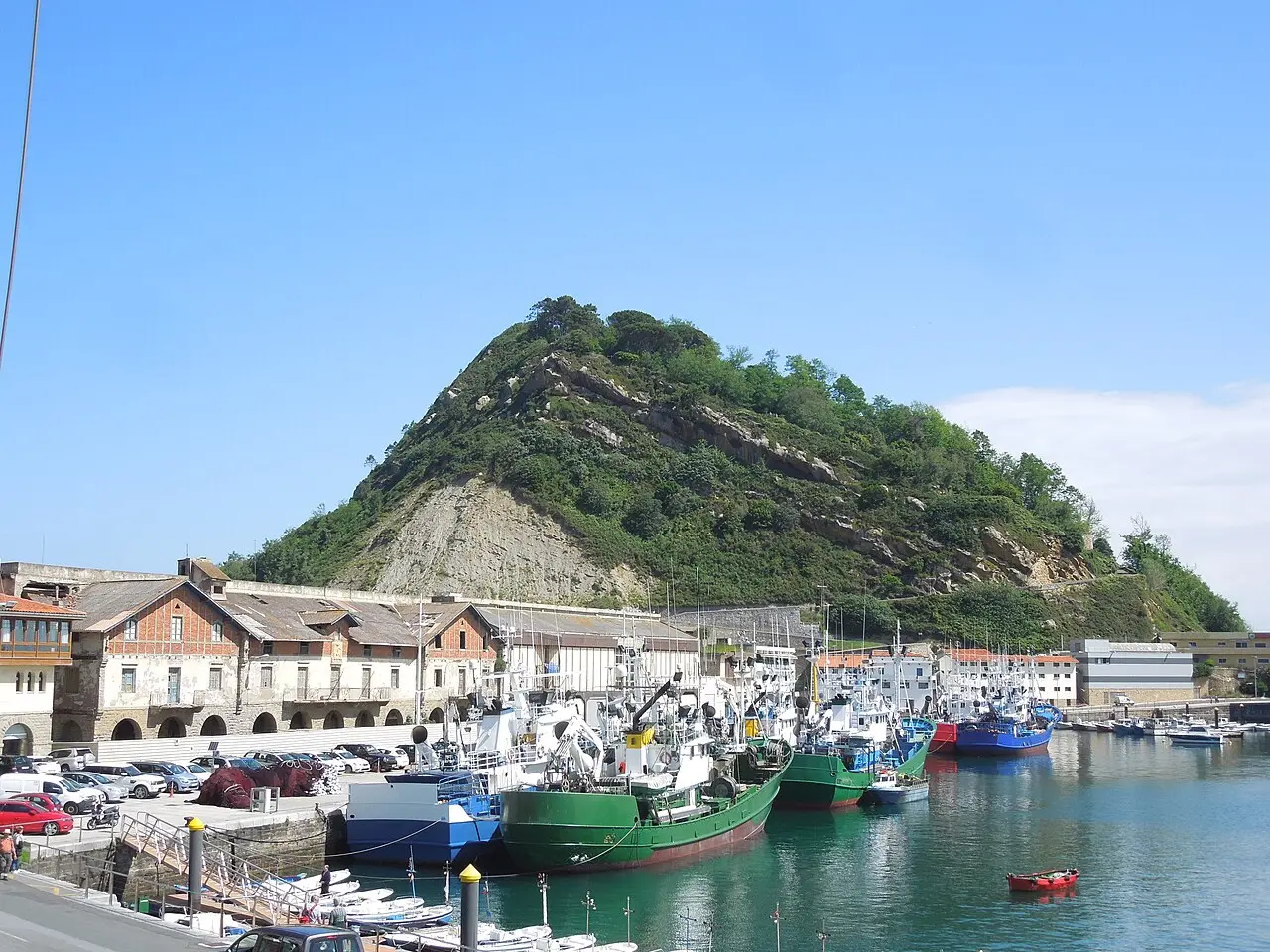
Getaria and its Mouse.Photo: Cosal · CC BY-SA 4.0 Half an hour west. Zarautz has the longest beach in the Basque Country, almost 3 km of sand, and a huge surf scene: every September it hosts a world-tour event. If you want your first lesson, it's a good place. At the eastern end of the beach is the protected Iñurritza biotope, with dunes and marshland.
Three kilometres on is Getaria. It's the birthplace of Juan Sebastián Elcano, the first man to sail around the world, and of Cristóbal Balenciaga, who has his museum here. Mount San Antón, known to everyone as the Getaria Mouse, was an island until the 16th century. The Gothic church of San Salvador hosted the first General Assembly of Gipuzkoa in 1397.
To drink, Getaria txakoli, a white wine with its own designation of origin. An afternoon of harbour and strolling: there's little driving today.
What to see
- Zarautz beach and the Iñurritza biotope
- The Getaria Mouse from the harbour
- The church of San Salvador
- The Balenciaga Museum
Where to sleepAround Zarautz or Getaria, at an aire or campsite.
Heads upThe road between Zarautz and Getaria hugs the sea. Take it slowly and enjoy it.
Jaizkibel and Hondarribia
2Getaria3Hondarribiavia San Sebastián, Jaizkibel 57 km ≈ 1 h 15 min
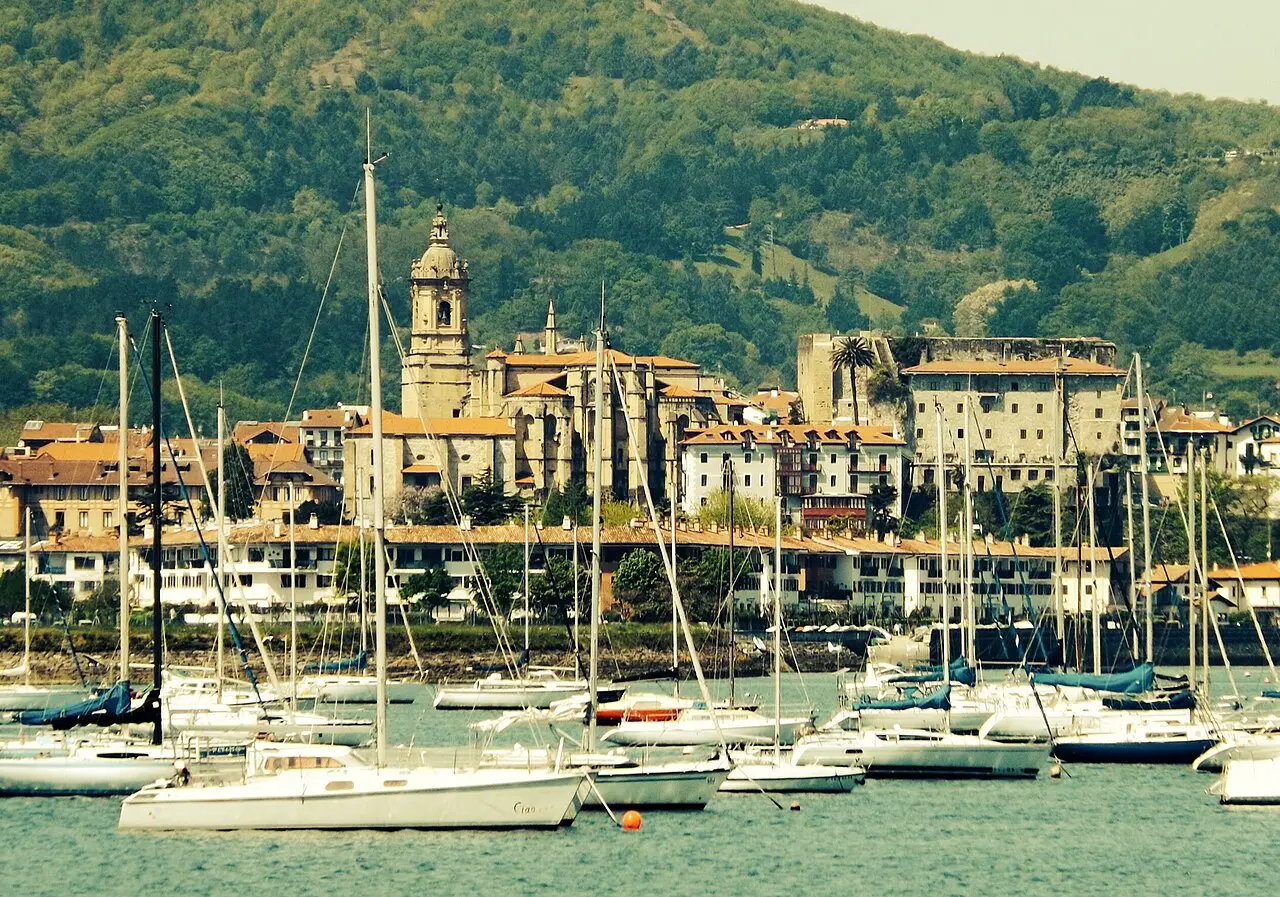
Hondarribia from Hendaye.Photo: Loubianka · CC BY-SA 3.0 Head back east, past San Sebastián, and up Jaizkibel, 543 metres above the sea. The road over the top to Hondarribia is one to take slowly, with the Bay of Biscay on your left. If it sounds familiar, the Clásica San Sebastián cycling race climbs it 32 km from the finish.
Drop down to Hondarribia, at the mouth of the Bidasoa. The walled old town is a listed monument, with a grid of streets, two gates and, at the highest point, the castle of Charles V, a parador since 1968. The town held out against the French siege of 1638, which gave it its motto and the Alarde parade held every year.
Outside the walls is the Marina district, the old fishermen's quarter, with brightly painted wooden balconies. That's where you eat tonight.
What to see
- The views from the Jaizkibel road
- The walled old town and the Plaza de Armas
- The castle of Charles V
- The Marina district
Where to sleepAround Hondarribia, at an aire or campsite.
Heads upThe Jaizkibel road is narrow and busy with cyclists. Be patient and give them room when overtaking.
Hendaye, the Corniche and Biarritz
3Hondarribia6Biarritzvia Hendaye, Saint-Jean-de-Luz 39 km ≈ 50 min
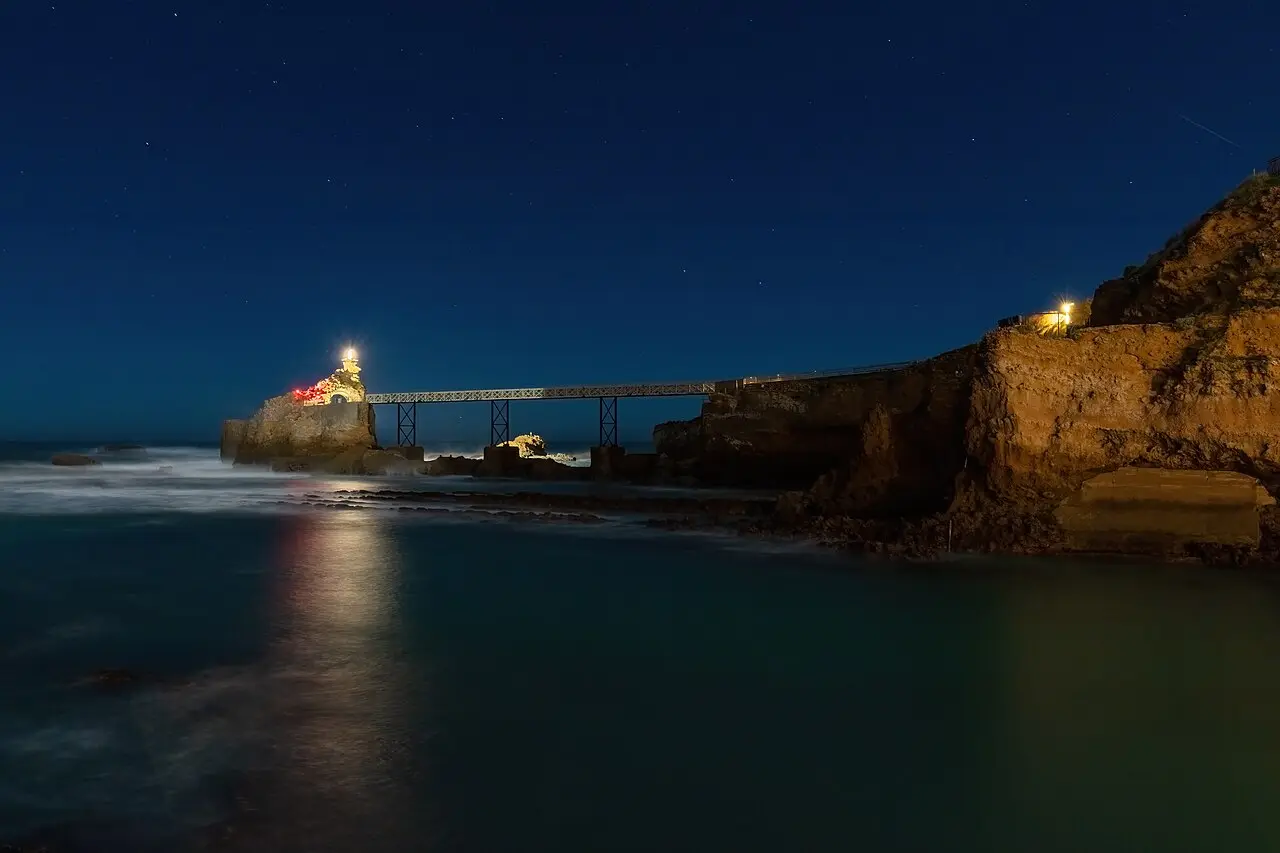
The Rocher de la Vierge, Biarritz.Photo: Diego Delso · CC BY-SA 4.0 Cross the Bidasoa and you're in France, with no checks and no paperwork. In the river, opposite Hendaye, is Pheasant Island, the smallest condominium in the world: France runs it for six months of the year and Spain for the other six, and the Treaty of the Pyrenees was signed there in 1659.
From Hendaye to Ciboure runs the Basque Corniche, 6 km of protected flysch cliffs along the D912. Then Saint-Jean-de-Luz, where Louis XIV married Maria Theresa of Spain on 9 June 1660, in the church of Saint John the Baptist. Its harbour, which lived off whaling and cod, is the only sheltered port in France between Arcachon and the border.
You reach Biarritz in the afternoon. It was a whaling village that became a spa resort in the 19th century: the Hôtel du Palais was built in 1854 for Empress Eugénie. In 1957 the first surfing in Europe happened here, when a Californian friend of director Peter Viertel rode waves during a film shoot. Walk out to the Rocher de la Vierge and up to the lighthouse, from 1834.
What to see
- Pheasant Island, in the Bidasoa
- The Basque Corniche between Hendaye and Ciboure
- The church of Saint John the Baptist in Saint-Jean-de-Luz
- The Rocher de la Vierge and the Biarritz lighthouse
Where to sleepIn or around Biarritz, at an aire or campsite.
Heads upIn France, check whether your route enters a low-emission zone and which Crit'Air sticker it requires. We explain it in travelling abroad with a rented campervan.
Capbreton and Hossegor
6Biarritz7Hossegorvia Capbreton 33 km ≈ 40 min
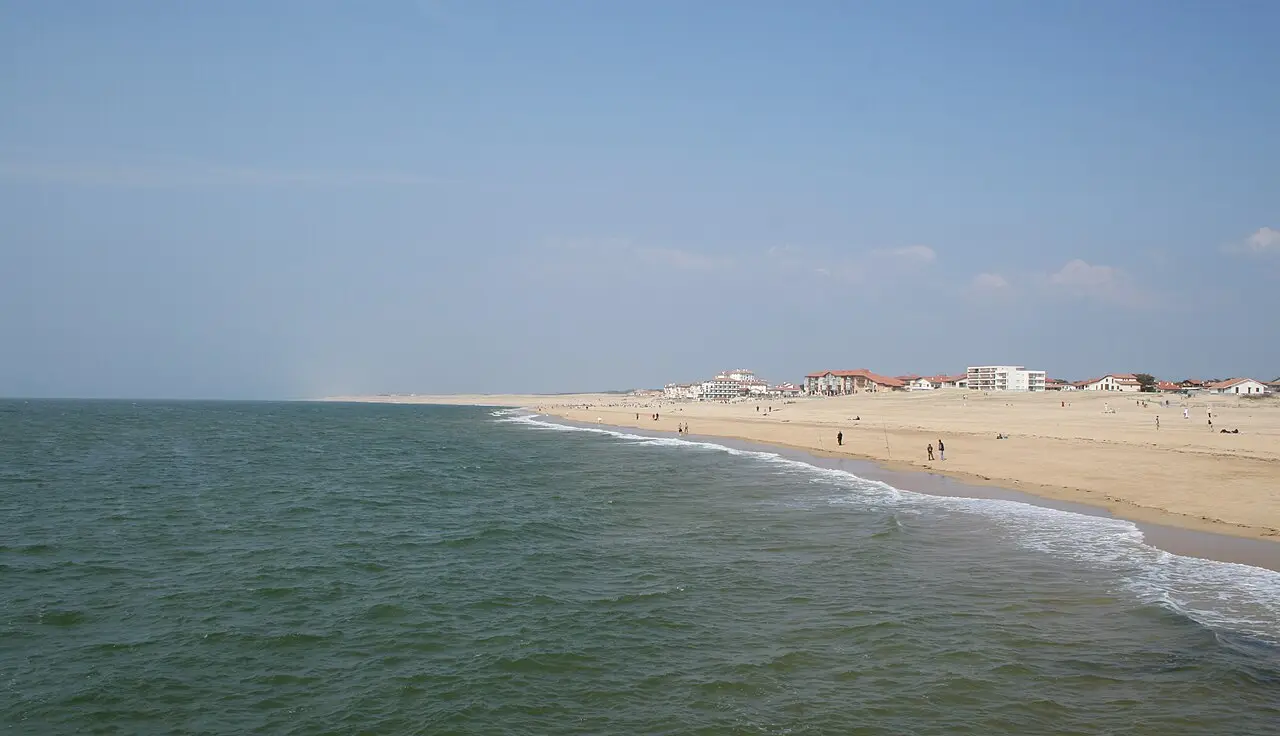
Hossegor beach.Photo: Remi Jouan · CC BY-SA 3.0 Forty minutes north and the landscape changes: the cliffs end and the Landes begin, sand and pines. First, Capbreton. It was the mouth of the Adour and an important port until 1578, when engineer Louis de Foix diverted the river to Bayonne. Its symbol is the Estacade, the wooden pier, and offshore lies the gouf, an underwater canyon that starts 300 metres from the shore.
That canyon explains the waves next door. At Hossegor, the sudden rise of the seabed works like a reef and throws up the wave they call La Nord. This is home to La Gravière, one of its most famous breaks, and in early October the Quiksilver Pro France brings in the world's best surfers.
For non-surfers there's Lake Hossegor, a sea lake where the water flows in and out with the tide. And for a stroll, the neo-Basque villas built from the 1920s onwards.
What to see
- The Estacade in Capbreton
- The waves at La Gravière
- The Hossegor sea lake
- The neo-Basque villas
Where to sleepAround Hossegor or Capbreton, at a campsite. There are some among the pines, a step from the sand.
Heads upHossegor's waves are serious. If you don't surf, swim in the lake or at a lifeguarded beach.
The Landes: Vieux-Boucau and the Courant d'Huchet
7Hossegor8Léonvia Vieux-Boucau 32 km ≈ 40 min
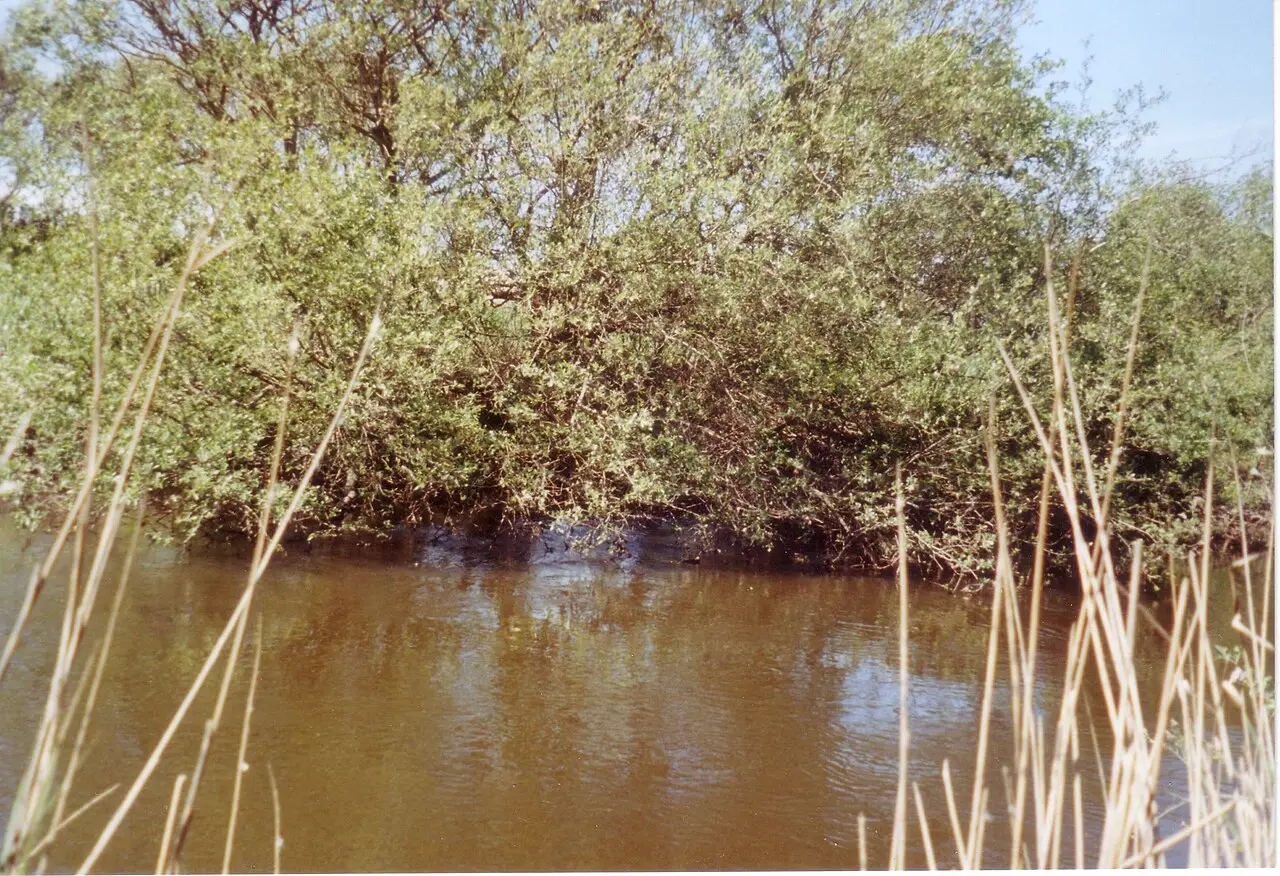
The Courant d'Huchet.Photo: Traumrune · CC BY-SA 3.0 Forest day. The Landes is the largest man-made forest in Western Europe: nearly a million hectares planted after the law of 1857, with maritime pine covering more than 80% of it. Between Hossegor and Léon you pass Seignosse and Vieux-Boucau, whose Gascon name means old river mouth: this is where the Adour used to reach the sea.
In the afternoon, the Courant d'Huchet, by Léon. It's the river that drains Lake Léon into the Atlantic, protected as a nature reserve since 1981, with 618 hectares and dense vegetation along its banks. One of the best stops on the route and one of the least known.
The rest of the day: bike, beach and siesta. That's what you came for.
What to see
- The pine forests between Seignosse and Vieux-Boucau
- The Courant d'Huchet nature reserve
- Lake Léon
Where to sleepAround Léon or Vieux-Boucau, at a campsite among the pines.
Heads upIn the pine forest, not a spark: follow each campsite's fire rules.
Mimizan, end of the route
8Léon9Mimizan 46 km ≈ 1 h
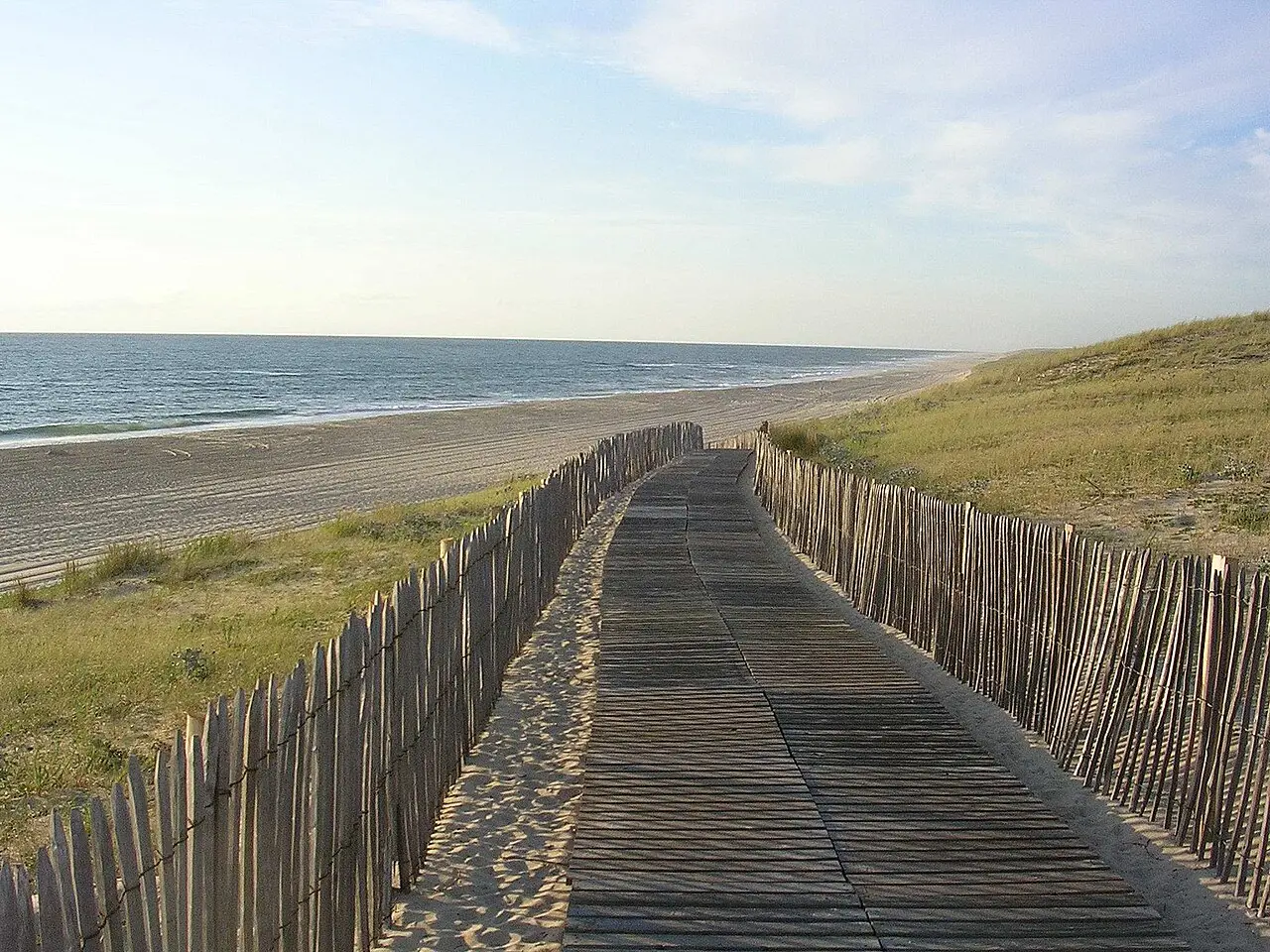
L'Espécier beach, Mimizan.Photo: Jibi44 · CC BY-SA 3.0 An hour north through the pines to Mimizan. It has two sides: Mimizan-Plage, on the coast, one of the main resorts of the Côte d'Argent, and the town, set back inland beside Lake Aureilhan. The courant de Mimizan flows out of the lake, a coastal river of about 7 km that ends in the ocean.
In the town stands the porch bell tower of the old priory, with a portal carved around 1220. Mimizan was a stop on the coastal Way of St James, which is why the bell tower has been a World Heritage Site since 2000, as part of the Routes of Santiago de Compostela in France.
A last afternoon on the beach and a last night among the pines. Tomorrow, home.
What to see
- The beach at Mimizan-Plage
- Lake Aureilhan and the courant de Mimizan
- The priory bell tower
Where to sleepIn Mimizan, at a campsite.
Heads upFill up before the drive home and compare: diesel prices differ between France and Spain.
Back to Plaza de Castilla: Mimizan → Plaza de Castilla · 607 km · ≈ 6 h 50 min · almost seven hours: best done the next day
Before you set off
- Tell us your itinerary before you leave. France is in the EU and there's no cross-border surcharge; details in travelling abroad with a rented campervan.
- Check whether your route through France crosses a low-emission zone and which Crit'Air sticker it needs.
- Overnight parking on the Basque coast is tightly regulated: sleep at aires and campsites.
- In August everything is full, especially in France: book your campsite.
- If you plan to surf, book a lesson or board early in summer.
- Download the GPX before you set off, in case you lose signal.
When to go
June to September for the beach and swimming, bearing in mind that August is the busiest month, especially in France. June and September strike the best balance: good weather, pleasant water and fewer people.
Spring and autumn work well if you're more into surfing and scenery than swimming. And if you want to watch top-level surf without getting wet, the Quiksilver Pro France is in Hossegor in early October.
Where to sleep and refuel
On the Basque Coast, overnight parking is tightly regulated, with areas and months under explicit bans, so use aires and campsites, of which there are plenty. The French side is campsite heaven among the pines right by the beach, many set up for campervans and surfers. Be sensible about where you stop: we explain it in where it's legal to sleep in a campervan.
Refuel in the towns and remember that diesel can be priced differently in France; don't run it close. To stretch water and battery between swims, have a look at the campervan manual.
What to eat on the way
The route starts strong: pintxos in San Sebastián's old quarter, bar by bar. In Getaria, the local txakoli, with its own designation of origin. In Hondarribia, dinner in the Marina district. In the Landes the plan changes: market, a full campervan fridge and dinner among the pines.
Surf: who this route is for
Everyone. Zarautz, Biarritz, Hossegor and the whole Landes coast have schools and waves for every level. If you're starting out, Zarautz and Biarritz are good places for a first lesson. If you can already surf, Hossegor is another league: La Nord comes off the Capbreton underwater canyon and doesn't forgive. The campervan is the perfect companion: load the boards, sleep close to the beach and get up for the first wave without depending on anyone.
If you have more days
This is our version, but the campervan is yours to stretch:
- An extra day in San Sebastián: the city can easily fill it.
- More Landes to the north: near Arcachon is the Dune du Pilat, the highest in France and in Europe.
- Link up with the south of France: from the Landes you can carry on towards the Mediterranean with our south of France route.
- Split the drive home: it's 607 km from Mimizan. If you don't fancy a full day on the road, stop halfway.
We set off from Madrid with the campervan fully checked and spotless, and we answer your questions about the route and the crossing into France on WhatsApp before you leave.
Which campervan to choose
For a week of beaches and pintxos, the Winkle Índico strikes the ideal balance of equipment and self-sufficiency.
Related routes
- South of France by campervan: a 7-day route
- Picos de Europa by campervan: a 5-day route
- Algarve and Portugal's Atlantic coast by campervan: 9 days
- From the Pyrenees to Cabo de Gata (12 days)
Before you book
Check requirements, pricing and how booking works in the guide to renting a campervan in Spain.
Ready for this route? Pick your dates and book →
Frequently asked questions
Do I need to do any paperwork to cross into France with the campervan?
None at all. You can travel across the European Union with no cross-border surcharge and no extra paperwork, so crossing from the Basque Coast into the Landes is as simple as carrying on driving. Bring your ID or passport and the campervan's documents, which we hand over to you, and tell us your itinerary before you leave.
Where can you spend the night with the campervan on this route?
On the Basque Coast, overnight parking is heavily regulated and there are areas and seasons with explicit bans, so it's best to rely on motorhome service areas and campsites (there are plenty, especially on the French side). The Landes are packed with campsites tucked among the pines right by the beach. Always respect local signage.
Is this a good route for getting into surfing?
One of the best in Europe. Zarautz, Biarritz, Hossegor and the whole Landes coastline have schools and waves for every level. The campervan is the perfect surf companion: you load the boards, sleep close to the beach, and catch the next wave at dawn without depending on anyone.
How long does it take from Madrid?
From Plaza de Castilla to San Sebastián it's about 446 km, around five hours at the wheel. The drive home from Mimizan, at the end of the route, is about 607 km and almost seven hours, so it's best to give it a full day.
What's the best time of year for this route?
June to September for the beach and swimming, bearing in mind that August is the busiest month (especially in France). June and September strike the best balance: good weather, pleasant water and fewer crowds. Spring and autumn are ideal if you're more into surfing and scenery than swimming.