
8 campervan routes from Madrid to escape for 3, 5 or 7 days
Eight campervan routes from Madrid for 3, 5 or 7 days, with a real map, round-trip kilometres, driving hours, mileage package and the Winkle that fits best.
Madrid has an advantage you spot as soon as you open a map: in three days you sleep among mountains and stone villages, in five you wake up in the Picos de Europa and with a week you reach France or the Mediterranean. The point is not to go as far as you can. It is to pick a route that leaves you time to switch the engine off.
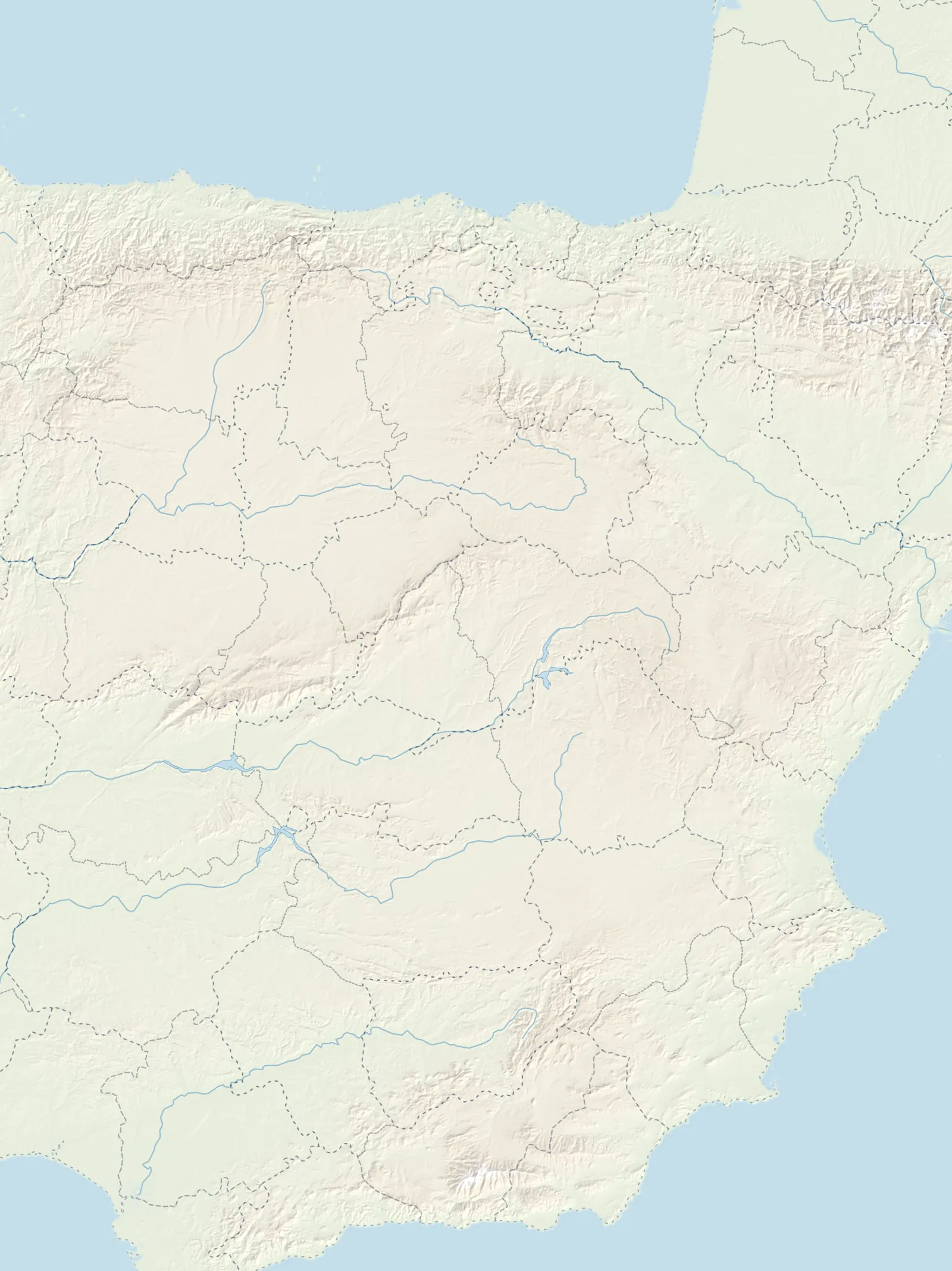
All eight are full loops: you leave from Plaza de Castilla and come back to Plaza de Castilla. The kilometres and hours on each card are calculated by road, including the way out, the route and the way back, with no stops or detours. Four have their own day-by-day guide; the other four are covered further down.
- 1
Sierra de Madrid and Gredos
3 days584 km round trip≈ 9 h 10 min driving
The Guadarrama mountains, Valsaín and the Gredos Platform, coming back through La Vera. Short stages, always close to home: the best one for a first trip.
See the full guide - 2
Segovia and the Duratón Gorge
3 days306 km round trip≈ 6 h 10 min driving
Segovia, the walled village of Pedraza, Sepúlveda and the Duratón gorge with the San Frutos hermitage. The shortest of the eight.
- 3
Cuenca and its Serranía
3 days513 km round trip≈ 7 h 25 min driving
Cuenca old town and its Serranía: the Ciudad Encantada, the Ventano del Diablo and the source of the Cuervo river. Winding mountain roads from day two.
See the full guide - 4
Picos de Europa
5 days1,065 km round trip≈ 15 h 40 min driving
Riaño, Valdeón, Caín, Covadonga, Cabrales and Fuente Dé. High mountains in five days, on narrow roads that call for a slow pace.
See the full guide - 5
Monfragüe, Trujillo and Cáceres
5 days720 km round trip≈ 8 h 50 min driving
Plasencia, Monfragüe National Park, Trujillo and the old town of Cáceres. Easy roads and a lot of stone.
- 6
Albarracín and the Maestrazgo
5 days858 km round trip≈ 12 h 25 min driving
Albarracín, Teruel, Cantavieja and Morella. Medieval villages above a thousand metres, with plenty of back roads in between.
- 7
Basque Coast and Landes
7 days1,286 km round trip≈ 16 h 50 min driving
San Sebastián, Getaria, Hondarribia, the French Basque Country and the beaches and pine forests of the Landes. The one that crosses a border.
See the full guide - 8
Granada, the Alpujarra and Cabo de Gata
7 days1,261 km round trip≈ 16 h 45 min driving
Granada, the villages of the Poqueira gorge, Trevélez, Almería, Cabo de Gata and the cave houses of Guadix. From inland Spain to the Mediterranean.
How to choose the route that suits you
By days
On a three-day trip every hour on the road is time taken from the trip. That is why the three short routes stay between 300 and 600 km in total. With five days you can spend one getting there, three exploring one area and one coming back. With a week you can reach the coast or cross into France, but try to keep only the first and last days above four hours of driving.
By kilometres and package
The rental includes 100 km per day. You can upgrade to 200 km/day (+€10/day) or unlimited mileage (+€35/day), when you book or later from your booking area. If you go over your package, it costs €0.50/km when you return the van. With each route's kilometres, the maths looks like this:
| Route | Days | Round-trip km | Km per day | Package that fits |
|---|---|---|---|---|
| 1. Sierra de Madrid and Gredos | 3 | 584 | 195 | 200 km/day |
| 2. Segovia and the Duratón Gorge | 3 | 306 | 102 | Base, paying about 6 km extra |
| 3. Cuenca and its Serranía | 3 | 513 | 171 | 200 km/day |
| 4. Picos de Europa | 5 | 1,065 | 213 | 200 km/day, with about 65 km extra |
| 5. Monfragüe, Trujillo and Cáceres | 5 | 720 | 144 | 200 km/day |
| 6. Albarracín and the Maestrazgo | 5 | 858 | 172 | 200 km/day |
| 7. Basque Coast and Landes | 7 | 1,286 | 184 | 200 km/day |
| 8. Granada, the Alpujarra and Cabo de Gata | 7 | 1,261 | 180 | 200 km/day |
These are kilometres without detours. Add 10% and do the maths again. Unlimited only pays off if you plan to stretch the route a lot. Step by step in how to work out your rental kilometres.
By road
- For a first trip: Segovia and Duratón or Sierra and Gredos. Motorway, gentle passes and always close to home.
- If you like mountains: Picos, the Serranía de Cuenca or the Maestrazgo. There, a hundred kilometres can take half a morning.
- If you want motorway and coast: Basque Coast and Landes.
- If you don't mind long hours: Granada, the Alpujarra and Cabo de Gata.
By season
In summer, head north or into the mountains. Extremadura, the Maestrazgo and Andalusia are best in spring and autumn. In winter check for snow and ice on the passes, and in August book coastal campsites early. The full calendar is in the best time to rent a campervan in Spain.
By group
The Adriático is for couples (up to 3 seats), with 20 L of fresh water and a portable shower, no hot water. The Caribe has 4 seats, an awning and a kitchen unit, but no water tank or shower. The Índico adds a pop-up roof, heating, 57 L of water and an outdoor shower for up to 4. The Báltico is the only one with hot water and the roomiest: up to 5 seats. Compare them on the Winkles or in which campervan to choose for your group. Travelling with kids? See campervan travel with children too.
The four routes without their own guide
Routes 1, 3, 4 and 7 have a day-by-day guide (tap the card). These four are covered here.
2. Segovia and the Duratón Gorge
An afternoon in Segovia on day one, and day two for Pedraza and Sepúlveda. Pedraza is a walled medieval village with a single gate in and out, and its castle dates from the 13th century. In early July the whole village is lit with candles.
Day three is the gorge. The Duratón river runs for 27 km between walls up to 100 m high, and on a ledge above the cliff stands the San Frutos hermitage, a 12th-century Romanesque priory. It has been a natural park since 1989 and is home to one of the largest griffon vulture colonies in Europe. Sleep in authorised areas or campsites: a daytime car park does not mean you can stay the night. The Adriático is more than enough for two.
5. Monfragüe, Trujillo and Cáceres
You go in through Plasencia and down to Monfragüe, a national park since 2007: 17,852 hectares between the Tagus and Tiétar rivers. Give it a full day. Climb to the castle, which has the whole park at its feet, and stop at the Salto del Gitano viewpoint. Among other birds, around 286 pairs of black vultures breed there.
Then Trujillo, where Francisco Pizarro was born and where his equestrian statue presides over the Plaza Mayor, below the castle. You finish in Cáceres, whose old town has been a World Heritage Site since 1986. The roads are easy, so this is the alternative to Picos if you want fewer bends. Avoid summer middays. The Índico, with heating for spring nights, is a good match.
6. Albarracín and the Maestrazgo
Albarracín sits at 1,171 m, almost surrounded by the Guadalaviar river, with houses the reddish colour of the local rodeno sandstone. It has been a National Monument since 1961. If you only have a long weekend, stay in this area with the Teruel and Albarracín guide. With five days, keep going east.
Cantavieja is the capital of the Maestrazgo in Teruel, above 1,200 m, with its arcaded square and a medieval old town declared a historic-artistic site in 1981. It was a Templar commandery. The last hop is to Morella, already in Castellón and capital of Els Ports: a 2,500 m ring of walls and a castle built into the rock. Between villages there are plenty of winding back roads, so don't plan the stages as if they were motorway. Nights are cold outside summer: the Índico, with heating, is the best fit.
8. Granada, the Alpujarra and Cabo de Gata
First stop, Granada. From there you climb into the Alpujarra: Pampaneira, at 1,058 m right in the Poqueira gorge, and Trevélez, at 1,543 m, where ham is one of the main trades. The roads are narrow and winding: take your time.
You drop down to Almería and the Cabo de Gata-Níjar Natural Park, volcanic in origin, protected since 1987, a biosphere reserve and a UNESCO geopark. San José makes a good base. The way back runs through Guadix, at 913 m, with its cave houses and a cathedral in three styles. It is the route with the most hours of the eight, so the Báltico, with hot water and more space, is worth it. In summer the heat and the lack of parking on the coast change the trip: spring and autumn are better.
Where to sleep
No guide can promise that a spot is still open or allowed when you get there: local rules change. Use motorhome areas and campsites, check recent information and follow the signs. In natural and national parks, even more so: in Picos, for example, overnight stays inside the National Park are heavily restricted and camping is banned.
Sleeping inside a properly parked van is not the same as camping. Putting out an awning, table or chairs changes that. It is all explained in where you can sleep in a van.
What to bring
Kitchenware is included, coffee maker too. Bedding, the portable gas stove and the portable toilet are paid extras: add them when you book or bring your own. Also:
- layers of clothing and a soft bag, which fits better than a suitcase;
- walking shoes and another pair for showers or the beach;
- water and food for the first few hours;
- chargers and a power bank;
- documents and medication;
- a plan for where to sleep, or at least a backup.
Pets are not allowed on board. More in what to bring on your first campervan trip.
Know how many days you have?
Check which Winkles are free on your dates, then choose the route, the model and the mileage package.
Keep reading: Galicia by campervan · South of France by campervan · All campervan routes
Frequently asked questions
Which route from Madrid is best for a first campervan trip?
Segovia and the Duratón Gorge is the shortest: about 306 km in three days. If you would rather have everything planned, Sierra de Madrid and Gredos has a day-by-day guide, with short stages and always close to home.
Where can I go by campervan for three days from Madrid?
Sierra de Madrid and Gredos (584 km round trip), Segovia and the Duratón Gorge (306 km) or Cuenca and its Serranía (513 km). All three fit in a long weekend without spending the trip behind the wheel.
Which five-day route leaves from Madrid?
Picos de Europa (1,065 km), Monfragüe, Trujillo and Cáceres (720 km) or Albarracín and the Maestrazgo (858 km). Picos is high mountains, Extremadura has the easiest driving and the Maestrazgo has the most bends.
Which seven-day route crosses a border?
Basque Coast and Landes: about 1,286 km round trip including south-west France. Before you go, check insurance, documents and tolls in the guide on crossing borders with a rented campervan.
Which mileage package do I need for these routes?
The rental includes 100 km per day. For almost all of them, the 200 km/day package (+€10/day) is the one that fits. On Segovia and Duratón you go over the base package by a few kilometres, and on Picos the 200 package falls short by about 65 km. Extra kilometres cost €0.50/km when you return the van.
How much fuel does a campervan use on these routes?
The Winkles use on average 7.5 to 8.5 litres of diesel per 100 km at 90-110 km/h, with an 80 L tank good for about 950 km. Multiply your route kilometres by that consumption and by the price on the day.
Do the kilometres include the drive back to Madrid?
Yes. Each figure is the full loop from Plaza de Castilla and back, calculated by road with no detours. Add 10% for refuelling, viewpoints and changes of overnight spot.